
Lately we’ve been exploring the freedom to practice any religion which is found at Article 21 (1)(c) of the Constitution of Namibia. In previous posts we’ve mentioned that this freedom is based on international agreements. These fundamental freedoms don’t exist in a vacuum, here is a small reference list on some international agreements that form the basis of this freedom in Namibia.
Universal Declaration of Human Rights
- Article 18 (Freedom of religion)
- Article 20 (Freedom of Association)
- Article 2 ( Anti-discrimination)
International Covenant on Civil and Political Rights
- Article 18 (Freedom of thought, conscience and religion)
- Article 22 (The right to freedom of association)
- Article 2 (Non-discrimination on the basis of religion or belief)
- Article 26 (All persons are equal before the law)
- Article 27 (Protection for religious minorities)
1981 Declaration on the Elimination of All Forms of Intolerance and of Discrimination based on Religion or Belief
“Everyone shall have the right to freedom of thought, conscience and religion. The right shall include freedom to have or to adopt a religion or belief of hid choice and freedom either individually or in community with others and in public or private, to manifest his religion or belief in worship, observance, practice and teaching.“Everyone shall have the right to freedom of thought, conscience and religion. The right shall include freedom to have or to adopt a religion or belief of hid choice and freedom either individually or in community with others and in public or private, to manifest his religion or belief in worship, observance, practice and teaching.“
Article 18
Now that we’ve covered some of the rules and grounds on this, lets take a look at some opposing perspectives on how this right is enjoyed. Recently the comment below was mentioned in referenced in relation to the Catholic Church creating a more inclusive policy which allows for the church to bless same sex marriages, something which the Namibian branch is strongly opposed to.

This is one interpretation of the African ethos in relation to the Christian African LGBTQ community.
On the other hand…
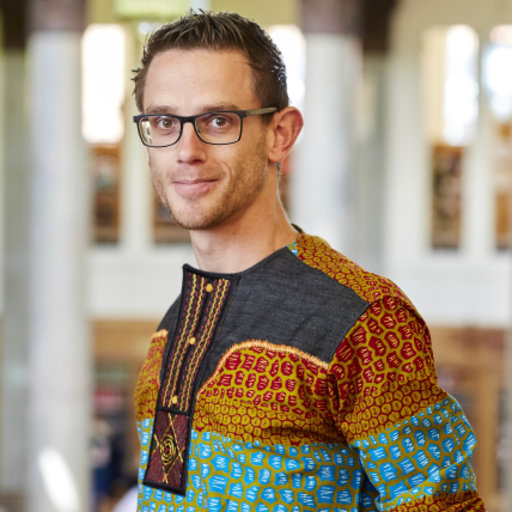
The African ethos has been seen to be broader than expressed in this statement. Works written by Adriaan Van Klinken voice an opposing opinion that you can check out. Adriaan Van Klinken is a Professor of Religion and African Studies at the University of Leeds has some interesting views we can consider.
- A lot of religious leaders see religion as being inclusive
He talks about the advocacy work of Bishop Desmond Tutu in this article, pointing out that while he faced some opposition from his colleagues he, and thought leaders like him, viewed homophobia, heterosexism and racism in the same light. In Namibia there are organisations that advocate for religious LGBTQ+ persons and their allies such as Tulinam.
2. The Bible can be interpreted in a way that upholds Ubuntu
In a book he co-wrote with Ezra Chitando, Reimagining Christianity and Sexual Diversity in Africa, they explore a radical theology of inclusivity, where they unpack two myths. The first ‘myth’, commonly articulated in African nationalist discourse, both within the churches and in wider African society, is that homosexuality is a purely Western phenomenon, imposed on Africa by the ‘gay lobby’ and other international human rights advocacy groups, a product of neo-colonialism and neo-liberalism. The second stereotype originates in Western secular discourse, which often characterises Africa as intractably homophobic, fuelled by a regressive, pre-enlightenment version of Christianity.
3. Homophobic attacks can be dehumanising to an extent of missing crucial lessons in Christianity
The human rights listed above also apply to LGBTQ+ people who are religious. In this article, he speaks about a wide array of effort against the LGBTQ mentioning how those who have been discriminated against in Uganda seek refuge in Kenya but are also subject to harrassment there. In the article he also talks about the documentation of lives of African LGBTQ+ people through art, one work he cites is a collection of stories titled Stories of Our Lives, wherein 250 stories are submitted by Kenyan people showcasing everyday human experiences.
Conclusion
A view of religion in Africa that is inclusive also promotes concepts that are central to Africa like Ubuntu. While neutrality and middle grounds are difficult in most instances, Adriaan van Klinken believes that room seems to exist for an interpretation of religion and the freedoms associated with it, which promotes togetherness rather than division and conflict.
 ZENZE
ZENZE 