
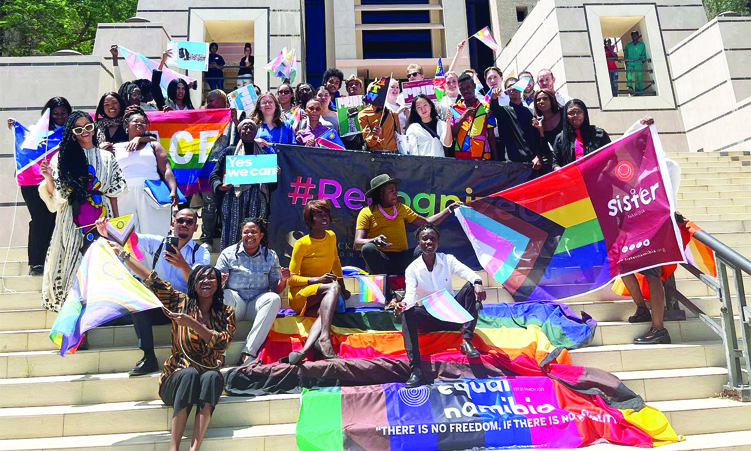
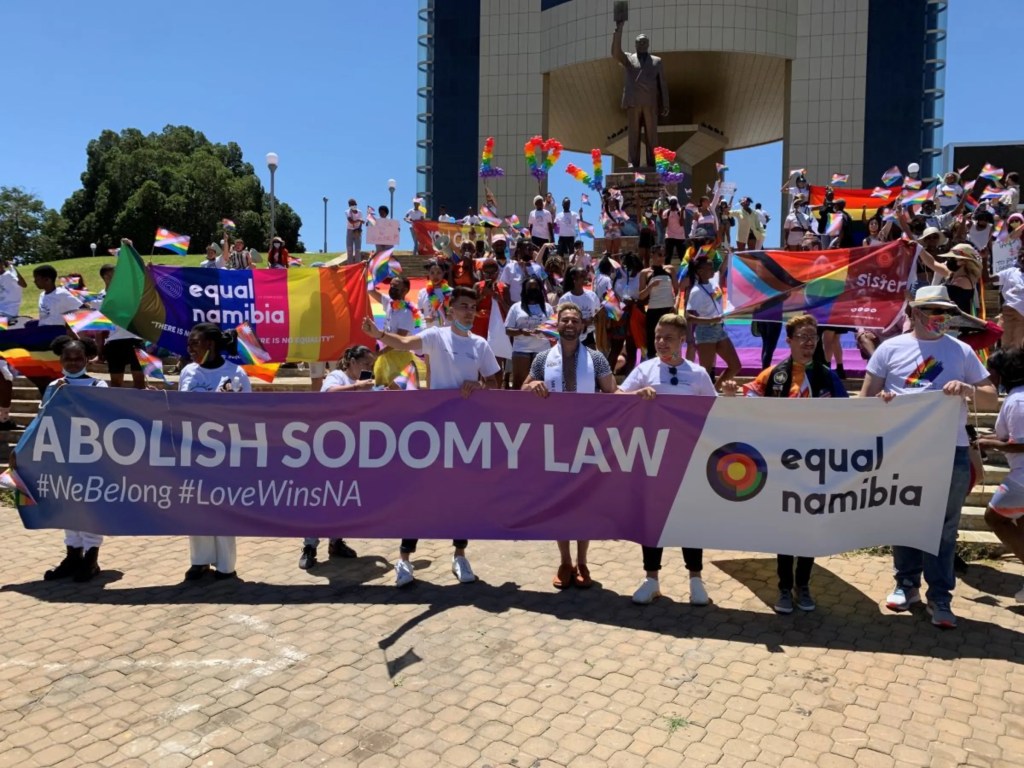
On the 21st of June 2024 the High Court of Namibia ruled in favour of declaring the sodomy law unconstitutional in the case of Dausab v the Government of Namibia. This follows years of activism alongside a steadily rising amount of homophobic attacks and an Anti-Gay Bill. We are in a pride revolution and here’s why its an important step against colonialism and genocide…
What does this have to do with colonialism?
Before colonialism, being gay was a norm. This sounds like a taboo to many who have fed into the false idea that tradition justifies homophobia. In many African countries, the word “gay” was normal enough to acquire its own title. For example; Eshenge in OshiWambo, Ngochani in ChiShona and Adofuro in Yoruba.
In the Namibian Ovambo cultural context it was believed that these men simply possessed a feminine spirits and were regular members of the community rather than ostracized minorities. German anthropologist Kurt Falk confirmed this during the 1920s having spent time with several Namibian tribes, including the Ovambo, OvaHerero, Nama and Himba. Ethnologist, Carlos Estermann supported this during the 1970’s and added that it was a culturally acknowledged ‘third gender’. The very first anti-homosexual trial was conducted under the German colonial rule. Four German men were banished for having defied paragraph 145 of the German Code which outlawed sodomy. This outlawing of sodomy was carried on by the South African colonial regime after taking over Namibia as a protectorate. If it isn’t already clear, the anti-homosexual laws were not born of tradition but of colonialism.
Over time, the colonial effect of self-rejection (a phenomenon whereby subjects to colonialism consciously reject colonialism but have learned to look down on their ethnic origins, cultural groups, cultures and customs) included a rejection of the LGBTQ+ community. Colonialism left in its wake, many with the idea that “all are equal but some more equal than others.” In our context, this idea from George Orwell’s animal farm wasn’t limited to just financial pursuits, but to the pursuit of love and happiness as well. A 2013 baseline study revealed that about 73% of nmaibians were under the impression that members of the LGBTQ+ community were accorded equal rights. This has not been true since the pre-colonial era. It has since become more evident that many are more aware of their own rights than those of others. So when words like moffie are blurted out in the same tone as the word nigger or kaffer , it is easy to play it off as common rhetoric despite the fact that such terms are intended to humiliate and undermine an entire group of people for natural differences that they have no control over. Worse still, many have used these rhetorics and the laws supporting them to justify their violence and hatred, and further to pervert religion to suit these hateful narratives in the name if dispensing justice for God’s wrath. But that’s another conversation. In short, the same way colonial laws emboldened racist attacks, is the same way anti-homosexual laws embolden homophobic attacks. The same way racism was rationalized to seem like something morally acceptable, is the same way homophobia is rationalized to seem like the more morally acceptable stance. It is not.
The Dausab v Government of Namibia Judgement
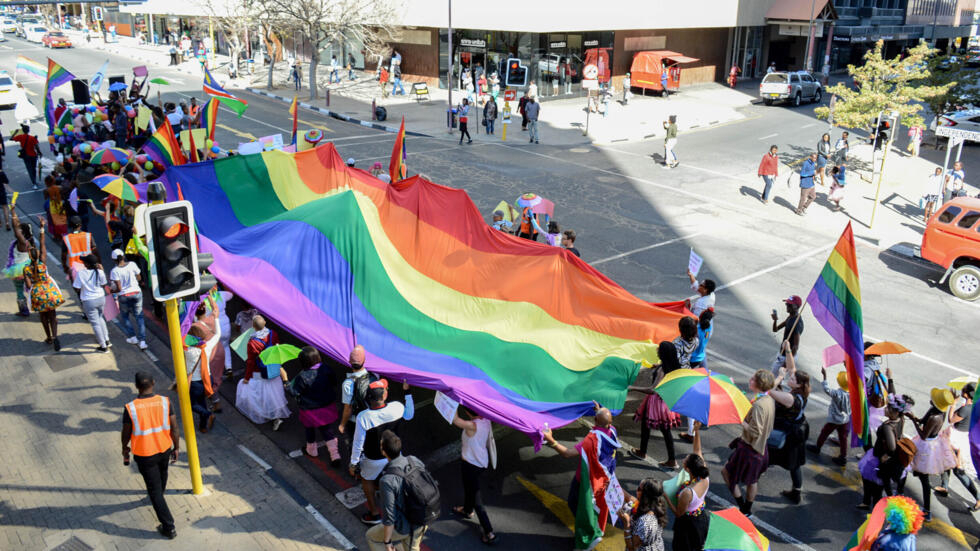
Fortunately many LGBTQ+ people and allies have taken a stand against these senselessly exclusive laws. Everyone should have the opportunity to freely pursue romantic relationships. Human rights are a core aspect of the Namibian Constitution and are found in Chapter three. These have been developed with various religious and ethical concepts in mind, with the goal of ensuring that the law treats us all fairly. That we treat each other fairly.
The court in this case had to deliberate on three issues that relate to this;
- Whether the sodomy law violates the right to equality (Article 10(1))
- Whether the criminalization of same-sex relationships between men serves a justifiable purpose
- The balance between the interests of society and the interests of gay men
A few interesting points came up during the discussion that led to the decision that the sodomy law is unconstitutional. These are that;
- If the same act takes place between men and women, it is not criminalized, which means that this law targets and unfairly discriminates against men on the basis of gender.
- This law does not serve a legitimate purpose. The moralistic justification that sex between men is unnatural is subjectively held by people whose rights are not infringed by the existence of these consensual relationships. Upholding these peoples morals over those directly affected by this law goes against the principle of democracy.
- Outlawing these men’s private relationships is irrational and serves no justifiable purpose.
- Although the discrimination differentiating heterosexual men from homosexual men is not covered by the grounds listed in article 10, it still amounts to unfair discrimination.
This landmark judgement has made room for more Africans to enjoy their sovereignty within the continent. If we keep moving in this direction, LGBTQ+ may not be discouraged from living and thriving in their own continent, and in turn, will not move away from helping their continent thrive. LGBTQ+ rights are human rights. Let’s change the statutory provisions to make them more inclusive of LGBTQ+ people.
 ZENZE
ZENZE 
One thought on “How the Pride Movement in Namibia Is Fighting Colonial Laws”