
The Story of Zuva and Mwedzi

In the spirit of romance, love and union, I decided to revisit an old folktale I came across some year back about how the world came to be. For a good while, I believed that this was the Shona, world creation story. I’d later find that there were different versions of it, all written with the bold claim of being the single story of how the Shona lore described the creation of the world, each with the same characters, Musikavanhu/Nyadenga (God), Zuva (the Sun), Mwedzi (the moon), Hweva (Morning star) and Morongo (Evening star). 

This story I’ve shared is a blend of all the versions I’ve encountered, enjoy ❤ …

This story goes…

Many years ago, before the great hammer hit the ground and before the world came to be, there was Nyadenga, who sat in constant contemplation. A moment came when he decided to move, in this moment he felt a great joy followed by an intense desire to share this experience. So he created to Zuva, full and fiery with a portion of Nyadenga’s greatest sense of passion and joy. 

After a time, it became clear that Zuva could not relate to Nyadenga, he had a loneliness about him which saddened Nyadenga. On a certain day, Nyadenga shed a tear at the sight of a lonesome Zuva, who’d been yearning for something he’d never known before. Nyadenga kept this tear and breathed life into it. Giving birth to Mwedzi, a companion for Zuva.

The two shared a beautiful romance, and Nyadenga delighted in it. He gave them the ability to realize this love through creation. Together they were amazing creators, Zuva would create beautiful plants and vegetation and show them to Mwedzi, and Mwedzi would create insects, birds and many gentle animals to show to Zuva. The more they created and shared in the beauty of their creations, the more their love grew. Nyadenga had been gifting them with inspiration when they created and stoking their love when they were apart, it gave him a sense of whimsy to do this for them in secret, and the amusement he felt when they’d each come and talk about the other in their private times with Nyadenga, filled him with more gratification than he’d ever anticipated.

Gradually, they grew more and more distant from Nyadenga, relishing only in their union. No longer speaking to their creator, leaning into a vanity over the works they had done.

Nyadenga grew furious at this, after all, the entire reason he created them, was to share the joy of life with them.

He watched as their vanity transformed their love into arrogance, believing they had done it all on their own. He leaned further back when they no longer sought to create as a mark of affection and their once heartfelt devotion to each other turned into competition. 

Their new commitment to outshine each other increasingly became fuelled with spite. Each one determined to prove that their creations were more beautiful, more important, more useful than the other. 

In a moment of rage, Zuva, knowing that Mwedzi’s animals fed on his plants, began to lace some with poison, and sure enough, the animals began to die off. A grief stricken Mwedzi, not knowing how to deal with this deception grew angry at her creations, she had often bragged that her animals were stronger because they could move freely as they pleased and that she could easily command them to stomp on Zuva’s motionless plants if she wished. She never imagined that he would poison them, or that they could succumb to the attack of a motionless creature. Soon after she created more violent animals to hunt down and kill the ones that had embarrassed her. 

This war that grew between Zuva and Mwedzi was felt by their creations. The plants vowed never to speak, fearing their father would set them ablaze. The herbivorous creatures grew more anxious, and uncertain, not knowing why they were punished with such violent siblings. And the carnivorous animals turned on each other, those who revelled in their roles as predators making a sport of attacking those who had sunken into shame and guilt for their violent nature.

Nyadenga could no longer bear the chaos. He called Zuva and Mwedzi and showed them the pain they had been causing. But they were too caught up in their strife to truly care about the harm they were causing to their creations, only choosing to blame each other.

So one day, Nyadenga took from Mwedzi’s smaller carnivores, the snake, which at the time only hunted for mice, and he filled it with poison from one of Zuva’s plants and set it loose. As Zuva paced and inspected his garden, he grabbed this snake with careless rage, mistaking it for a fallen branch and it’s hiss for an expression of disrespect, he had believed the plants honoured him with their silence. 

He felt the poison shoot up and without much time he was with Nyadenga.

Mwedzi would meet a similar fate, when she grabbed the snake to return it closer to the mice after seeing it wonder near Zuva’s garden.

The two pleaded with Nyadenga, begging to be sent back, Nyadenga wouldn’t have it, but he allowed each of them a single ask for their eternal lives in Nyadenga’s house. Mwedzi begged for them to be able to watch over their creations. Nyadenga granted this with the condition that they never do this together, that they were to spend eternity watching over their world apart, and were to never directly interact with their creations as they did before. 

After hearing that their union would not continue in eternity. A teary eyed Zuva begged for a chance to work on one last creation with Mwedzi, as a monument to their love. She accepted this, it hurt her too that their relationship would end, even though it had become so bitter. Together, with the help of Nyadenga they spent time creating mankind and womankind, pouring bits of themselves and their shared love and knowledge into them, and placed them on earth to help keep harmony amongst all creatures.

Soon after they were done, they shared a final kiss and a teary farewell then Nyadenga kept his word and separated them. Calling Zuva’s watch time day time and  Mwedzi’s watch time night time.

They drew nearer to Nyadenga, in their separation and the love that they had shared for each other resurfaced. So Nyadenga, not wanting them to suffer the lonesomeness that had once caused a heartbreaking isolation in Zuva, allowed them to send messengers; Hweva and Morongo, between each other, while keeping the vow that they never meet again.

The End
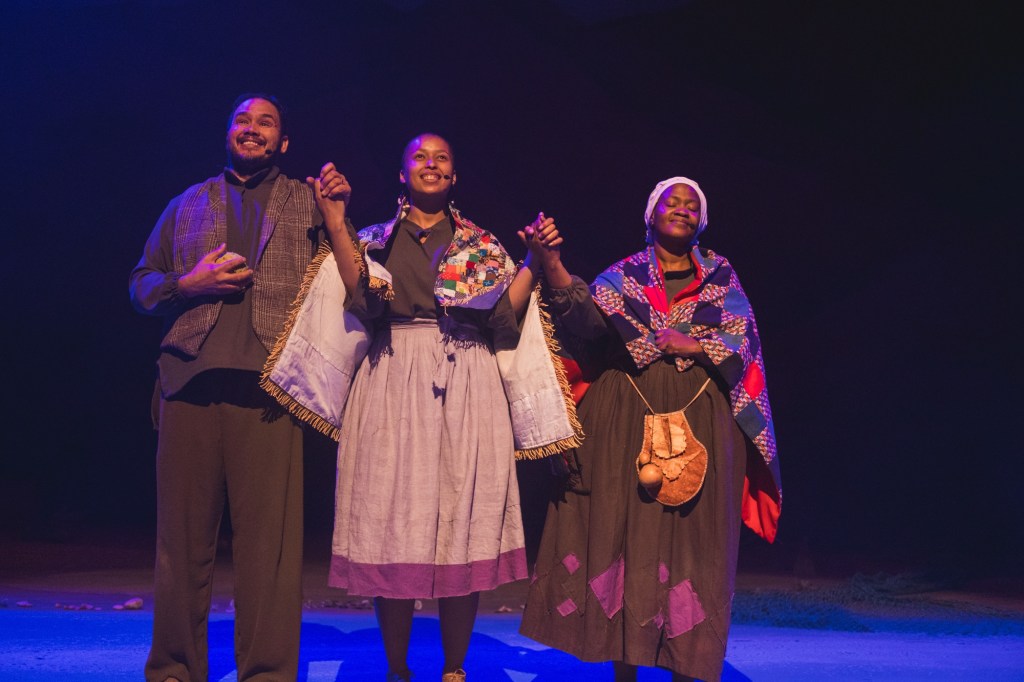
ǂAONI //AES : Reclaiming the Historic Narrative of the ǂAoni People Through Theatre

Section 6 of the Swakopmund Protocole

The owners of the rights shall be the holders of traditional knowledge, namely the local and traditional communities, and recognized individuals within such communities, who create, preserve and transmit knowledge in a traditional and intergenerational context in accordance with the provisions of section 4.

The application of this section is partially significant for how it allows customary groups to take ownership of their stories. The colonial era had oppressors taking the role of the authority on people’s stories. While we remain grateful for education, we can’t neglect the messaging that, “foreign knowledge is superior to indigenous knowledge.” This has played out as indigenous people not often being at the forefront of being historians of their own cultures. Since independence, many cultural groups have been making efforts to correct the stories that have been told about them. In this article we’re covering two works that have been conducted in Namibia, surrounding the cultural relationship between people and the ocean.

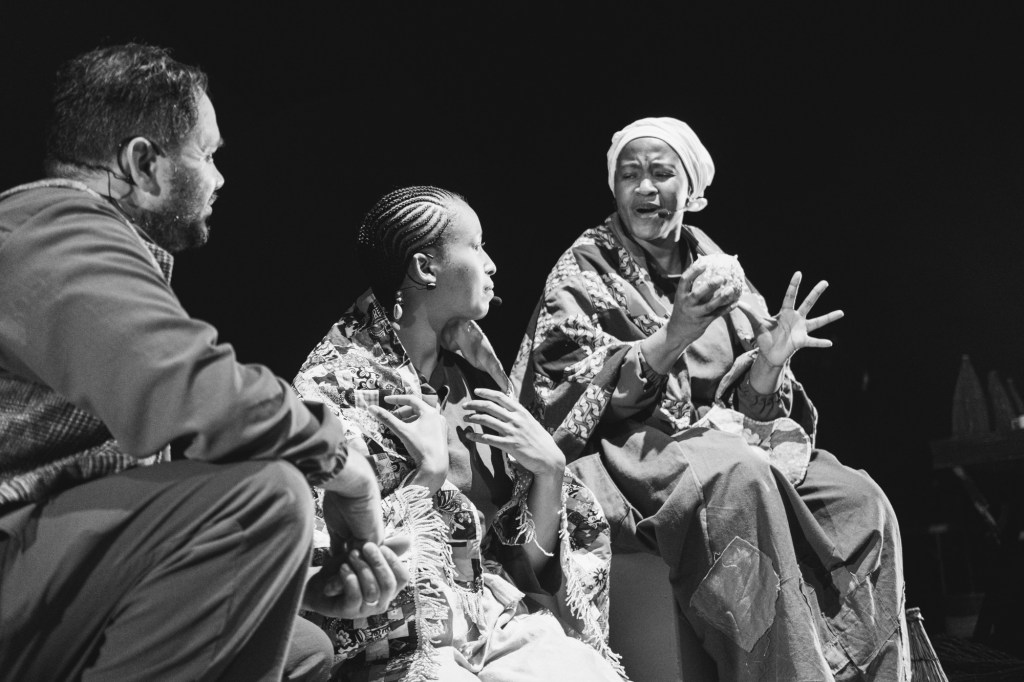
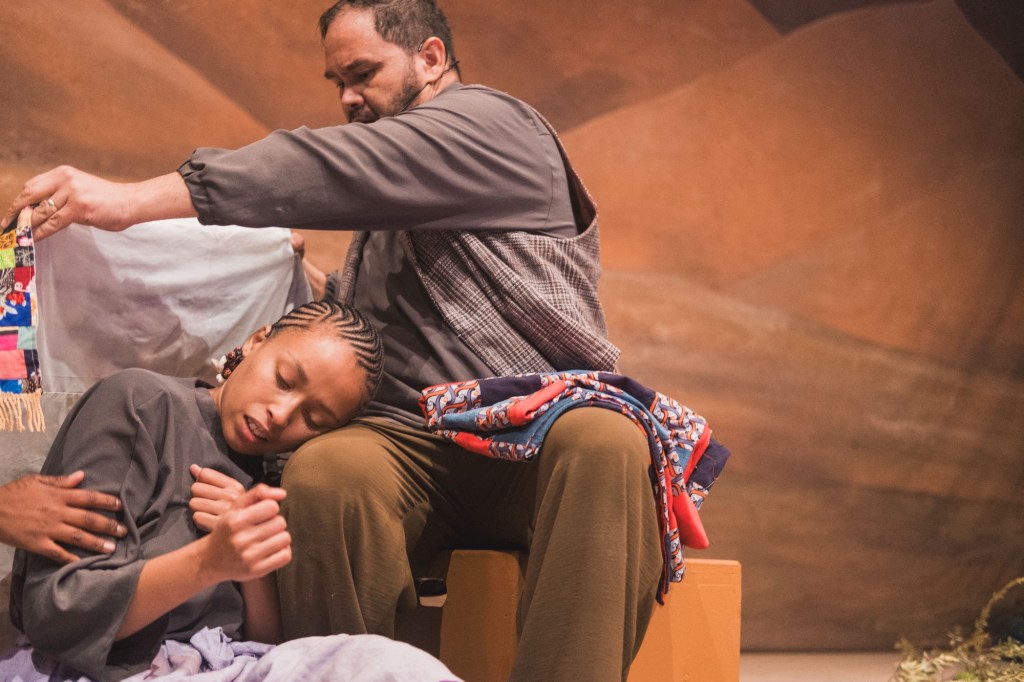
A phenomenal production retelling the story of the ǂAoni people and the ocean. The play consists of a cast of three, the father (Dawie Engelbrecht), the mother played by Hazel Hinda and their daughter Khoendikhoes, played by Chantell Uiras (Diolini). The story follows the three as they revisit the events of the colonial past and how these impacted on the current socioeconomic position of the ǂAoni people, a clan of Nama people mostly found around the !Kuiseb river in the Erongo region also referred to as the Topnaar community.

Setting things straight

One of the main issues covered in this play is that of the history of the community. Colonial era historians alleged that the community’s displacement during the colonial era was in response to countering fighting within the community and harm to the natural environment. The story starts by letting us know who these people were recognized as, ‘the water people’ or guardians of the water and marine life. Their role as caretakers was undermined by the ambitions of the colonizers. It was also clear that they were moved without consultation and that it was carried out in a forceful and chaotic manner. They did not stand a chance against the armed invaders and had no other choice but to comply. An all too familiar history. Before anyone else felt the hit of the colonial invaders, they, being at the coast, felt the first and strongest blows, and because the settling of foreign invaders on the coastal territory did not help their case much.

They spoke of the !Nara fruit (Acanthosicyos horrida), how it was not just food, but the unique way in which each family farmed it was a way to distinguish between families. After the displacement, restoring the practices that were central to their cultural identities has been a struggle not so much because they have lost the capacity to do so, but more because of the policies put in place to make sure that they never do Policies that have seen their way into post-independence Namibia. The play was not made out to be an attack on the contemporary government, but a channel to shed light to the fact that they (the Topnaar community) too are a people that were uniquely disempowered by the apartheid system, and that their story continues to be swept under other emerging and apparent issues. The story has been written in collaboration with academic research institutes like the University of Namibia (UNAM), One Ocean Hub, Global Research Fund, and UK Research and Innovation. Researchers such as Robert Vigne are also amongst those who have showcased the significantly disproportionate level of harm faced by the Topnaar Community during the colonial era. It’s safe to say that the message shared is one grounded in facts not a baseless critique.

When speaking to the audience after the play, a leader from the ǂAonin community, Joel Kooitjie, as well as, acting chief of community Stoffel Anamab, pointed out the struggles that their people continue to face today. Some impacts include the fact that they are only about two Topnaar people in local authority offices and that decision makers in their area can sometimes fail to capture their context very well and ultimately miss their needs. Furthermore, as a community that had largely survived on marine life for sustenance, bearing witness to the harm the ocean and its creatures have faced while disempowered from taking any feasible steps to help serves as a testament to the gradual weakening of their own development, this is in part because a great amount of their income came from inland circulation of oceanic goods. The historical and cultural relevance of ocean governance in this community has been significantly undermined and resulted in having to re-adapt to a life where their strongest skills remain in the backburner. It goes without saying that this need to suppress who they are in order to be convenient for invaders is a level of robbery that digs at the core of personhood.

Conclusion

The play ǂAONI //AES is an example of the Swakopmund Protocole at work. It’s the active reclaiming of a history by the people. It is also an assertion of who they are and who this land has known them to be. The impoverishment and struggle they face today is a result of being subject to a system that has unfortunately kept them down. The post-colonial government canntot take the blame for this, but, in their continuous efforts to decolonize Namibia, they can take the Topnaar Community and their pleas into consideration. 

How the Pride Movement in Namibia Is Fighting Colonial Laws

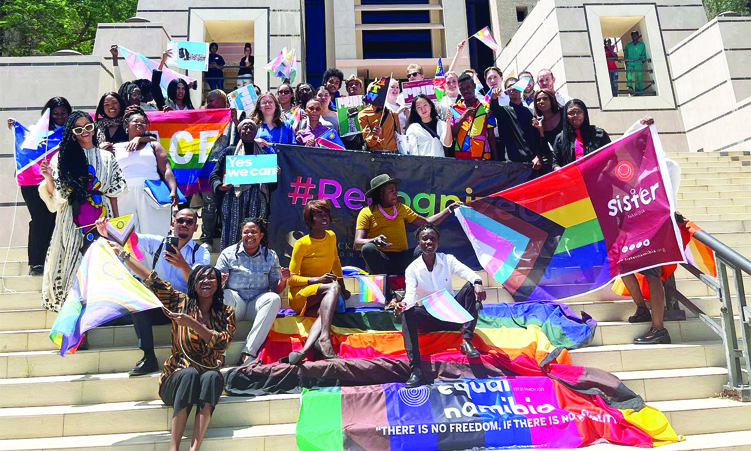
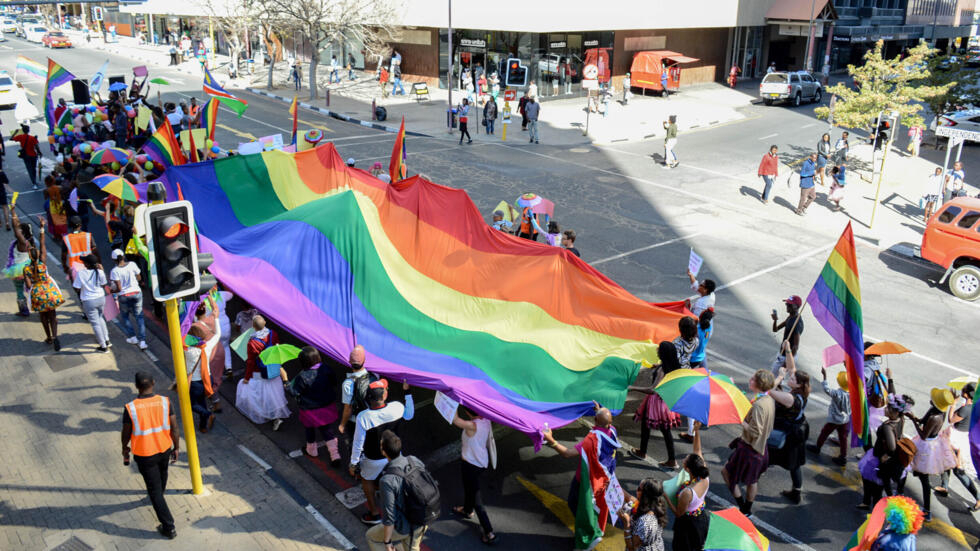
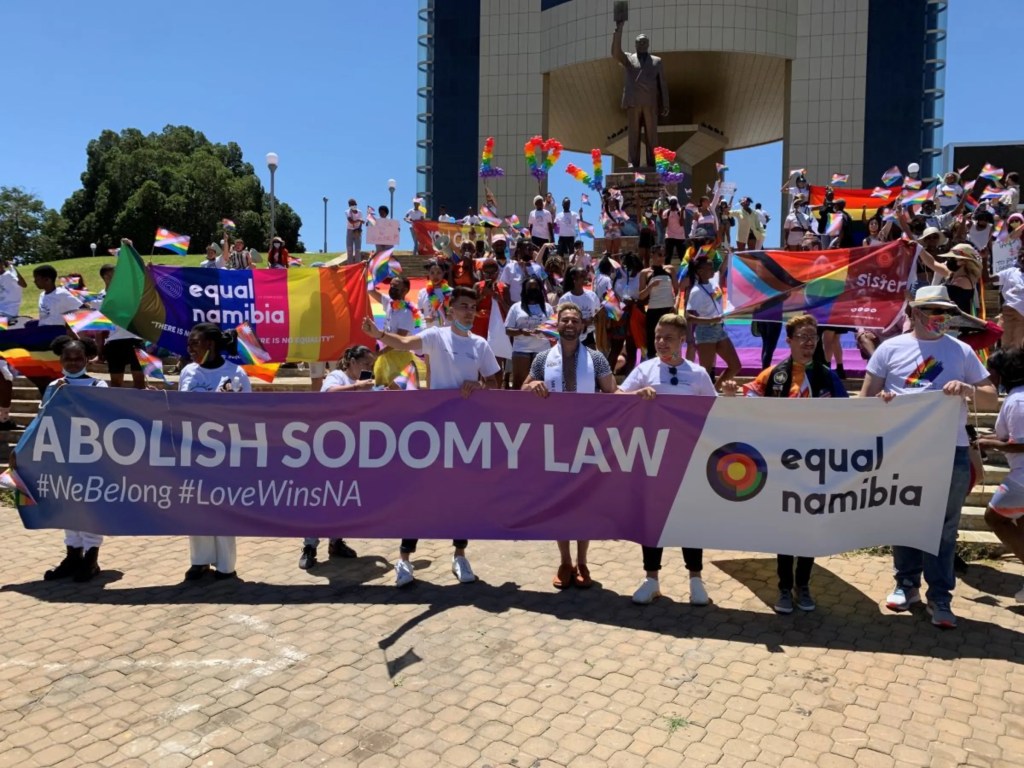
On the 21st of June 2024 the High Court of Namibia ruled in favour of declaring the sodomy law unconstitutional in the case of Dausab v the Government of Namibia. This follows years of activism alongside a steadily rising amount of homophobic attacks and an Anti-Gay Bill. We are in a pride revolution and here’s why its an important step against colonialism and genocide…

What does this have to do with colonialism?

Before colonialism, being gay was a norm. This sounds like a taboo to many who have fed into the false idea that tradition justifies homophobia. In many African countries, the word “gay” was normal enough to acquire its own title. For example; Eshenge in OshiWambo, Ngochani in ChiShona and Adofuro in Yoruba.

In the Namibian Ovambo cultural context it was believed that these men simply possessed a feminine spirits and were regular members of the community rather than ostracized minorities. German anthropologist Kurt Falk confirmed this during the 1920s having spent time with several Namibian tribes, including the Ovambo, OvaHerero, Nama and Himba. Ethnologist, Carlos Estermann supported this during the 1970’s and added that it was a culturally acknowledged ‘third gender’. The very first anti-homosexual trial was conducted under the German colonial rule. Four German men were banished for having defied paragraph 145 of the German Code which outlawed sodomy. This outlawing of sodomy was carried on by the South African colonial regime after taking over Namibia as a protectorate. If it isn’t already clear, the anti-homosexual laws were not born of tradition but of colonialism.

Over time, the colonial effect of self-rejection (a phenomenon whereby subjects to colonialism consciously reject colonialism but have learned to look down on their ethnic origins, cultural groups, cultures and customs) included a rejection of the LGBTQ+ community. Colonialism left in its wake, many with the idea that “all are equal but some more equal than others.” In our context, this idea from George Orwell’s animal farm wasn’t limited to just financial pursuits, but to the pursuit of love and happiness as well. A 2013 baseline study revealed that about 73% of nmaibians were under the impression that members of the LGBTQ+ community were accorded equal rights. This has not been true since the pre-colonial era. It has since become more evident that many are more aware of their own rights than those of others. So when words like moffie  are blurted out in the same tone as the word nigger or kaffer , it is easy to play it off as common rhetoric despite the fact that such terms are intended to humiliate and undermine an entire group of people for natural differences that they have no control over. Worse still, many have used these rhetorics and the laws supporting them to justify their violence and hatred, and further to pervert religion to suit these hateful narratives in the name if dispensing justice for God’s wrath. But that’s another conversation. In short, the same way colonial laws emboldened racist attacks, is the same way anti-homosexual laws embolden homophobic attacks. The same way racism was rationalized to seem like something morally acceptable, is the same way homophobia is rationalized to seem like the more morally acceptable stance. It is not.

The Dausab v Government of Namibia Judgement

Fortunately many LGBTQ+ people and allies have taken a stand against these senselessly exclusive laws. Everyone should have the opportunity to freely pursue romantic relationships. Human rights are a core aspect of the Namibian Constitution and are found in Chapter three. These have been developed with various religious and ethical concepts in mind, with the goal of ensuring that the law treats us all fairly. That we treat each other fairly.

The court in this case had to deliberate on three issues that relate to this;

  1. Whether the sodomy law violates the right to equality (Article 10(1))
  2. Whether the criminalization of same-sex relationships between men serves a justifiable purpose
  3. The balance between the interests of society and the interests of gay men

A few interesting points came up during the discussion that led to the decision that the sodomy law is unconstitutional. These are that;

  1. If the same act takes place between men and women, it is not criminalized, which means that this law targets and unfairly discriminates against men on the basis of gender.
  2. This law does not serve a legitimate purpose. The moralistic justification that sex between men is unnatural is subjectively held by people whose rights are not infringed by the existence of these consensual relationships. Upholding these peoples morals over those directly affected by this law goes against the principle of democracy.
  3. Outlawing these men’s private relationships is irrational and serves no justifiable purpose.
  4. Although the discrimination differentiating heterosexual men from homosexual men is not covered by the grounds listed in article 10, it still amounts to unfair discrimination.

This landmark judgement has made room for more Africans to enjoy their sovereignty within the continent. If we keep moving in this direction, LGBTQ+ may not be discouraged from living and thriving in their own continent, and in turn, will not move away from helping their continent thrive. LGBTQ+ rights are human rights. Let’s change the statutory provisions to make them more inclusive of LGBTQ+ people.

An Africa For Africans: Focus on Adriaan Van Klinken on Inclusivity

Lately we’ve been exploring the freedom to practice any religion which is found at Article 21 (1)(c) of the Constitution of Namibia. In previous posts we’ve mentioned that this freedom is based on international agreements. These fundamental freedoms don’t exist in a vacuum, here is a small reference list on some international agreements that form the basis of this freedom in Namibia.

Universal Declaration of Human Rights

  • Article 18 (Freedom of religion)
  • Article 20 (Freedom of Association)
  • Article 2 ( Anti-discrimination)

International Covenant on Civil and Political Rights

  • Article 18 (Freedom of thought, conscience and religion)
  • Article 22 (The right to freedom of association)
  • Article 2 (Non-discrimination on the basis of religion or belief)
  • Article 26 (All persons are equal before the law)
  • Article 27 (Protection for religious minorities)

1981 Declaration on the Elimination of All Forms of Intolerance and of Discrimination based on Religion or Belief

Everyone shall have the right to freedom of thought, conscience and religion. The right shall include freedom to have or to adopt a religion or belief of hid choice and freedom either individually or in community with others and in public or private, to manifest his religion or belief in worship, observance, practice and teaching.Everyone shall have the right to freedom of thought, conscience and religion. The right shall include freedom to have or to adopt a religion or belief of hid choice and freedom either individually or in community with others and in public or private, to manifest his religion or belief in worship, observance, practice and teaching.

Article 18

Now that we’ve covered some of the rules and grounds on this, lets take a look at some opposing perspectives on how this right is enjoyed. Recently the comment below was mentioned in referenced in relation to the Catholic Church creating a more inclusive policy which allows for the church to bless same sex marriages, something which the Namibian branch is strongly opposed to.

A statement from this issue of The Namibian

This is one interpretation of the African ethos in relation to the Christian African LGBTQ community.

On the other hand…

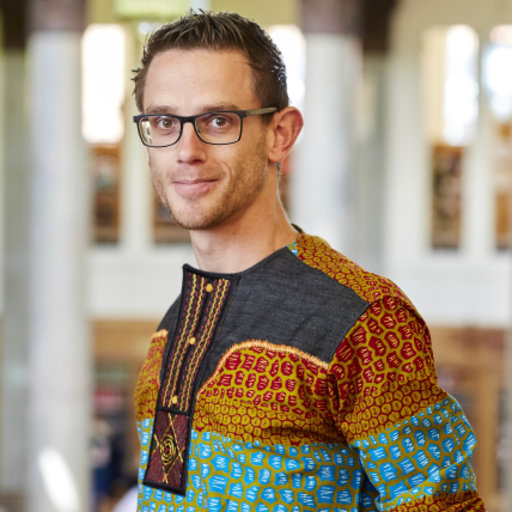
The African ethos has been seen to be broader than expressed in this statement. Works written by Adriaan Van Klinken voice an opposing opinion that you can check out. Adriaan Van Klinken is a Professor of Religion and African Studies at the University of Leeds has some interesting views we can consider.

  1. A lot of religious leaders see religion as being inclusive

He talks about the advocacy work of Bishop Desmond Tutu in this article, pointing out that while he faced some opposition from his colleagues he, and thought leaders like him, viewed homophobia, heterosexism and racism in the same light. In Namibia there are organisations that advocate for religious LGBTQ+ persons and their allies such as Tulinam.

 2. The Bible can be interpreted in a way that upholds Ubuntu

In a book he co-wrote with Ezra Chitando, Reimagining Christianity and Sexual Diversity in Africa, they explore a radical theology of inclusivity, where they unpack two myths. The first ‘myth’, commonly articulated in African nationalist discourse, both within the churches and in wider African society, is that homosexuality is a purely Western phenomenon, imposed on Africa by the ‘gay lobby’ and other international human rights advocacy groups, a product of neo-colonialism and neo-liberalism. The second stereotype originates in Western secular discourse, which often characterises Africa as intractably homophobic, fuelled by a regressive, pre-enlightenment version of Christianity.

 3. Homophobic attacks can be dehumanising to an extent of missing crucial lessons in Christianity

The human rights listed above also apply to LGBTQ+ people who are religious. In this article, he speaks about a wide array of effort against the LGBTQ mentioning how those who have been discriminated against in Uganda seek refuge in Kenya but are also subject to harrassment there. In the article he also talks about the documentation of lives of African LGBTQ+ people through art, one work he cites is a collection of stories titled Stories of Our Lives, wherein 250 stories are submitted by Kenyan people showcasing everyday human experiences.

Conclusion

A view of religion in Africa that is inclusive also promotes concepts that are central to Africa like Ubuntu. While neutrality and middle grounds are difficult in most instances, Adriaan van Klinken believes that room seems to exist for an interpretation of religion and the freedoms associated with it, which promotes togetherness rather than division and conflict.

Lessons from the TB Joshua Documentary

The Zenze podcast is up and we’ve been focusing on the fundamental freedoms mainly the freedom to religion found at Article 1 (1)(c) of the Namibian Constitution and Article 18 of the Universal Declaration of Human Rights.

Every right and freedom is limited and its for good cause. Article 22 of the Constitution of Namibia points out that every limitation has to be general and not aimed at a specific individual and that each limitation must be clear, if it is based on another existing law, that law must be pointed out, there should be no blurred lines. The writers of the Constitution, having just come out of apartheid knew that every right came with power, it is just easier for some people to exercise some rights and freedoms than others, because of social factors like race, class, gender, and, when it comes to religion, divine titles and leadership positions.

The news about TB Joshua passing away in 2021 had many evangelicals heartbroken. The man had established himself as an icon. Recently, in a BBC documentary a few women, some of his closest disciples spoke out about who this man was in reality. This documentary showed that TB Joshua was the leader of possibly one of the biggest cults in the 21st century. There are a few lessons we can get from watching the documentary to help us identify when the fundamental freedom to religion is being violated with some reference to the Constitution;

  • There is abuse going on and reporting it will cause harm

A few brave women spoke out about the sexual and physical abuse carried out by this man, and it goes without saying that this could not have been an easy task for them.  They also spoke about how their faith was used to normalize this abuse. One woman, Jessica a Namibian woman, told a story of when she questioned a possible victim about this behavior and she was reported and beaten for it. Standing up for themselves was an act with horrid consequences. Safe to say, if you are part of a religious group where there is physical, sexual, financial, emotional or spiritual abuse. RUN. One helpful way, apart from a leader crossing boundaries, is to look at the consequences that will come if people report issues that they feel are violations.

  • A system that seeks to breakdown while calling it ‘empowerment’ : Dignity and Slavery

The documentaries had many counts of people who were made to feel special for a time just to be broken down. The narrative, to the disciples was that of a humbling process, but the leaders knew what they were doing. That if they kept building up and breaking down people, eventually people would start associating the leaders with the role of ‘God’ the source of power. It was intentional but was framed as a natural part of the process. There is a difference between respecting leadership in an institution and having the right to dignity attacked to preserve the power of leadership in an institution. Aricle 8(2)(b) makes the right to dignity inclusive of torture, cruel, inhumane or degrading treatment or punishment.

Slavery and forced labour are prohibited by Article 9, and from the documentary, we learn that excessive servitude, to TB Joshua, to the point where people felt like zombies was framed as honouring God. In the documentary they spoke of how this came about by overworking the synagogue disciples into a state of perpetual exhaustion, such that they couldn’t really think for themselves. Meanwhile the narrative that having the approval of the leader (TB Joshua) meant having this extra level of honour in the eyes of God, then making them crave his attention, which he would give and take away on a whim. Having them chase a carrot on a stick for his own ego boost. One woman, spoke of how she was beaten on multiple times, he forced himself on her, and yet held her in a high position, amongst others giving her ‘need to know’ tasks like the recruitment of westerners. He took advantage of their desire to get closer to God.

  • Targeting the Vulnerable : Liberty and Privacy

Speaking on a calculated “humbling” process. The westerners, particularly white westerners were unwittingly walking into a trap. He took advantage of the fact that they were foreigners, made them afraid of the rest of Nigeria ensuring that safety could only come if they saw things the way he did. One of the closer disciples spoke of a very well thought out practice of recruiting members, playing on their desire to be part of a group that shared an interest as them, then dehumanizing them for their loyalty. For several years on end. Article 7 of the Constitution protects the right to liberty, no one should unlawfully be kept from moving freely.

His focus on westerners and foreigners was calculated. It was the young, bright eyed, hopeful and innocent ones that he would target with the goal of molding them into his little puppets. Targeting young people is not the main problem the problem is the intention behind it, investigating them to learn exactly how to manipulate them. They were robbed of their individualism for what they were made to believe was a greater cause. They had no privacy, cameras were all over, including in showers and being fully dressed in the dorms was not welcomed. The right to privacy is protected by Article 13, the only exception being that there is reasonable suspicion that there is criminal activity, which may be highly unlikely with young people joining a church youth group. It’s a little more difficult to see this one off the bat but if there’s an option to be a disciple in anything with the option to leave and to be yourself getting thinner as you get more into it, there’s a problem, if you have to be investigated, have your privacy unlawfully deprived to keep your place there, there’s a problem.

  • Loyalty to the movement

Above all else. Loyalty to the version of Christianity pedaled by TB Joshua and inadvertently loyalty to him, is what was meant to stand before everything. The fundamental freedom is violated when the ability to think for yourself is robbed from you. There is something wrong with an organization when you can’t criticize it.

  • What happens when you leave?

One way to test this is this is to look at what happens to those who leave? In the documentary, they mentioned that who ever said they wanted to leave was humiliated, disgraced, to paint them as an unholy entity against the church. If leaving comes with tribulation, it probably means they’re after your free -will and the point of having the freedom of religion is to actively practice free will in a way that is fulfilling and does not cause harm to others.

Conclusion

All in all the TB Joshua documentary is an eye opener and a reminder  that even those we look up to can violate our rights and freedoms. Click this link to watch the first episode of the documentary.