ǂAONI //AES : Reclaiming the Historic Narrative of the ǂAoni People Through Theatre

Section 6 of the Swakopmund Protocole

The owners of the rights shall be the holders of traditional knowledge, namely the local and traditional communities, and recognized individuals within such communities, who create, preserve and transmit knowledge in a traditional and intergenerational context in accordance with the provisions of section 4.

The application of this section is partially significant for how it allows customary groups to take ownership of their stories. The colonial era had oppressors taking the role of the authority on people’s stories. While we remain grateful for education, we can’t neglect the messaging that, “foreign knowledge is superior to indigenous knowledge.” This has played out as indigenous people not often being at the forefront of being historians of their own cultures. Since independence, many cultural groups have been making efforts to correct the stories that have been told about them. In this article we’re covering two works that have been conducted in Namibia, surrounding the cultural relationship between people and the ocean.

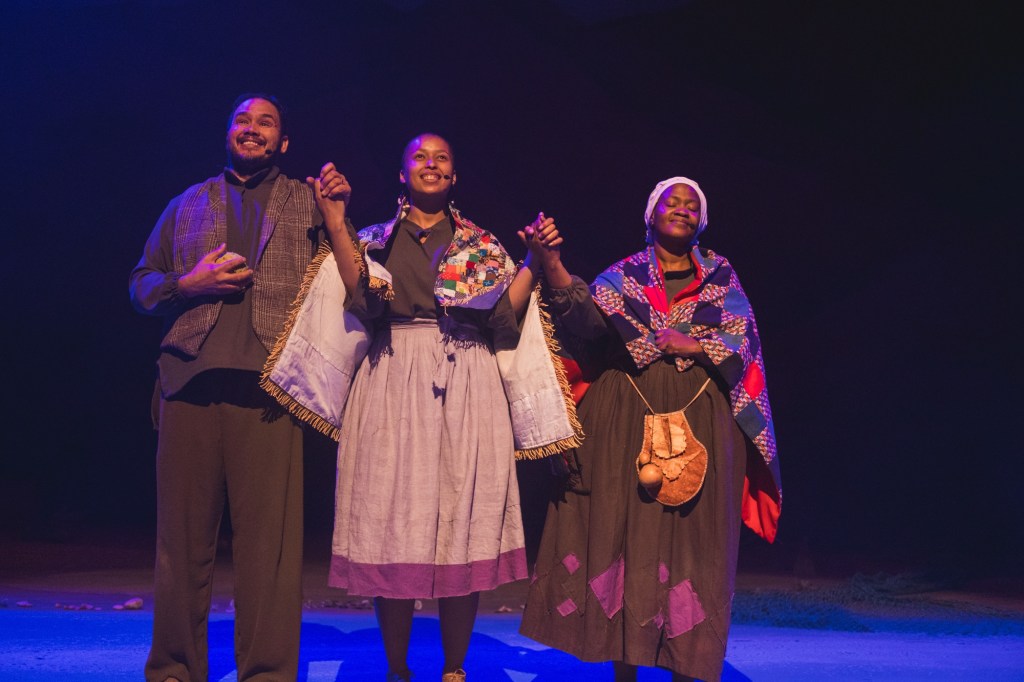
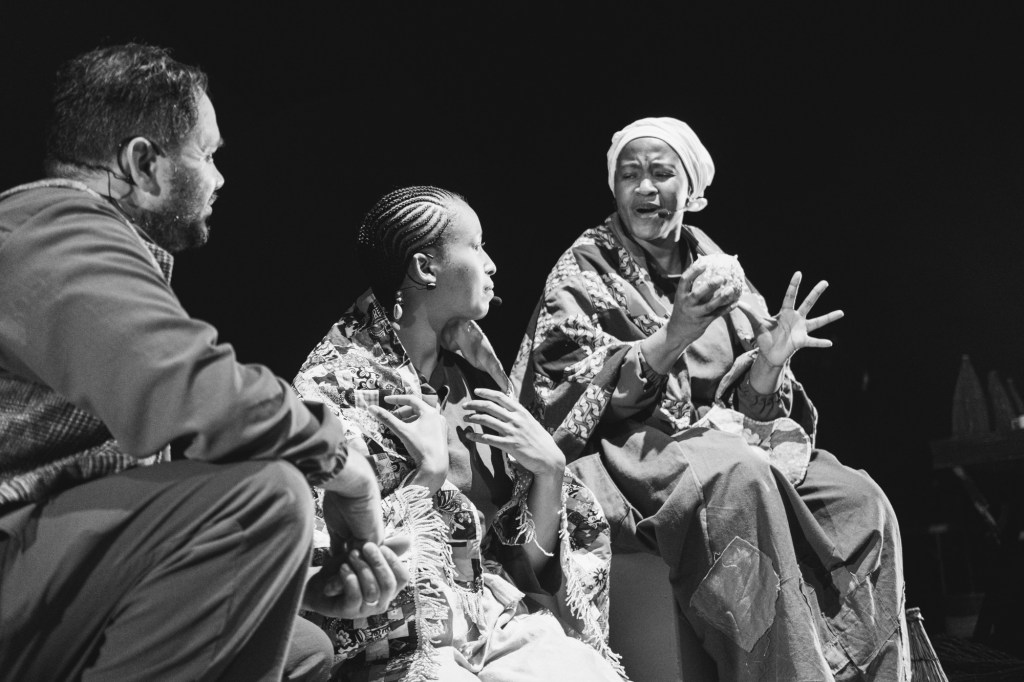
A phenomenal production retelling the story of the ǂAoni people and the ocean. The play consists of a cast of three, the father (Dawie Engelbrecht), the mother played by Hazel Hinda and their daughter Khoendikhoes, played by Chantell Uiras (Diolini). The story follows the three as they revisit the events of the colonial past and how these impacted on the current socioeconomic position of the ǂAoni people, a clan of Nama people mostly found around the !Kuiseb river in the Erongo region also referred to as the Topnaar community.
Setting things straight

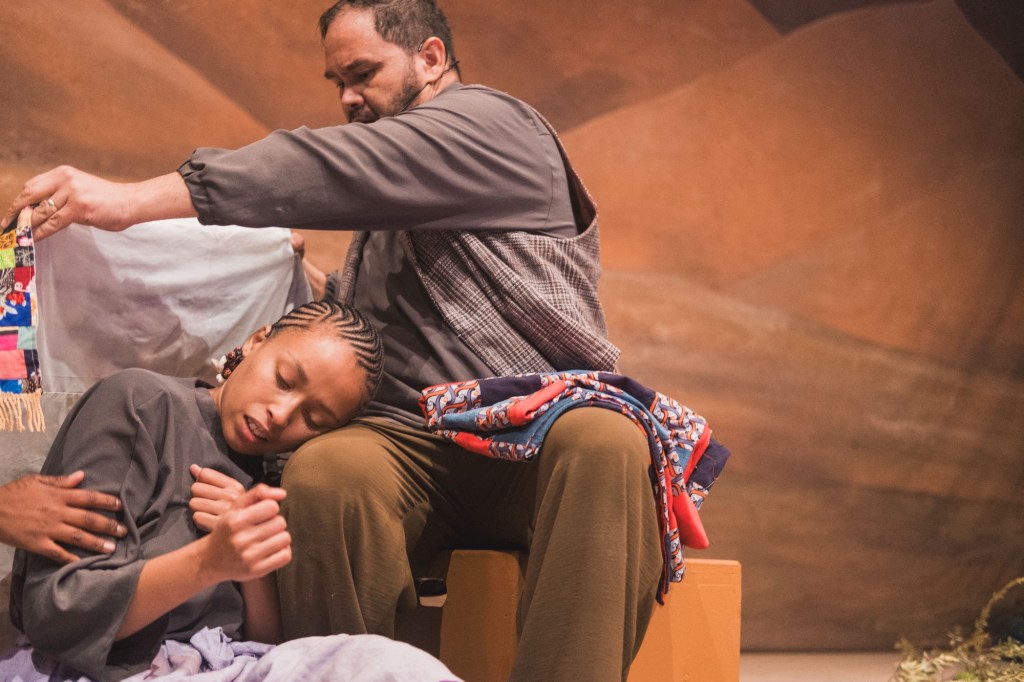
One of the main issues covered in this play is that of the history of the community. Colonial era historians alleged that the community’s displacement during the colonial era was in response to countering fighting within the community and harm to the natural environment. The story starts by letting us know who these people were recognized as, ‘the water people’ or guardians of the water and marine life. Their role as caretakers was undermined by the ambitions of the colonizers. It was also clear that they were moved without consultation and that it was carried out in a forceful and chaotic manner. They did not stand a chance against the armed invaders and had no other choice but to comply. An all too familiar history. Before anyone else felt the hit of the colonial invaders, they, being at the coast, felt the first and strongest blows, and because the settling of foreign invaders on the coastal territory did not help their case much.

They spoke of the !Nara fruit (Acanthosicyos horrida), how it was not just food, but the unique way in which each family farmed it was a way to distinguish between families. After the displacement, restoring the practices that were central to their cultural identities has been a struggle not so much because they have lost the capacity to do so, but more because of the policies put in place to make sure that they never do Policies that have seen their way into post-independence Namibia. The play was not made out to be an attack on the contemporary government, but a channel to shed light to the fact that they (the Topnaar community) too are a people that were uniquely disempowered by the apartheid system, and that their story continues to be swept under other emerging and apparent issues. The story has been written in collaboration with academic research institutes like the University of Namibia (UNAM), One Ocean Hub, Global Research Fund, and UK Research and Innovation. Researchers such as Robert Vigne are also amongst those who have showcased the significantly disproportionate level of harm faced by the Topnaar Community during the colonial era. It’s safe to say that the message shared is one grounded in facts not a baseless critique.

When speaking to the audience after the play, a leader from the ǂAonin community, Joel Kooitjie, as well as, acting chief of community Stoffel Anamab, pointed out the struggles that their people continue to face today. Some impacts include the fact that they are only about two Topnaar people in local authority offices and that decision makers in their area can sometimes fail to capture their context very well and ultimately miss their needs. Furthermore, as a community that had largely survived on marine life for sustenance, bearing witness to the harm the ocean and its creatures have faced while disempowered from taking any feasible steps to help serves as a testament to the gradual weakening of their own development, this is in part because a great amount of their income came from inland circulation of oceanic goods. The historical and cultural relevance of ocean governance in this community has been significantly undermined and resulted in having to re-adapt to a life where their strongest skills remain in the backburner. It goes without saying that this need to suppress who they are in order to be convenient for invaders is a level of robbery that digs at the core of personhood.
Conclusion

The play ǂAONI //AES is an example of the Swakopmund Protocole at work. It’s the active reclaiming of a history by the people. It is also an assertion of who they are and who this land has known them to be. The impoverishment and struggle they face today is a result of being subject to a system that has unfortunately kept them down. The post-colonial government canntot take the blame for this, but, in their continuous efforts to decolonize Namibia, they can take the Topnaar Community and their pleas into consideration. 
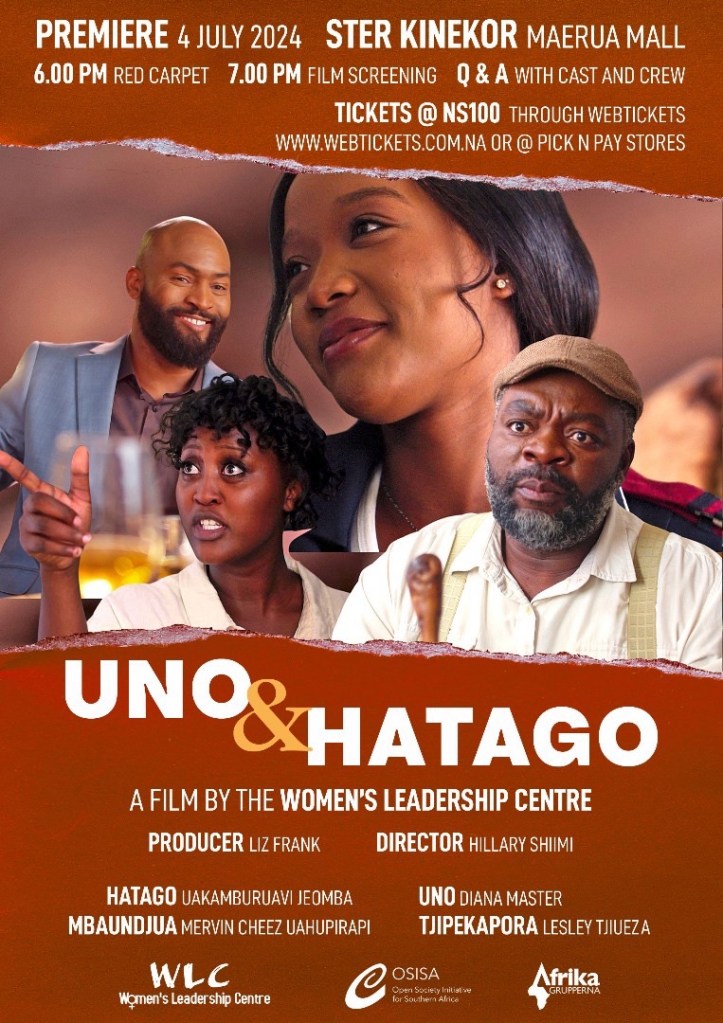
UNO and HATAGO : Review

***SPOILERS***

RATING: PG (Depictions of Sexual Assault)

Uno and Hatago is an aptly timed production. It was largely marketed as a lesbian film, and it is, but it goes beyond that by addressing harmful cultural practices and promoting unity.

Uno and Hatago follows the story of a nurse, Uno, played by Diana Master, who’s world suddenly crashes when her family finds out about her sexual orientation. Up until then, Uno had been living in Windhoek with her partner Hatago, a feminist and LGBTQ+ rights activist played by Uakamburuavi Jeomba.

Patriarchy, Family Secrets and Tradition

The film is centered on how Uno’s family of OvaHerero traditionalists react to finding out that she is a lesbian woman. The traditionalism is explored from two ends. First is the ‘traditionalist’ idea that lesbianism is not acceptable or that is something foreign, and second is a traditionalism which acknowledges that lesbian women (and other members of the LGBTQ+ community) have always existed in Namibia and that true tradition is that this is not unAfrican.  

The patriarchal nature of the first perspective is perfectly portrayed by Uno’s uncle, played by Mervin Cheez Uahupirapi, and her father, played by Lesley Tjiueza. These two played these characters so well, I left the theatre with so much animosity for fictional characters. The way they are written doesn’t stretch far from reality at all, the audience is likely to think of characters in their own lives who are like these two.

We meet Uno’s uncle during an intimate gathering at a restaurant, where they (Uno, Hatago and a few of their friends), have gone to celebrate Uno’s graduation. During that same night, Uno’s uncle is having dinner with his girlfriend, an extra-marital partner. His girlfriend insists on taking a picture of him, and as he protests this, he notices that she also captured his niece, Uno, kissing a woman right behind him. Suddenly his focus turns away from the possibility of being caught cheating to excitement having caught his niece in what he considers to be a cultural ‘sin’. He asks his girlfriend to share this picture with him and takes it to her father under the guise of taking immediate action to save the family’s reputation. His solution to this is to marry her off to Tove, his nephew with seemingly low marital prospects. The two agree on a dowry that Uno’s father can pay and thereafter, call Uno to the homestead to tell her that they found out about her ‘city life antics’ and about the marriage they have organized for her. In line with unspoken cultural norms, this uncle sexually assaults Uno to ‘prepare her’ for marriage.

Her father shows pride in his recently graduated daughter for her qualifications before completely discarding that in favour of viewing her as a shameful person. From the moment he finds out that his daughter is a lesbian, he focuses on hiding this “shame.” Essentially, it seems like, she is not truly successful if she does not let a man dominate her. He expresses this more by defending her uncle and disowning her after she reports the assault and carries on her relationship with Hatago. Embracing her lesbianism is a rebellion against the idea that she is not a real woman if she is not in a relationship with a man, just as being gay may be falsely viewed as not ‘real manhood’ if one is not dominant over a woman.

This form of ‘traditionalism’ which focuses on filling heteronormative and patriarchal templates completely undermines that dignity of women and this film explores this in a realistic way. The fact that Uno’s uncle was cheating is a non-issue while Uno’s committed and healthy relationship is. The fact that he has violated his niece is less of an issue than the fact that she is a lesbian, even to the police officer who recieves the matter.

It is Uno’s grandmother who sheds light on another of the other view of ‘traditionalism.’ The idea that lesbianism has always existed and that assault on women is an unacceptable norm. She helps Uno escape and return to the city after finding out that her uncle has attacked her, and the film ends with her sharing a story of a same-sex partner that she had before being married off to her husband. She shares about the grief she experienced when that partner passed away and the pain she felt not being able to express the extent of that grief given the nature of their relationship. She emphasizes togetherness through love and acceptance within a family, rather than allowing harm to go on, in the name of protecting family honour. She frames honour as being something that can come from showing up for each other rather than maintaining socially imposed images. In this case, the images of the ‘macho men’ and ‘high achieving, good girl daughter.’

Uno’s mother starts off with a similar stance to that of her husband. Rejecting her daughter because of her sexual orientation. However she gradually leans towards accepting her daughter after seeing that her family is becoming torn apart because of this, and worse still, that Uno’s sexual orientation has not stopped her from becoming a productive, successful and helpful member of society, or from having a child. Throughout the film, she maintains a regal and stoic disposition, not showing affection and avoiding vulnerability until it becomes clear that her husband’s stubbornness may force Uno to completely cut them off. This may have also been amplified when she meets her daughters mother-in-law, Buruxa (I hope I spelt that right), who shows unconditional love, encouragement and acceptance to Uno. Buruxa is the mother Uno needed and this may not have landed well with Uno’s biological mother. Soon enough, she takes on the grandmother’s stance, to lean into love and acceptance, while maintaining her rigid mannerisms. The character doesn’t change drastically, but in subtle ways like inviting Uno home and making her tea, and in her most expressive moment when she stands up for Uno to her husband, pointing out that his pursuit of family honour is fueled by hatred and that this is not the kind of family that can stay together for very long. She seems to represent anyone who has experienced this changing of perspectives, from a tradition rejection to one of radical acceptance.

Criticisms

Unfortunately we do not get to see Uno’s mother reacting to the assault and we do not get to see her express pride in her daughter’s achievements. We just see her expressing a whole lot of disappointment and coldness. Which can bring up the question of whether her distant nature is just who she is or if it came as a result of finding out that her daughter is a lesbian. Sure, Uno becomes tense when she notices that her mother is upset with her but the inexpressiveness seems to continue even after they have made amends, and seems to be there when Uno’s grandmother shares her story. It is not clear if we should expect affection from this woman if this is the personality she has always had or if she has taken on this persona as a reaction to Uno being a lesbian.

With the exception of Uno and Hatago’s friends whose cultural backgrounds and sexual orientations remain a mystery, the OtjiHerero heterosexual women we meet are all homophobic. On the other end of the scale, Buruxa, the only other woman we meet who is accepting of Uno and Hatago’s relationship, is of Damara heritage. Her sexual orientation doesn’t come up, but there would have been some reality balance in seeing a non-Herero speaking homophobe or a non-LGBTQ+, OtjiHerero speaking ally. This may come off as pitting the two customary groups against each other in how they view LGBTQ+ issues given that Namibia has the added context of tribalism and these two groups are mentioned on opposing ends of this issue.  (But then again, the existence of this dynamic in this one story doesn’t mean there’s no alternative dynamic elsewhere, so don’t miss the plot by centralizing these criticisms)

Conclusion

More LGBTQ+ stories are needed in media, especially one’s like this one that humanize same-sex partners. Homophobia is just dispensed without consideration for the humanity of the people being attacked and the fact that they too are members of society (Just scroll through the comments section of any LGBTQ+ related post on the Namibian pages, it’s a mess). Beyond this, the authenticity of LGBTQ+ stories told by a predominantly LGBTQ+ production team didn’t go past any of the audience members, and likely contributed to how impactful the overall story is. The story touches on other themes that are not LGBTQ+ centric such as family, harmful cultural practices, civic action, women’s rights, gender norms and romance (I didn’t get into it but Hatago is such a supportive and loving partner, they’re a wholesome couple which makes it so much easier to root for them. The way their relationship is depicted is enjoyable and if not for the political aspect of this movie, you may want to watch it for the romance story.)

Definitely a must watch.

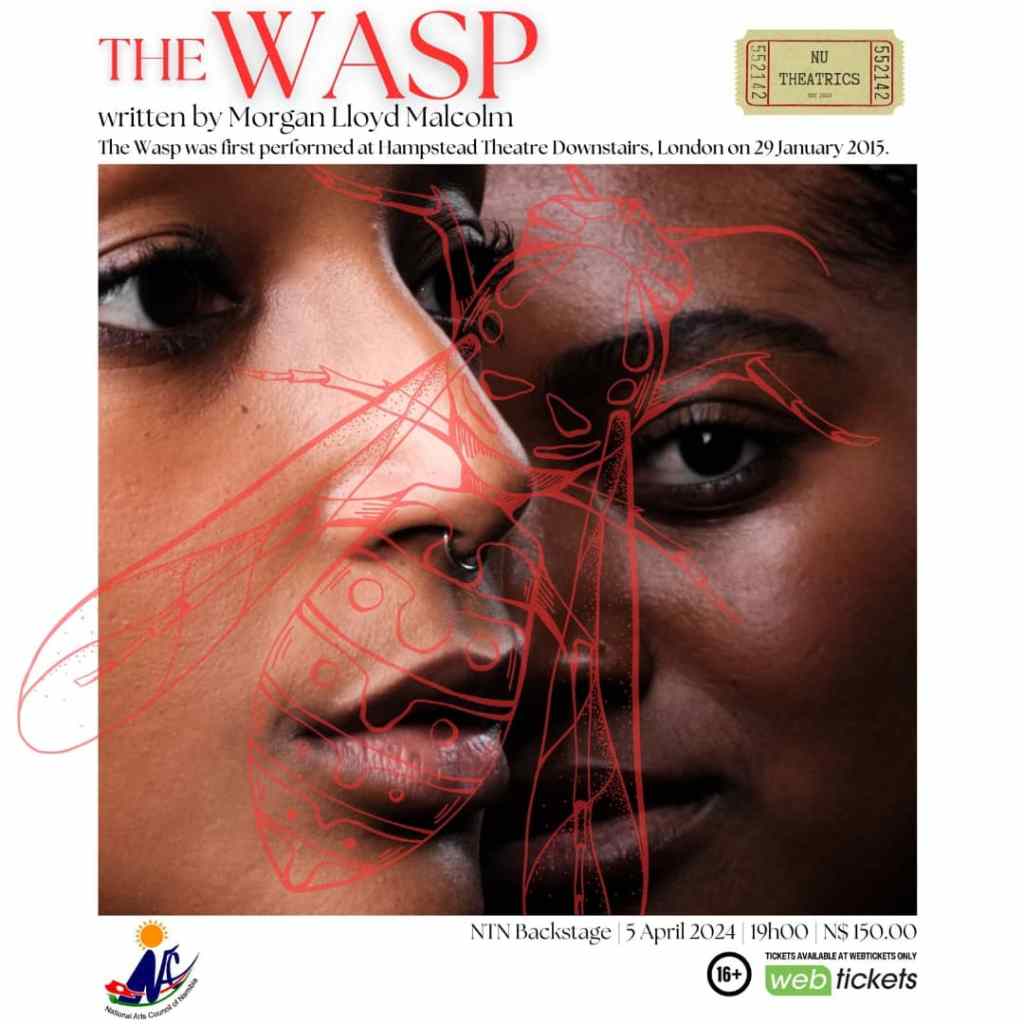
The Wasp (A Review)

Age Rating: 16+

*There’s a couple of spoilers in here*

NTN (The National Theatre of Namibia) came back with a bang and I am more than glad that I didn’t skip this play, The Wasp was, in one word, jaw-dropping. When we act like there’s no elephant in the room, it will eventually stomp us. That’s one of the major themes in NTN’s latest production “The Wasp.” This play is not for the feint-hearted, you might just question your own ethics while watching it, at least that’s what I found myself doing during the climax of this, thriller.

The Wasp is the story of two women, who reconnect after years to rekindle what they keep referring to as a friendship, but, friendship is the furthest term I’d use to describe this relationship. They are the only two characters we meet and they’re all we need, Morgan Lloyd Malcom’s writing this had a fly on the wall effect to it, giving us the sense that we know the characters very well through us eavesdropping on some very hush hush conversations, meanwhile still being able to deliver twists that keep the audience hooked. So a 10/10 from me on those stage directions and the dialogue. Here are my biggest takeaways from this play:

On Friendships and “Friendships”

Ever wondered what the worst case scenario could be in a friendship where unaddressed competition and bitterness are at the core? Well The Wasp does a great job at showing us just what might happen if you and that frienemy keep walking on blurred lines. This play shows us that things can change and eventually something has to give in blurred line based relationships.

The play starts with a meeting at a café between the two, Heather and Carla. Heather has become wealthy since their school days while Carla lives more paycheck to paycheck, the remnants of what was a love-hate relationship between the two are clear in how they speak to eachother.  In in their first meeting in years, the awkwardness of an unlikely meeting between two people who had fallen out was very well portrayed and spilt over into the audience. It was clear that there were a lot of unspoken words between them throughout that first meeting. Carla has little patience for any outside opinions about her, she has shown up fully prepared to fight Heather, should the need arise, it doesn’t, but if it had, best believe Carla was ready to go from the very beginning. Meanwhile, Heather is the embodiment of the seemingly polite aristocrat whose back handed statements are delivered like they are either facts or gifts.

Heather has a proposition, for Carla to kill her husband. Why Carla? A strong belief in her capacity to be callous. The oddness of the proposition struck us all, a very much needed “o O” from one of the audience members, vocalized what we were all thinking. If someone wants their husband, or anyone killed, why would they reach out to an old high school frienemy? Well the twist ending was the perfect pay-off for this confusion.

All too often fears of being alone, the need to assimilate or be one of the ‘cool kids’ can lead to whitewashing rather than confronting violations. This play shows how, if left unaddressed, these dynamics can spill over well into adulthood. How talks of  ‘healing the wounded inner child’ don’t just stop at some internal reflection, but also involve looking at addressing conflict and hurts from other people, and how if that doesn’t happen, the cycles continue until either you or the cycle are broken.

The Authority of the Sacred Victim

*Big spoilers here*

Molly Brigid McGrath published a paper called “The Authority of the Sacred Victim” in 2020 which talks about the harms of maintaining a template of how a victim should be observed. That the possibility of harm by a social victim can result in the creation of new villains. It is wrong when an individual uses their trauma to justify causing trauma, it explains it, but it definitely doesn’t make it right or acceptable. This play does an excellent job at exploring that. It takes this a step further by giving us two protagonists who have understandable backstories for why they are the way they are, and why they do the things they do. Heather is the one looking to murder her husband for infidelity, resorting to catfishing Carla and spying on her before presenting this proposition, and even convincingly threatening to torture and kill Carla after the proposition is made. On the other hand, Carla violently bullied and sexually assaulted Heather in high school, because she was the more teacher’s pet type and her family was more loving than Carla’s abusive family. I’ll admit that it’s easier for me to lean towards Heather in this situation, bullies, especially the ones who do it intentionally not out of ignorance, are disgusting. Yup, I said it and I’d say it again. But the play is written in a way that asks us to both empathize with and dislike these two. Both are ‘sacred victims’ and the finale has one offering the other a way out, to choose to walk away and be forgiving, and start a new chapter or to embrace animosity. The choice she made was definitely worth the wait (not spoiling everything ).

Perfect is in the eye of the beholder

We are introduced to Carla the pregnant Mother of five sitting outside a café and smoking and Heather enters the scene making her out-of-placeness apparent. This place is a casual enough place for Carla yet too casual for the likes of Heather. On first listening their ‘have and have not’ relationship makes Heather’s situation more preferable until she speaks about how much she’s been struggling to have children. Carla dangles her upper hand in this instance and even offers to become a surrogate for some money, bragging about how easily she can get pregnant. After some awkwardness over this, the two gossip a little about a former classmate who is in a relationship with a serial cheater, briefly sharing a high horse over this before even that high horse is broken by how differently they think about it. Carla thinks its normal for men to cheat, the role of the woman is to tighten the leash on him, while Heather believes men should not be excused for such behavior. (Very much noted the heteronormativity of these views and their normalcy.)

Each woman is desperate to escape aspects of their lives. Heather longing for a healthy family of her own while Carla hopes for financial freedom. In our discovery of this, each one is free and confident with whatever they have over the other, and to point out the inferiority of the other. It is Heather who announces Carla’s difficult financial situation, repeating how desperate she must be, and that she’d “obviously” do anything for money. And while Heather speaks of her marital and fertility struggles, it is Carla who emphasizes how easy this part of life should be and adds salt to the wound by making light of Heather’s struggle, the discovery of the abuse in high school make Carla’s jokes more jarring and almost make her seem inhumanely cruel.

Conclusion

All in all, this play is fully worth the watch. If the opportunity ever presents itself, GO WATCH IT!!! These are only a few of the themes I picked up but there’s a lot more I left out. The cast, stage design, directions, all of it were a superb “welcome back to the theatre.”  I hope to see more from this writer and can’t wait to see what else NTN has in store for us.