I was born a girl Exhibition: Celebrating Human Rights, Women and Engaging Men in GBV Advocacy

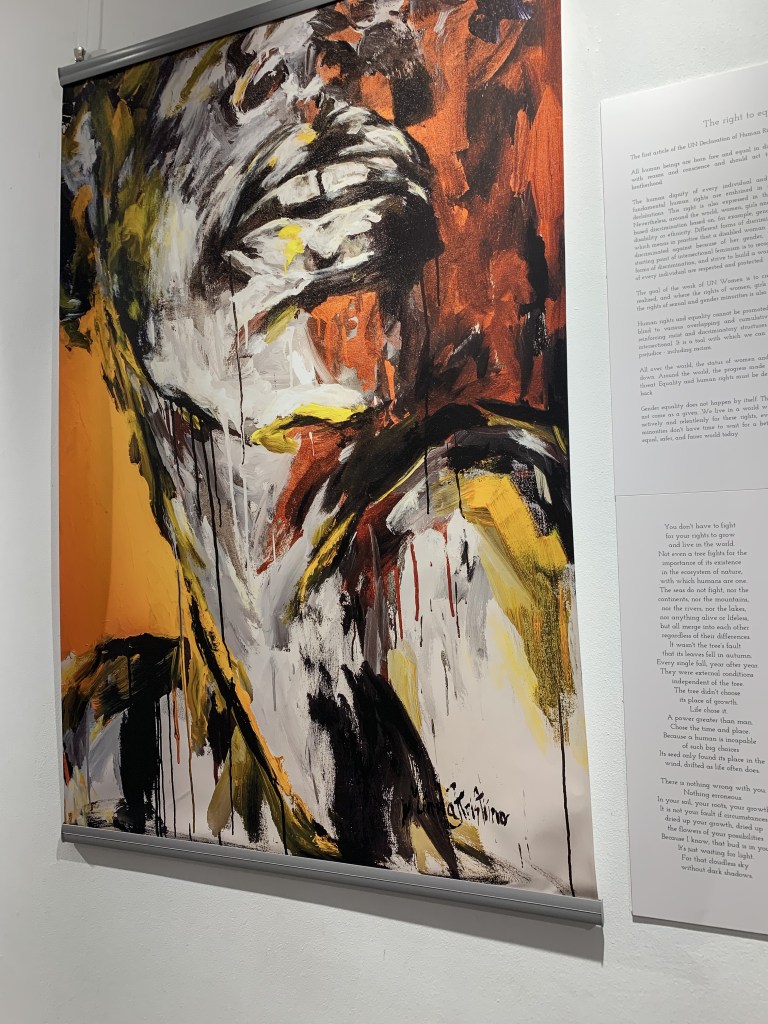
My interest in visual art has been in relation to how art brings about justice, transforms and documents culture and good old slice of life type of work. The work in the “I was born a girl” is a well timed reminder for women’s rights defenders to never lose hope. The exhibition was launched at the Goethe institute and HISA center, hosted by the Finnish embassy in honour of the 16 Days of activism against Gender Based Violence, taking place from the 24th of November to the 10th of December. I have no doubt that it was a worthwhile experience for anyone who appreciates art as a tool for justice. A project by Minna Pietarinene and Peppi Stunkel to highlight the incredible efforts of women’s rights activists and leaders from different parts of the globe. Each piece comes with a poem and corresponding human rights and their stories, succinctly capturing the efforts of some pretty awesome human beings.  

Here some highlights from this exhibition;

Context from Namibian Human Rights Advocates

The event was launched with a notable mindfulness for the context of where it was being launched. The work has been showcased in different parts of the world, including Mexico, South Africa, Mozambique and Switzerland and it’s great to see that the project takes into consideration the conditions and background of its destination country. Created with the notion that while human rights are for everyone, they are not a ‘one size fits all’ solution.

Often times when the subject of human rights comes up, the risk of westernization disguised as human rights, especially because of the consequences of not being vigilant about intentional or unintentional colonial imposition. The need to guard contextual narratives is often a top priority when human rights are discussed because too many instances have come up where irrelevant solutions are applied. During the launch of this event, a panel discussion was held which included speakers from The Legal Assistance Center Namibia, UNFPA Namibia, Sister Namibia and the One Economy Foundation. The conversation highlighted an existing frustration with inadequate implementation of laws in Namibia, the need to expand on civic education and men’s engagement with Gender Based Violence Advocacy in Namibia. In response to this, a male engagement event in honour of the 16 Days of Activism against GBV was held on the closing day of the exhibition at the HISA Center.  This exhibition was more than just a moment to appreciate some good artwork, it also provided a helpful platform to unpack men’s roles in advocating against GBV, the reality of having great written laws but not being able to use to rely on them, either as a result of people not knowing them well enough or regulators not always making use of them.
The Works, the Poetry and the Women

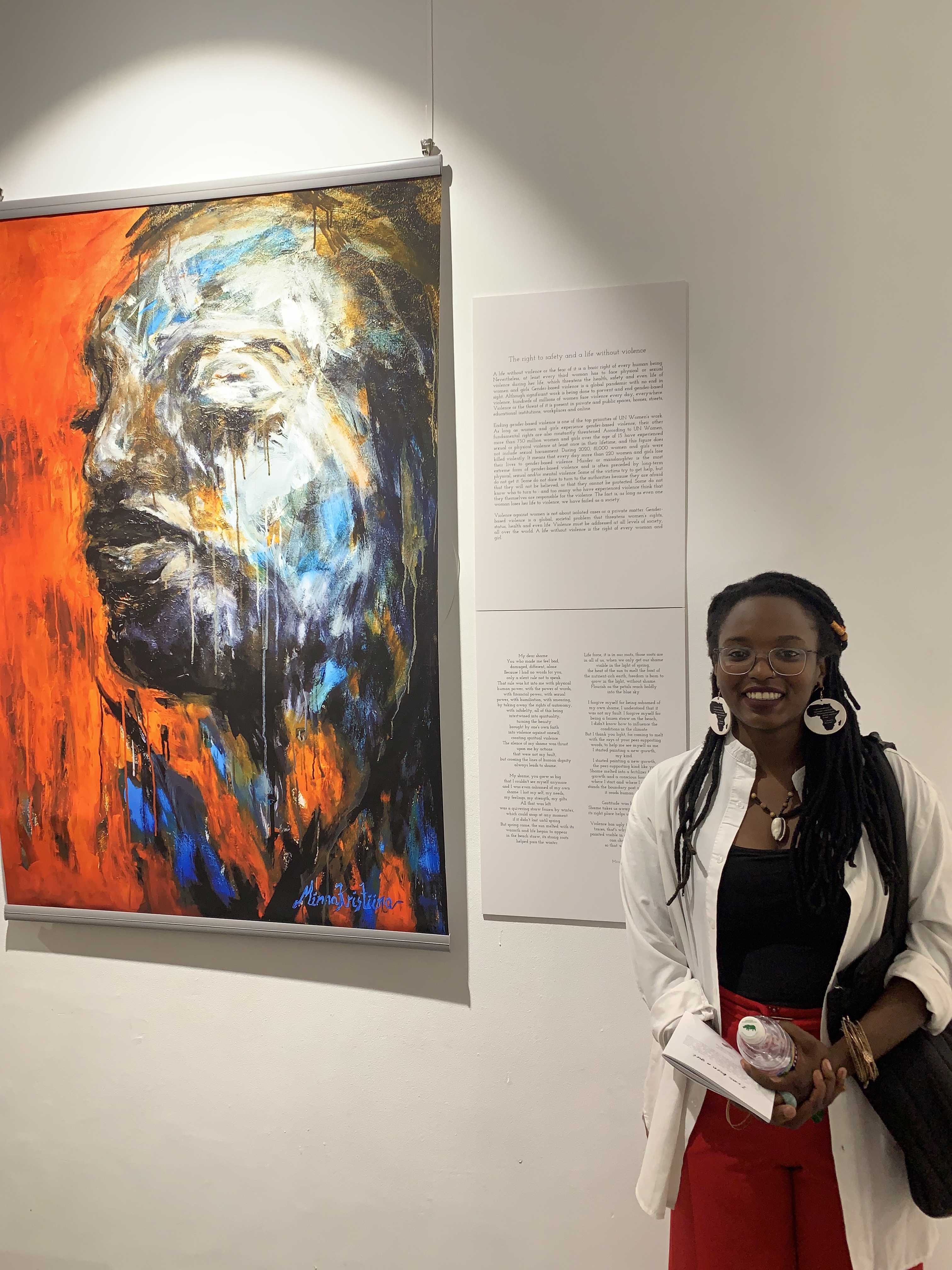
What makes the “I was born a girl” exhibition especially universal is that the collection includes diverse women from diverse communities, all bound by uniting rights and theme. The colour orange is present in all the pieces, the colour of the Unite to End Violence against Women Campaign which encourages people to wear orange to symbolize a future free from violence. It starts off with an overaching experience associated with human rights violations, shame. The piece titled “My Dear Shame” speaks on how isolating and overwhelming such experiences can be, and how human rights are protective boundaries that make room for love, and how these rights can bring about positive change. The right emphasized in this piece is the right to safety and a life without violence. Other works include stories of women who intenetinally went into the profession of politics and the protection of human rights such as Sanna Marin the former Prime Minister of Finland who advocated for the right to non-discrimination. Women who inadvertently fell into advocacy by unapologetically pursuing their passions, such as Alcenda Panguana and Rady Gramane who became symbols for the right to gender equality in sports after challenging stereotypes in boxing. Women whose efforts as community workers highlighted rights violations, such as Zanele Mbeki whose commitment to social work resulted in her significantly addressing the right to economic empowerment.

The I was born a girl exhibition ran in Windhoek from the 13th to the 19th of November 2024 at the Goethe Institute and from the 20th to the 27th of November 2024 at the HISA Center. To learn more about this work, visit www.iwasbornagirl.fi .
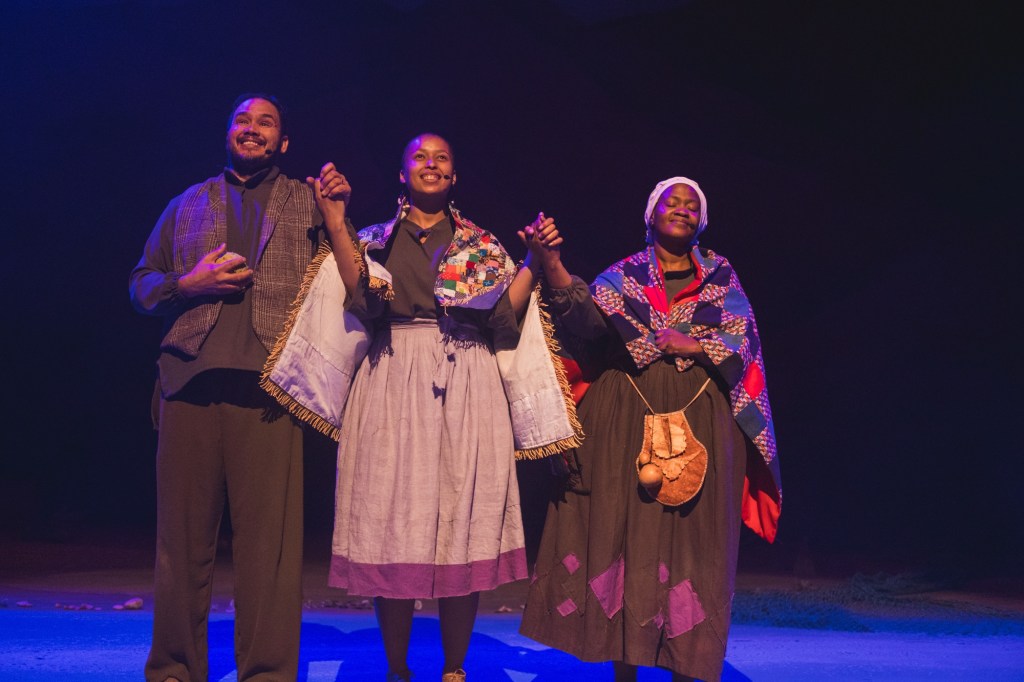
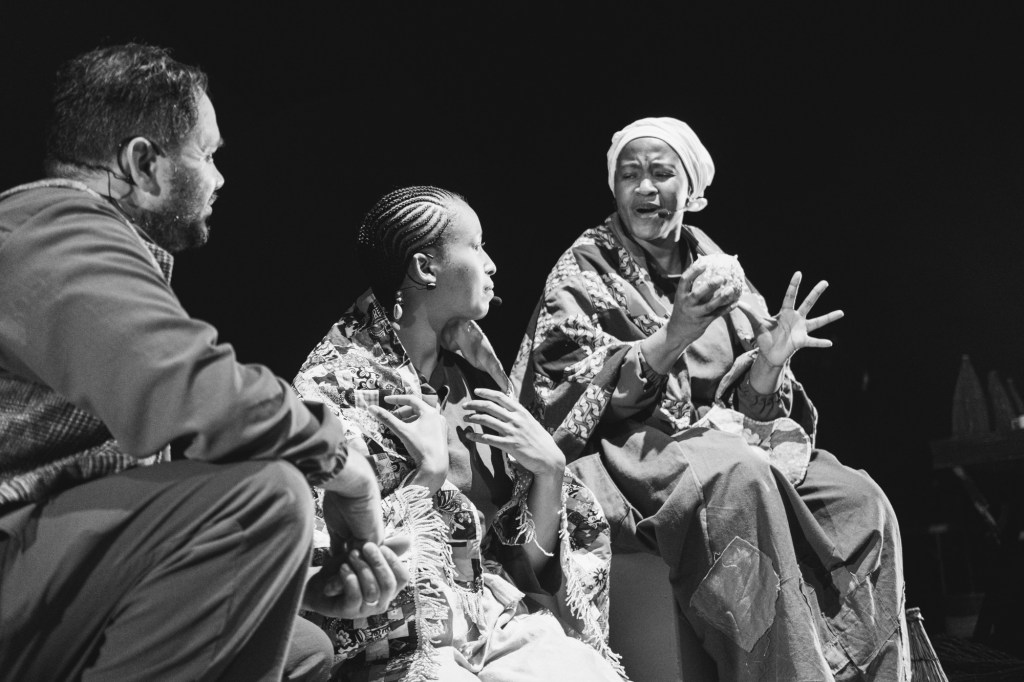
ǂAONI //AES : Reclaiming the Historic Narrative of the ǂAoni People Through Theatre

Section 6 of the Swakopmund Protocole

The owners of the rights shall be the holders of traditional knowledge, namely the local and traditional communities, and recognized individuals within such communities, who create, preserve and transmit knowledge in a traditional and intergenerational context in accordance with the provisions of section 4.

The application of this section is partially significant for how it allows customary groups to take ownership of their stories. The colonial era had oppressors taking the role of the authority on people’s stories. While we remain grateful for education, we can’t neglect the messaging that, “foreign knowledge is superior to indigenous knowledge.” This has played out as indigenous people not often being at the forefront of being historians of their own cultures. Since independence, many cultural groups have been making efforts to correct the stories that have been told about them. In this article we’re covering two works that have been conducted in Namibia, surrounding the cultural relationship between people and the ocean.

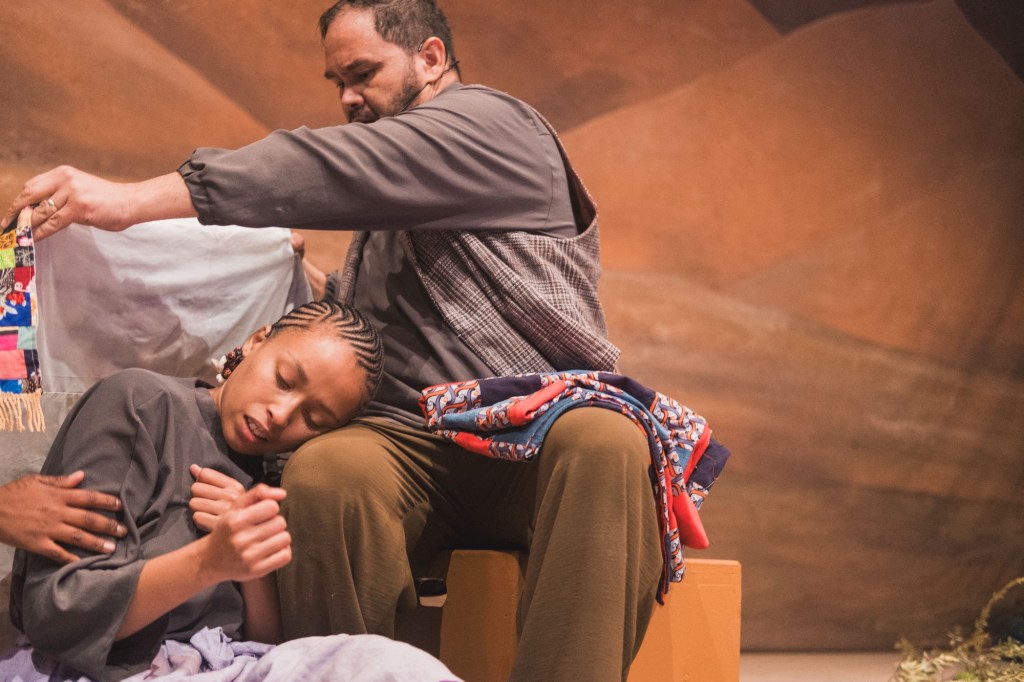
A phenomenal production retelling the story of the ǂAoni people and the ocean. The play consists of a cast of three, the father (Dawie Engelbrecht), the mother played by Hazel Hinda and their daughter Khoendikhoes, played by Chantell Uiras (Diolini). The story follows the three as they revisit the events of the colonial past and how these impacted on the current socioeconomic position of the ǂAoni people, a clan of Nama people mostly found around the !Kuiseb river in the Erongo region also referred to as the Topnaar community.

Setting things straight

One of the main issues covered in this play is that of the history of the community. Colonial era historians alleged that the community’s displacement during the colonial era was in response to countering fighting within the community and harm to the natural environment. The story starts by letting us know who these people were recognized as, ‘the water people’ or guardians of the water and marine life. Their role as caretakers was undermined by the ambitions of the colonizers. It was also clear that they were moved without consultation and that it was carried out in a forceful and chaotic manner. They did not stand a chance against the armed invaders and had no other choice but to comply. An all too familiar history. Before anyone else felt the hit of the colonial invaders, they, being at the coast, felt the first and strongest blows, and because the settling of foreign invaders on the coastal territory did not help their case much.

They spoke of the !Nara fruit (Acanthosicyos horrida), how it was not just food, but the unique way in which each family farmed it was a way to distinguish between families. After the displacement, restoring the practices that were central to their cultural identities has been a struggle not so much because they have lost the capacity to do so, but more because of the policies put in place to make sure that they never do Policies that have seen their way into post-independence Namibia. The play was not made out to be an attack on the contemporary government, but a channel to shed light to the fact that they (the Topnaar community) too are a people that were uniquely disempowered by the apartheid system, and that their story continues to be swept under other emerging and apparent issues. The story has been written in collaboration with academic research institutes like the University of Namibia (UNAM), One Ocean Hub, Global Research Fund, and UK Research and Innovation. Researchers such as Robert Vigne are also amongst those who have showcased the significantly disproportionate level of harm faced by the Topnaar Community during the colonial era. It’s safe to say that the message shared is one grounded in facts not a baseless critique.

When speaking to the audience after the play, a leader from the ǂAonin community, Joel Kooitjie, as well as, acting chief of community Stoffel Anamab, pointed out the struggles that their people continue to face today. Some impacts include the fact that they are only about two Topnaar people in local authority offices and that decision makers in their area can sometimes fail to capture their context very well and ultimately miss their needs. Furthermore, as a community that had largely survived on marine life for sustenance, bearing witness to the harm the ocean and its creatures have faced while disempowered from taking any feasible steps to help serves as a testament to the gradual weakening of their own development, this is in part because a great amount of their income came from inland circulation of oceanic goods. The historical and cultural relevance of ocean governance in this community has been significantly undermined and resulted in having to re-adapt to a life where their strongest skills remain in the backburner. It goes without saying that this need to suppress who they are in order to be convenient for invaders is a level of robbery that digs at the core of personhood.

Conclusion

The play ǂAONI //AES is an example of the Swakopmund Protocole at work. It’s the active reclaiming of a history by the people. It is also an assertion of who they are and who this land has known them to be. The impoverishment and struggle they face today is a result of being subject to a system that has unfortunately kept them down. The post-colonial government canntot take the blame for this, but, in their continuous efforts to decolonize Namibia, they can take the Topnaar Community and their pleas into consideration. 

Anita

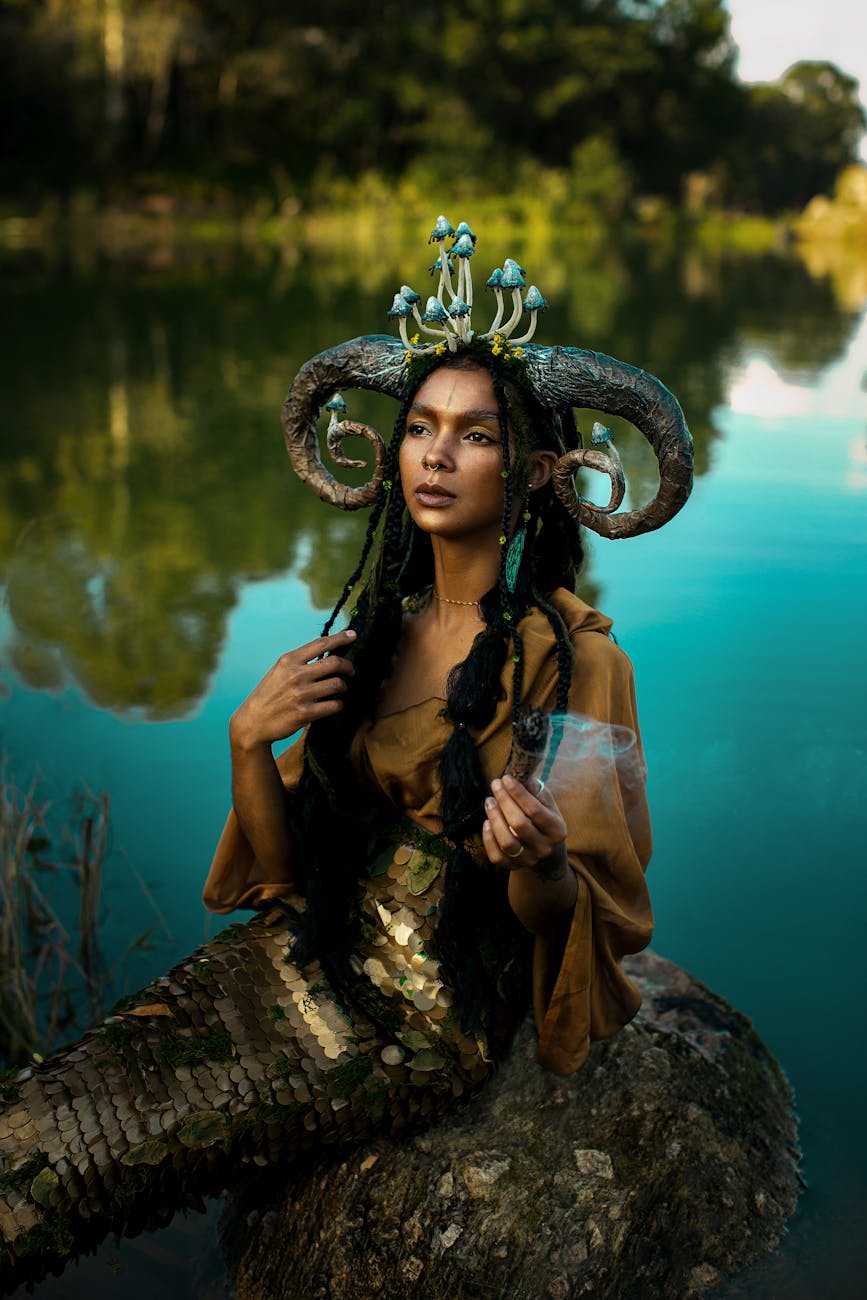
Anita is a fictional short story of a mother on the search for her daughter, admist frustrating bureaucracy, finding out that she didn’t know her daughter as well as he thought she did and the legend of the Zambezi water goddess Kitapo. It is written in honour of International women’s day, recognizing the lives of women who are extraodinary despite traits that may not be widely likeable or ‘perfect’ but simply because they exist as themselves on a day to day basis, the ancient lore that centers women and the incredible love held by many women who are mothers and daughters.

Anita

Anita woke up to the usual morning routine. Her alarm clock rang at 06:45, but she had hit the snooze button automatically. Anita would drift through some comfortable haze until her body had finally woken her up at 07:10. With bleary eyes, she scrolled through Instagram, chuckling to herself as she passed by memes and checked in to her horoscope. On any given day, she would see a motivational video on YouTube coaxing her out of the morning fog. At 07:20, she would jump out of bed and go through the routines as a matter of course: drag her from her sleep right to the kitchen for a piping hot cup of coffee, on which some Allan Watts-esque video droned in the background, accompanied by a steamy, self-indulgent shower into which she slipped herself-just long enough to clear the remnants of sleep.

This two-year ritual had been part of her life, interspersed periodically with stretching exercises or switching over to Pinterest to get her fix of inspiration. That is, until last week-Tuesday, to be exact-when everything changed. She called in late to work, and at first, coworkers thought she was merely ill and hadn’t called it in to human resources, so they weren’t alarmed. But to her mother, Mai Mushawako, the silence was loud. It was highly out of character for Anita not to call that evening, and highly unusual for her to completely ignore the myriad of messages sent onto her phone.

Anita’s studio apartment was on the ground floor of a newly built estate and told volumes about her Bohemian character. It was decorated with bottles reused as lamps, a shelf full of vinyl records, though sans phonograph, fiction novels, and books on African gods and customs. The walls were pasted with motivating sentences, and plants were thriving on every available nook. Nothing was disturbed; she looked like she had just stepped out, having left no traces of a tussle or kidnapping.

Mai Mushawako had become a fixture in the complex, knocking on doors in a frantic search for her daughter. She was clad in a chitenge, tightly wrapped around her body, with feet dragging in worn flip-flops. Many residents-who, because of her normally polished appearance, could barely recognize her-implored her for information. Each of those questions was tinged with increasing dread, building into a suspicion that maybe, just possibly, one of them knew more than they were letting on. They could not turn a blind eye to her desperate appeals; rather, they almost wished for some sort of answers while at the same time not wanting the worst to be confirmed.

The police at the missing persons’ unit reacted with a shrug, labeling Anita’s absence as youthful rebellion. Detectives Haufiku and Majapo were parents themselves, inured to such cases. When Mrs. Mushawako urged them, they would say some stock phrases: “We are doing our best,” “We are still waiting on more information.” With each rebuff, some of her respect for them eroded, and this amateur sleuthing became her only source of hope.

Mrs Mushawako put together over six months of details about Anita’s life in order to paint a fuller picture. There was Samantha, her close friend, pursuing her PhD in African studies, and a new connection in Anita’s life in the midst of discovering that she had been increasingly interested in the lore of Bantu, aspects of identity that Mai had hardly realized. Anita had been reading stories about their ancestors, learned the totem chants, and the long trek from the Congo basin to Zambezi. Mai felt guilty over the distance she had created between them with her heresies. Was she stifling the inquisitiveness in Anita with dogmatic Christian dogma? In a supposed attempt to piece together what might have been going on, Mai noticed that Anita had been communicating with a Professor Matenga, who was reported to be a specialist on the Kitapo water goddess legend. A water goddess named Kitapo, dear to the Tonga, miraculously shared a love with the Nyaminyami spirit-the walls of colonizers’ dams separating them both. This story, which would otherwise be considered a simple cautionary relationship tale, seemed to take whole new meaning now that her daughter was gone.

Confronting him with raw emotion, her voice cut through the air at a café meeting with the professor. “Have you involved my daughter in ungodly rituals?” she shouted, anger spiraling to despair. He attempted to calm her: “Your daughter has answered a call, wherever she is, she is safe…”. The words fell flat against her growing outrage. She stormed out, leaving the professor bewildered and detectives full of doubt over where this case was headed.


Mai Mushawako drove her Nissan into her village homestead. The loneliness of the journey weighed heavily on her. VaMushawako had remained in South Africa, saying life must go on, but to Mai every quiet moment felt like an eternity of anguish.

Gogo Mushawako sat on a lowly wooden stool, her body worn by time, but the presence of a queen. The two buildings behind her, a modest two-bedroom house built by VaMushawaro and a round hut kitchen, were a testament to the meaning of family and history. As Mai drew closer, Gogo’s knowing eyes met hers; an understanding which needed no words was made.

“I have to tell you what happened to Anita,” Mai started, a quiver in her voice. Gogo cut her off, “Your daughter was here, mwanangu. She has answered the call of Kitapo.” It was like thunder that hit her, sparking an instant storm of denial in her mind. Memories came flooding back-stories of her cousin who disappeared, elders’ whispers accompanying the absence.

“Do not be sad, mwanangu, Gogo said firmly yet calmly. “I will explain it all when the time is appropriate, but she is safe.” The reassurance fell flat – starkly in contrast to the deep bubbling sorrow within Mai. Overwhelmed by all this knowledge, she collapsed into sobs – her terrors fell like waves to the shore.

Her cries echoed in the homestead as neighbours averted their eyes; this was avoidance to not confront the grief they felt was imminent. In that instant, a piece of Mai’s heart broke, an impregnable bond that she felt with her daughter against the fraying mark of uncertainty.


Zenze copyright 2024. All rights reserved