Global Africanism and the African Renaissance

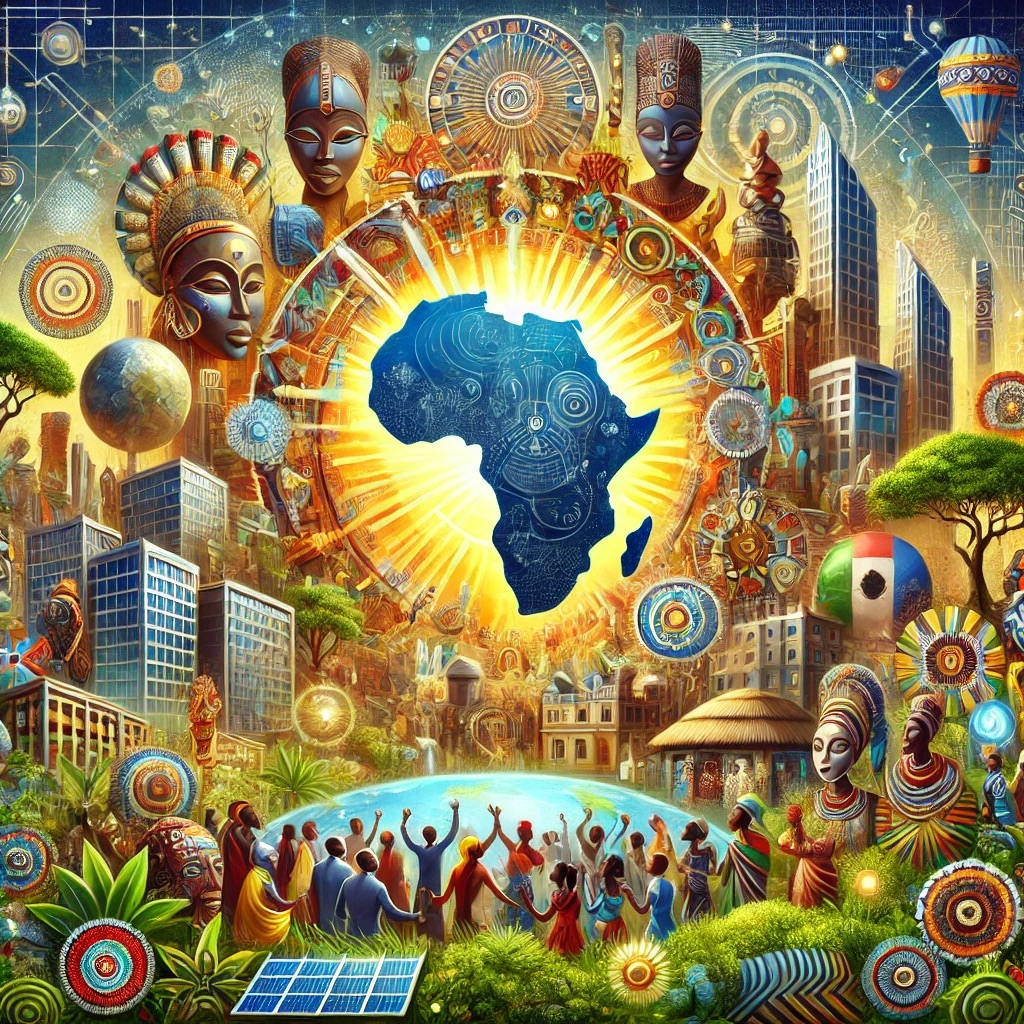
The  African Renaissance is taking place and through it we are fortunate to be at the forefront of seeing Africa take her place in the world. There are ongoing efforts at decolonising several industries, reclaiming narratives as well as embracing and contextualising  cultures. The idea of  Global Africanism looks at where Africa finds herself during this transformative era and how she interacts with her global peers. 

The term was popularised in an edition of the General History of Africa project which was introduced by UNESCO in an effort to support Africans reclaiming their narratives. The purpose of the Global African movement was to bridge the militant goals of the Pan-African movement with the diplomatic efforts of international bodies such as the AU and the UN. On one end, making PanAfricanism fit global diplomacy standards has been seen as a form of giving up and folding over to forceful powers, with leaders such as Malcom X fervently urging his followers to remain distrustful when it came to diplomatic approaches to conflict resolution. On the other hand it is the diplomatic approaches of leaders such as Nelson Mandela, that helped translate PanAfrican goals and get state freedom.

In his 2019 paper A call for a ‘right to development’- informed pan-Africanism in the twenty-first century, Kamga discusses how the rest of the world can take part in the African Renaissance particularly in the realisation of the right to development. That way, he essentially incorporates Global Africanism in his arguments. Outlining how international tools created to maintain diplomatic relations, can be useful pathways for development only if Pan-African goals are centralised rather than the neo-colonialist outcomes that many African countries have become subjected to. This right  is  outlined in Article 22 of the 1981 African Union Charter, the basis of the 2001 New Partnerships for Africa’s Development program by the Au as well as Resolution 41/128 of the UN General Assembly (the Declaration on the Right to Development) and is embodied in the 2030 Agenda for Sustainable Development.

In a 1998 speech Thabo Mbeki made a reference to the Japanese Meiji period when illustrating the possibilities of the African Renaissance, a time of industrialisation for the Japanese and successful resistance to being colonised. In this it’s made clear that  most important means of achieving this is building such an interest, especially amongst the emerging young Africans, to form united African nations, to learn and contextualise what’s working for others, all while maintaining cultural integrity.

Thabo Mbeki spoke a lot about the African Renaissance during his presidency, making clear his ambitions to bring South Africa to a level playing field with global superpowers. This ambition and vision stirred up hope for a much more successful South Africa, but in implementation, he faced criticism for placing so much focus on these diplomatic relations that he’d neglect meeting many South Africans’ immediate needs like employment for a great amount of the youths. That being said, Kamga’s approach seems to address what much of Thabo Mbeki’s approach missed. Voicing how the need to meet practical needs is an international objective that can still be met.

Global Africanism and the African Renaissance are PanAfrican concepts that, not only call for the imagination of a better future, but collaborative efforts to making that future a reality. Kamga makes it clear that the potential exists for everyone to take part in this. We’re one year closer to the Global Agenda for Sustainable Development’s vision 2030 and it’s exciting to see ideas that aim to make PanAfrican goals a reality.
I was born a girl Exhibition: Celebrating Human Rights, Women and Engaging Men in GBV Advocacy

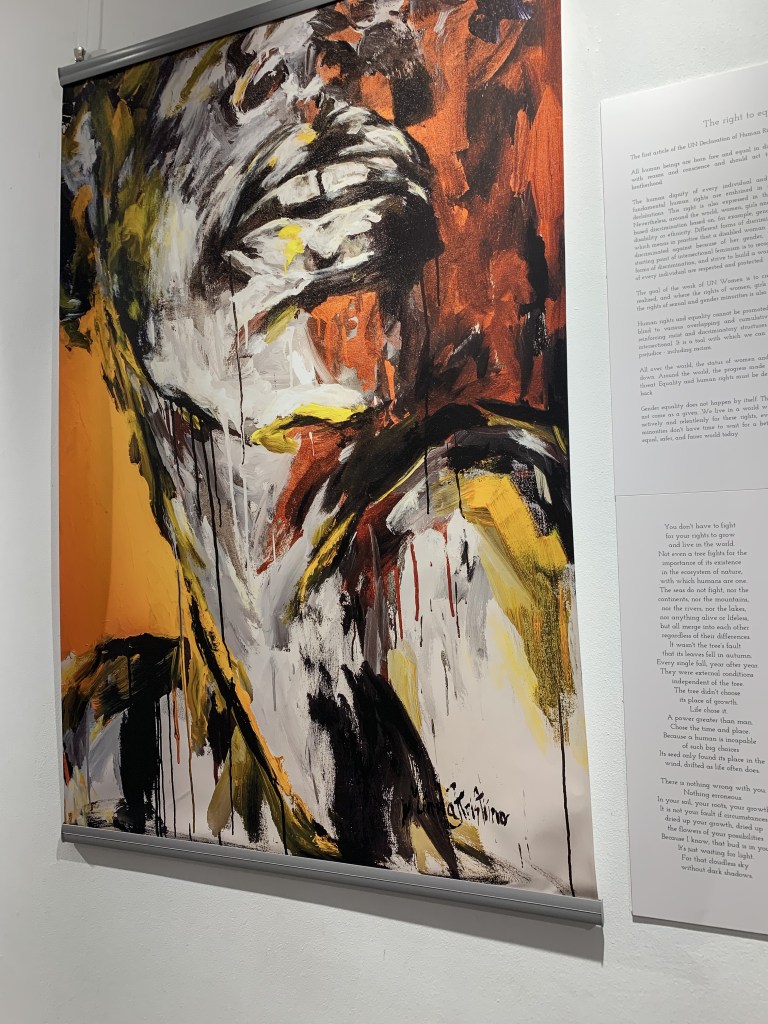
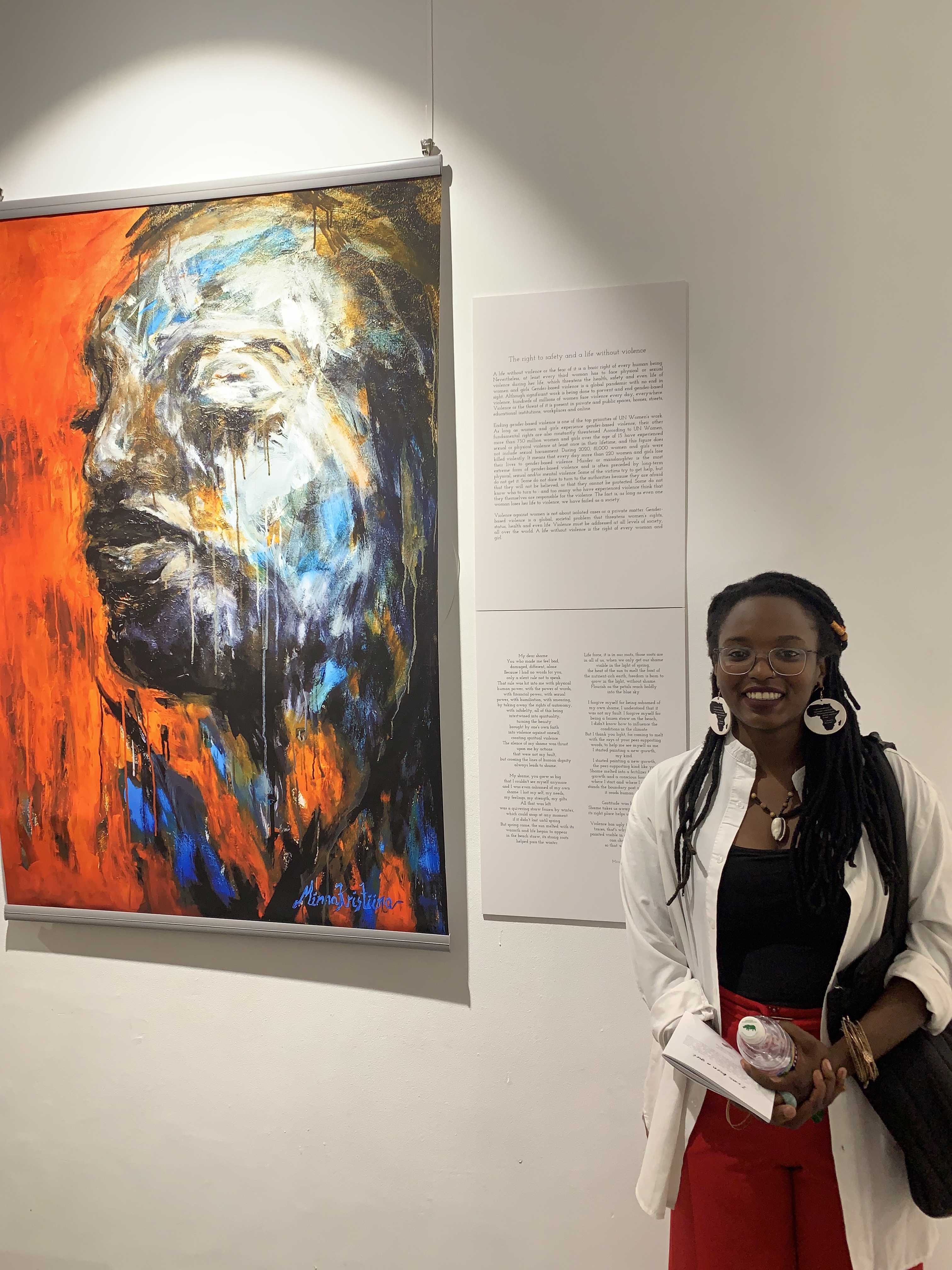
My interest in visual art has been in relation to how art brings about justice, transforms and documents culture and good old slice of life type of work. The work in the “I was born a girl” is a well timed reminder for women’s rights defenders to never lose hope. The exhibition was launched at the Goethe institute and HISA center, hosted by the Finnish embassy in honour of the 16 Days of activism against Gender Based Violence, taking place from the 24th of November to the 10th of December. I have no doubt that it was a worthwhile experience for anyone who appreciates art as a tool for justice. A project by Minna Pietarinene and Peppi Stunkel to highlight the incredible efforts of women’s rights activists and leaders from different parts of the globe. Each piece comes with a poem and corresponding human rights and their stories, succinctly capturing the efforts of some pretty awesome human beings.  

Here some highlights from this exhibition;

Context from Namibian Human Rights Advocates

The event was launched with a notable mindfulness for the context of where it was being launched. The work has been showcased in different parts of the world, including Mexico, South Africa, Mozambique and Switzerland and it’s great to see that the project takes into consideration the conditions and background of its destination country. Created with the notion that while human rights are for everyone, they are not a ‘one size fits all’ solution.

Often times when the subject of human rights comes up, the risk of westernization disguised as human rights, especially because of the consequences of not being vigilant about intentional or unintentional colonial imposition. The need to guard contextual narratives is often a top priority when human rights are discussed because too many instances have come up where irrelevant solutions are applied. During the launch of this event, a panel discussion was held which included speakers from The Legal Assistance Center Namibia, UNFPA Namibia, Sister Namibia and the One Economy Foundation. The conversation highlighted an existing frustration with inadequate implementation of laws in Namibia, the need to expand on civic education and men’s engagement with Gender Based Violence Advocacy in Namibia. In response to this, a male engagement event in honour of the 16 Days of Activism against GBV was held on the closing day of the exhibition at the HISA Center.  This exhibition was more than just a moment to appreciate some good artwork, it also provided a helpful platform to unpack men’s roles in advocating against GBV, the reality of having great written laws but not being able to use to rely on them, either as a result of people not knowing them well enough or regulators not always making use of them.

The Works, the Poetry and the Women

What makes the “I was born a girl” exhibition especially universal is that the collection includes diverse women from diverse communities, all bound by uniting rights and theme. The colour orange is present in all the pieces, the colour of the Unite to End Violence against Women Campaign which encourages people to wear orange to symbolize a future free from violence. It starts off with an overaching experience associated with human rights violations, shame. The piece titled “My Dear Shame” speaks on how isolating and overwhelming such experiences can be, and how human rights are protective boundaries that make room for love, and how these rights can bring about positive change. The right emphasized in this piece is the right to safety and a life without violence. Other works include stories of women who intenetinally went into the profession of politics and the protection of human rights such as Sanna Marin the former Prime Minister of Finland who advocated for the right to non-discrimination. Women who inadvertently fell into advocacy by unapologetically pursuing their passions, such as Alcenda Panguana and Rady Gramane who became symbols for the right to gender equality in sports after challenging stereotypes in boxing. Women whose efforts as community workers highlighted rights violations, such as Zanele Mbeki whose commitment to social work resulted in her significantly addressing the right to economic empowerment.

The I was born a girl exhibition ran in Windhoek from the 13th to the 19th of November 2024 at the Goethe Institute and from the 20th to the 27th of November 2024 at the HISA Center. To learn more about this work, visit www.iwasbornagirl.fi .

ǂAONI //AES : Reclaiming the Historic Narrative of the ǂAoni People Through Theatre

Section 6 of the Swakopmund Protocole

The owners of the rights shall be the holders of traditional knowledge, namely the local and traditional communities, and recognized individuals within such communities, who create, preserve and transmit knowledge in a traditional and intergenerational context in accordance with the provisions of section 4.

The application of this section is partially significant for how it allows customary groups to take ownership of their stories. The colonial era had oppressors taking the role of the authority on people’s stories. While we remain grateful for education, we can’t neglect the messaging that, “foreign knowledge is superior to indigenous knowledge.” This has played out as indigenous people not often being at the forefront of being historians of their own cultures. Since independence, many cultural groups have been making efforts to correct the stories that have been told about them. In this article we’re covering two works that have been conducted in Namibia, surrounding the cultural relationship between people and the ocean.

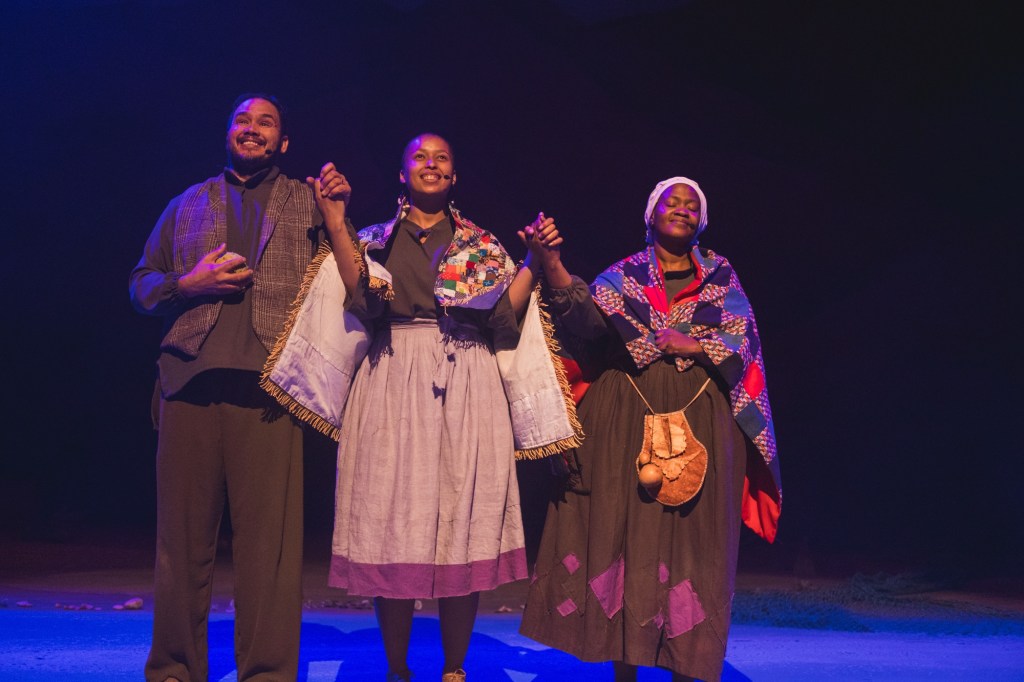
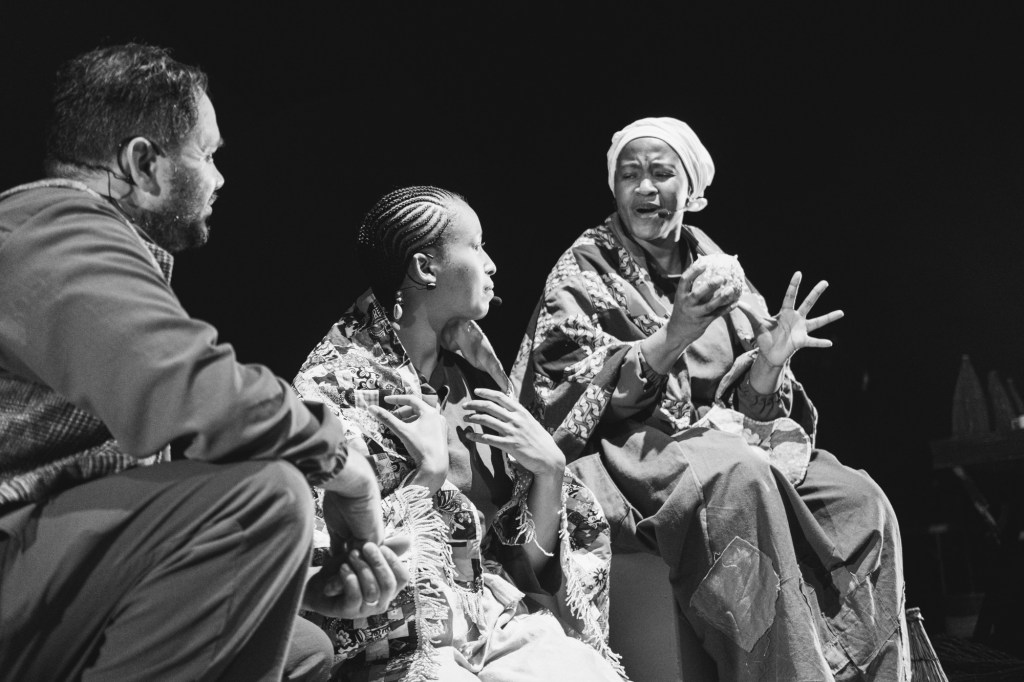
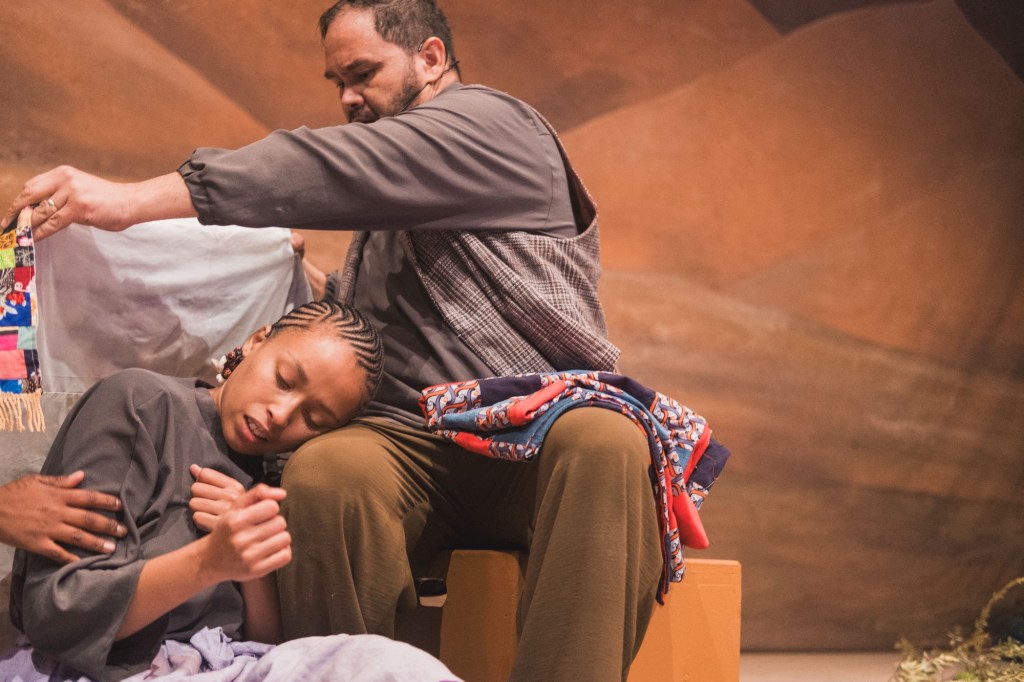
A phenomenal production retelling the story of the ǂAoni people and the ocean. The play consists of a cast of three, the father (Dawie Engelbrecht), the mother played by Hazel Hinda and their daughter Khoendikhoes, played by Chantell Uiras (Diolini). The story follows the three as they revisit the events of the colonial past and how these impacted on the current socioeconomic position of the ǂAoni people, a clan of Nama people mostly found around the !Kuiseb river in the Erongo region also referred to as the Topnaar community.

Setting things straight

One of the main issues covered in this play is that of the history of the community. Colonial era historians alleged that the community’s displacement during the colonial era was in response to countering fighting within the community and harm to the natural environment. The story starts by letting us know who these people were recognized as, ‘the water people’ or guardians of the water and marine life. Their role as caretakers was undermined by the ambitions of the colonizers. It was also clear that they were moved without consultation and that it was carried out in a forceful and chaotic manner. They did not stand a chance against the armed invaders and had no other choice but to comply. An all too familiar history. Before anyone else felt the hit of the colonial invaders, they, being at the coast, felt the first and strongest blows, and because the settling of foreign invaders on the coastal territory did not help their case much.

They spoke of the !Nara fruit (Acanthosicyos horrida), how it was not just food, but the unique way in which each family farmed it was a way to distinguish between families. After the displacement, restoring the practices that were central to their cultural identities has been a struggle not so much because they have lost the capacity to do so, but more because of the policies put in place to make sure that they never do Policies that have seen their way into post-independence Namibia. The play was not made out to be an attack on the contemporary government, but a channel to shed light to the fact that they (the Topnaar community) too are a people that were uniquely disempowered by the apartheid system, and that their story continues to be swept under other emerging and apparent issues. The story has been written in collaboration with academic research institutes like the University of Namibia (UNAM), One Ocean Hub, Global Research Fund, and UK Research and Innovation. Researchers such as Robert Vigne are also amongst those who have showcased the significantly disproportionate level of harm faced by the Topnaar Community during the colonial era. It’s safe to say that the message shared is one grounded in facts not a baseless critique.

When speaking to the audience after the play, a leader from the ǂAonin community, Joel Kooitjie, as well as, acting chief of community Stoffel Anamab, pointed out the struggles that their people continue to face today. Some impacts include the fact that they are only about two Topnaar people in local authority offices and that decision makers in their area can sometimes fail to capture their context very well and ultimately miss their needs. Furthermore, as a community that had largely survived on marine life for sustenance, bearing witness to the harm the ocean and its creatures have faced while disempowered from taking any feasible steps to help serves as a testament to the gradual weakening of their own development, this is in part because a great amount of their income came from inland circulation of oceanic goods. The historical and cultural relevance of ocean governance in this community has been significantly undermined and resulted in having to re-adapt to a life where their strongest skills remain in the backburner. It goes without saying that this need to suppress who they are in order to be convenient for invaders is a level of robbery that digs at the core of personhood.

Conclusion

The play ǂAONI //AES is an example of the Swakopmund Protocole at work. It’s the active reclaiming of a history by the people. It is also an assertion of who they are and who this land has known them to be. The impoverishment and struggle they face today is a result of being subject to a system that has unfortunately kept them down. The post-colonial government canntot take the blame for this, but, in their continuous efforts to decolonize Namibia, they can take the Topnaar Community and their pleas into consideration. 

A Farewell and a Welcome

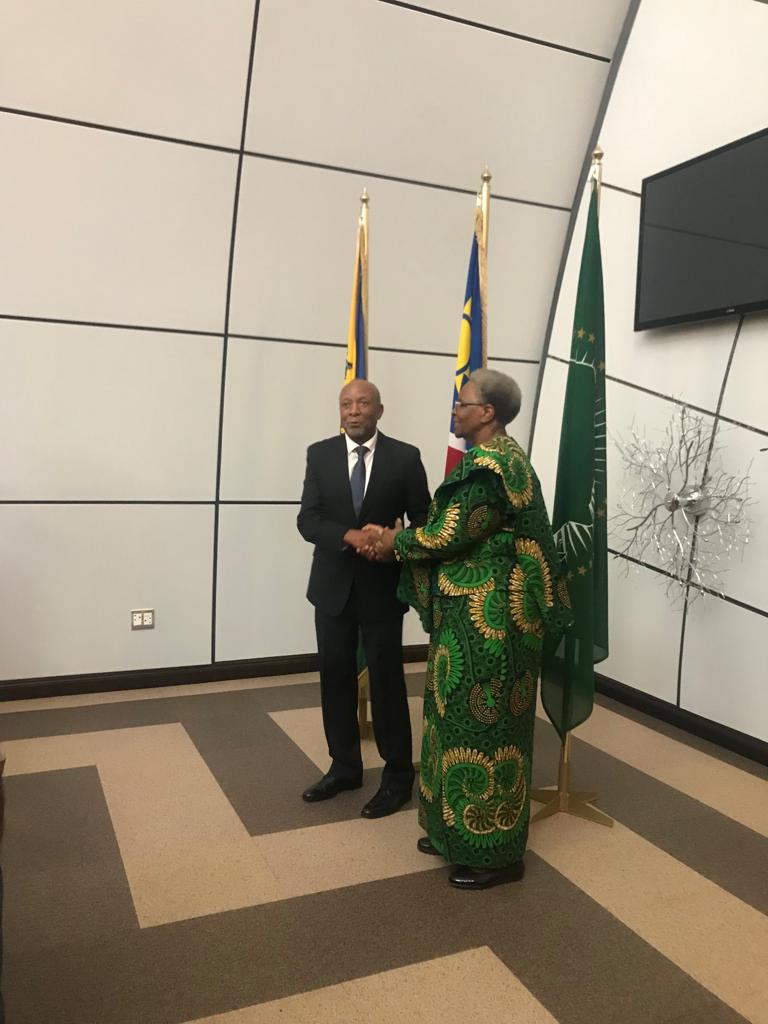
Figure 1: President Nangolo Mbumba (Left) and Vice-President Netumbo Nandi-Ndaitwah (Right)

The former president, Hage G Geingob is to be buried on Sunday the 25th of February 2023, as we draw nearer to the day, more and more people are curious about who this man was, the legacy he left and the successor to his office. In what turned out to be nearly clandestine, the Zenze page got access to the inauguration of the vice president who is being elected in accordance with Article 34 of the constitution of Namibia.

Article 34 requires the vice-president to take over as the interim president in circumstances such as the present one. President Mbumba will be the interim president until a new president is elected.

The Zenze team is no island to this curiosity, and so on the 4th of February 2024 a teammate found herself at this inauguration, hearing about the man, the legacy and the successor from some of those who were closest to him would beat a Google search rabbit-hole. It was without a doubt the type of nerve wrecking adventure for the young journalist, that makes it into an individuals’ “Hi, that’s me, I bet you’re wondering how I got here…” life reels. The room was top-full of dignitaries, head-officials from the NDF, Correctional Services and Police, not to mention members of the very slight 1% in Namibia.

“I just wore the face of someone who was meant to be in the room, broken camera in one hand and a phone on just 2% in the other…I just knew I had to be there,” she recounted a story that’ll make a good analogy for overcoming imposter syndrome someday. None apart from a keen-eyed correctional services official questioned her presence there after noticing that her camera wasn’t working. The room was sullen, sure, a new leader was being promoted, a woman becoming the first female vice-president of the nation, the occasion had all the elements of a celebration, but the circumstances that led to this were the undertone of the entire proceeding.

The somberness of it all was unavoidable, with congratulations delivered in light of shoes that needed to be filled rather than a new job attained. To say, “no pressure,” to President Mbumba would be like pointing at the eggshells surrounding his current role, and to say that to the newly elected Vice-President Netumbo Nandi-Ndaitwah, the first female vice-president of Namibia would be like telling her “hey, there’s a nail under one of these eggshells you’re treading on.” President Nangolo Mbumba has said that he will not be running for office in the November 2024 elections, and further added that even though he’s become president, he’d only ever dreamt of becoming a school principal, when they say “trust the journey” it’s because of stuff like this, you never really know how far that trust can take you, a title humbly claimed in light of the departure of his predecessor. Vice-President Nandi-Ndaitwah additionally takes up the role of the new presidential candidate for the South West Africa People’s Organisation (SWAPO).

The Minister of Information Communication and Technology has announced that President Hage G Geingob will be buried at the Heroes Acre in Windhoek on Sunday 25 February and the event is set to be broadcasted to the nation. Presidential elections will be held in November 2024 and youths all across the nation are becoming engaged in civic action and voters are highly encouraged to go through the manifestos of the parties to make informed decisions as voters.

Follow us on instagram @zenze_blog for more updates on what we’re up to and listen here for the latest podcast episode.

Remembering The Former President Dr Hage Geingob

The third President of Namibia, Dr Hage Geingob passed away recently on the 4th of January 2024. The news followed updates on treatment for cancer that had been taking place in the days leading up to his passing. While his office was laced with evidence of corruption, his leadership upheld the type of Pan-Africanism that seeks to unite. One mark of this was his endorsement of the abolishment of the Namibia and Botswana use of passports which contributes to the Pan-African United Africa vision. Let’s take a look at some of the great work he carried out to feed into this vision:

  • A progressive constitution

The Constitution of Namibia was finalized in 1990 soon after Namibia had gained its independence amongst its chief contributors was the former president Dr Hage Geingob. The Constitution has been credited for the largely inclusive principles that it is based on as well as being as a well crafted guiding tool for the nation.

  • Not signing homophobic bills

In his time in power, the LGBTQ+ community had been fighting for equal rights and to end stigma fueled violence. The debates around these rights escalated following the Digashu v Ministry of Home Affairs case wherein the court ruled in favour of recognizing foreign-concluded marriages. Following this a bill has been tabled demanding that the ruling be overturned. All that was left was for the President to put his signature on this bill and he refused to do so. On his deathbed, he made the effort to make a decision on the Bank of Namibia board members, this bill was not prioritized or entertained to this extent and it is evidence of the more inclusive and tolerant Namibia that he and his wife have been promoting through the #breakfreemovement.

This attitude has not gone unnoticed. On Friday the 9th of February, a vigil is being held in his honour by the LGBTQ+ community.

  • Charisma Charisma Charisma

While politics and corruption scandals had resulted in a plunge in support, his wit and charisma did not alienate the youth from political discourse. Many leaders’ tone and discourse can come off dictatorial in a way that is alienating. African politics and cultures have often coincided at the “respect your elders” mantra. This, while important for social relationships, can, in many places plays out as authoritarian leadership with little room to have contrarian opinions. The Namibia led by President Hage saw the formation and rising of youth empowerment movements, voices and in some instances, visible, respectful and non-demeaning responses from officials. Of note was the meeting with the #shutitalldown leaders. The rhetoric of putting heads down to “respect the elders” even in the face of violations, is gradually being replaced with a politics of respect and tolerance, in part, because of the way he led.

  • Representation

Apart from the visible youth participation, in his time in power, women’s representation in parliament increased to an impressive 44%, the number of over 90% of laws have been gender responsive and his successor as leader of the SWAPO party was to be a woman. His approach to public scrutiny seemed to be that of collaboration and humour rather than being dismissive and undermining in some instances, I say this with the response to the #shutitalldown marches in mind, however much of a sell out, it may appeared to some, it can be translated into an effort towards recognizing citizens’ concerns.

Namibia is by no means a perfect country and President Hage Geingob was by no means the perfect president, but he made significant efforts which are deeply revered by many of those who lived in the country under his leadership. The passing of the president was a massive shock to many and his loss will be deeply felt. May he rest in eternal peace.