

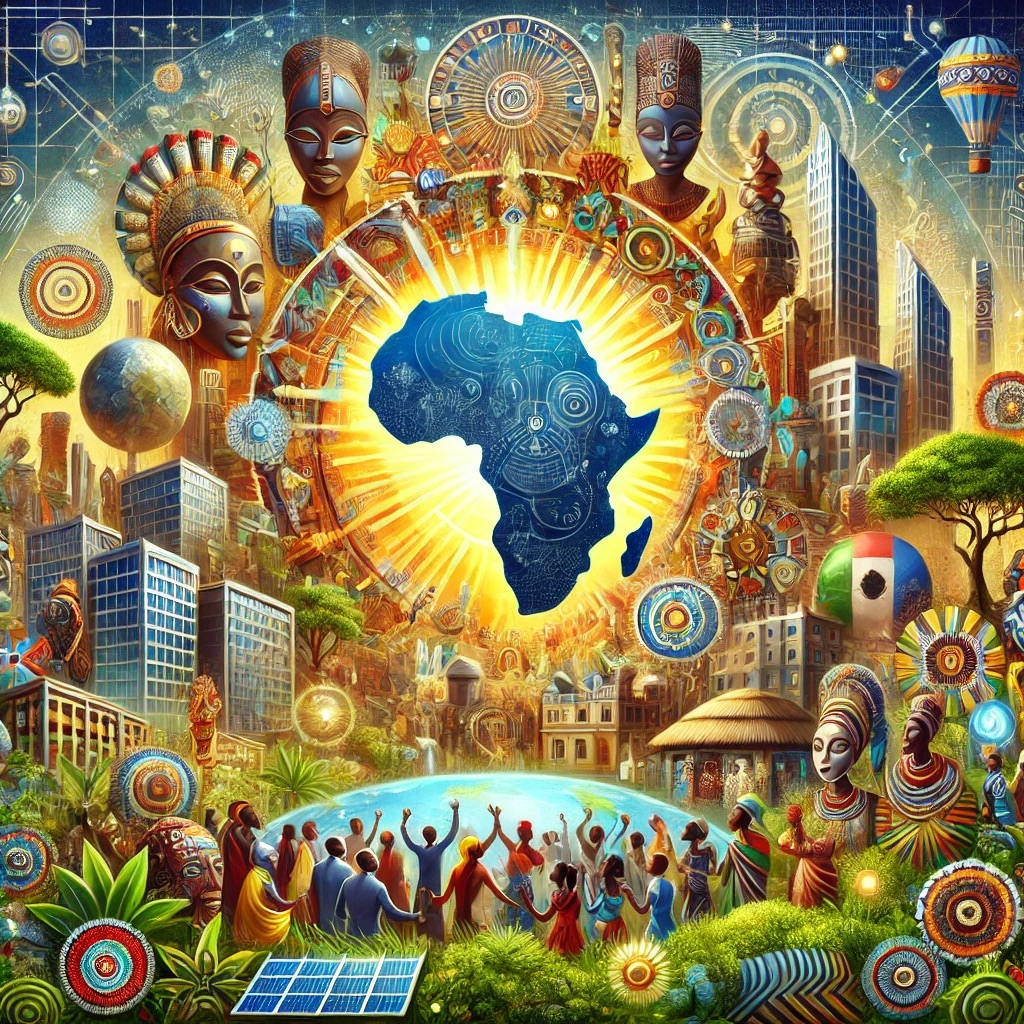
The African Renaissance is taking place and through it we are fortunate to be at the forefront of seeing Africa take her place in the world. There are ongoing efforts at decolonising several industries, reclaiming narratives as well as embracing and contextualising cultures. The idea of Global Africanism looks at where Africa finds herself during this transformative era and how she interacts with her global peers.
The term was popularised in an edition of the General History of Africa project which was introduced by UNESCO in an effort to support Africans reclaiming their narratives. The purpose of the Global African movement was to bridge the militant goals of the Pan-African movement with the diplomatic efforts of international bodies such as the AU and the UN. On one end, making PanAfricanism fit global diplomacy standards has been seen as a form of giving up and folding over to forceful powers, with leaders such as Malcom X fervently urging his followers to remain distrustful when it came to diplomatic approaches to conflict resolution. On the other hand it is the diplomatic approaches of leaders such as Nelson Mandela, that helped translate PanAfrican goals and get state freedom.
In his 2019 paper A call for a ‘right to development’- informed pan-Africanism in the twenty-first century, Kamga discusses how the rest of the world can take part in the African Renaissance particularly in the realisation of the right to development. That way, he essentially incorporates Global Africanism in his arguments. Outlining how international tools created to maintain diplomatic relations, can be useful pathways for development only if Pan-African goals are centralised rather than the neo-colonialist outcomes that many African countries have become subjected to. This right is outlined in Article 22 of the 1981 African Union Charter, the basis of the 2001 New Partnerships for Africa’s Development program by the Au as well as Resolution 41/128 of the UN General Assembly (the Declaration on the Right to Development) and is embodied in the 2030 Agenda for Sustainable Development.
In a 1998 speech Thabo Mbeki made a reference to the Japanese Meiji period when illustrating the possibilities of the African Renaissance, a time of industrialisation for the Japanese and successful resistance to being colonised. In this it’s made clear that most important means of achieving this is building such an interest, especially amongst the emerging young Africans, to form united African nations, to learn and contextualise what’s working for others, all while maintaining cultural integrity.
Thabo Mbeki spoke a lot about the African Renaissance during his presidency, making clear his ambitions to bring South Africa to a level playing field with global superpowers. This ambition and vision stirred up hope for a much more successful South Africa, but in implementation, he faced criticism for placing so much focus on these diplomatic relations that he’d neglect meeting many South Africans’ immediate needs like employment for a great amount of the youths. That being said, Kamga’s approach seems to address what much of Thabo Mbeki’s approach missed. Voicing how the need to meet practical needs is an international objective that can still be met.
Global Africanism and the African Renaissance are PanAfrican concepts that, not only call for the imagination of a better future, but collaborative efforts to making that future a reality. Kamga makes it clear that the potential exists for everyone to take part in this. We’re one year closer to the Global Agenda for Sustainable Development’s vision 2030 and it’s exciting to see ideas that aim to make PanAfrican goals a reality.
 ZENZE
ZENZE 