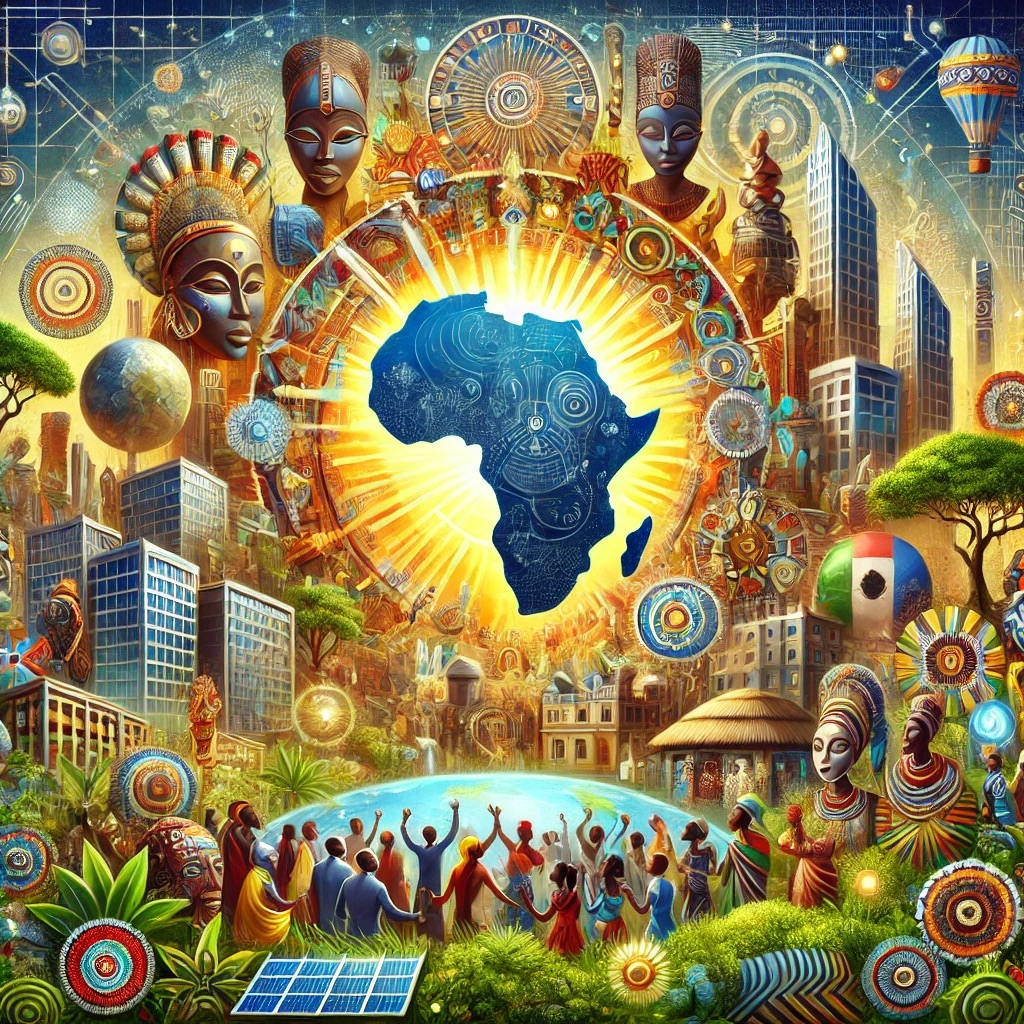
The African Renaissance is taking place and through it we are fortunate to be at the forefront of seeing Africa take her place in the world. There are ongoing efforts at decolonising several industries, reclaiming narratives as well as embracing and contextualising cultures. The idea of Global Africanism looks at where Africa finds herself during this transformative era and how she interacts with her global peers.
The term was popularised in an edition of the General History of Africa project which was introduced by UNESCO in an effort to support Africans reclaiming their narratives. The purpose of the Global African movement was to bridge the militant goals of the Pan-African movement with the diplomatic efforts of international bodies such as the AU and the UN. On one end, making PanAfricanism fit global diplomacy standards has been seen as a form of giving up and folding over to forceful powers, with leaders such as Malcom X fervently urging his followers to remain distrustful when it came to diplomatic approaches to conflict resolution. On the other hand it is the diplomatic approaches of leaders such as Nelson Mandela, that helped translate PanAfrican goals and get state freedom.
In his 2019 paper A call for a ‘right to development’- informed pan-Africanism in the twenty-first century, Kamga discusses how the rest of the world can take part in the African Renaissance particularly in the realisation of the right to development. That way, he essentially incorporates Global Africanism in his arguments. Outlining how international tools created to maintain diplomatic relations, can be useful pathways for development only if Pan-African goals are centralised rather than the neo-colonialist outcomes that many African countries have become subjected to. This right is outlined in Article 22 of the 1981 African Union Charter, the basis of the 2001 New Partnerships for Africa’s Development program by the Au as well as Resolution 41/128 of the UN General Assembly (the Declaration on the Right to Development) and is embodied in the 2030 Agenda for Sustainable Development.
In a 1998 speech Thabo Mbeki made a reference to the Japanese Meiji period when illustrating the possibilities of the African Renaissance, a time of industrialisation for the Japanese and successful resistance to being colonised. In this it’s made clear that most important means of achieving this is building such an interest, especially amongst the emerging young Africans, to form united African nations, to learn and contextualise what’s working for others, all while maintaining cultural integrity.
Thabo Mbeki spoke a lot about the African Renaissance during his presidency, making clear his ambitions to bring South Africa to a level playing field with global superpowers. This ambition and vision stirred up hope for a much more successful South Africa, but in implementation, he faced criticism for placing so much focus on these diplomatic relations that he’d neglect meeting many South Africans’ immediate needs like employment for a great amount of the youths. That being said, Kamga’s approach seems to address what much of Thabo Mbeki’s approach missed. Voicing how the need to meet practical needs is an international objective that can still be met.
Global Africanism and the African Renaissance are PanAfrican concepts that, not only call for the imagination of a better future, but collaborative efforts to making that future a reality. Kamga makes it clear that the potential exists for everyone to take part in this. We’re one year closer to the Global Agenda for Sustainable Development’s vision 2030 and it’s exciting to see ideas that aim to make PanAfrican goals a reality.
The owners of the rights shall be the holders of traditional knowledge, namely the local and traditional communities, and recognized individuals within such communities, who create, preserve and transmit knowledge in a traditional and intergenerational context in accordance with the provisions of section 4.
The application of this section is partially significant for how it allows customary groups to take ownership of their stories. The colonial era had oppressors taking the role of the authority on people’s stories. While we remain grateful for education, we can’t neglect the messaging that, “foreign knowledge is superior to indigenous knowledge.” This has played out as indigenous people not often being at the forefront of being historians of their own cultures. Since independence, many cultural groups have been making efforts to correct the stories that have been told about them. In this article we’re covering two works that have been conducted in Namibia, surrounding the cultural relationship between people and the ocean.
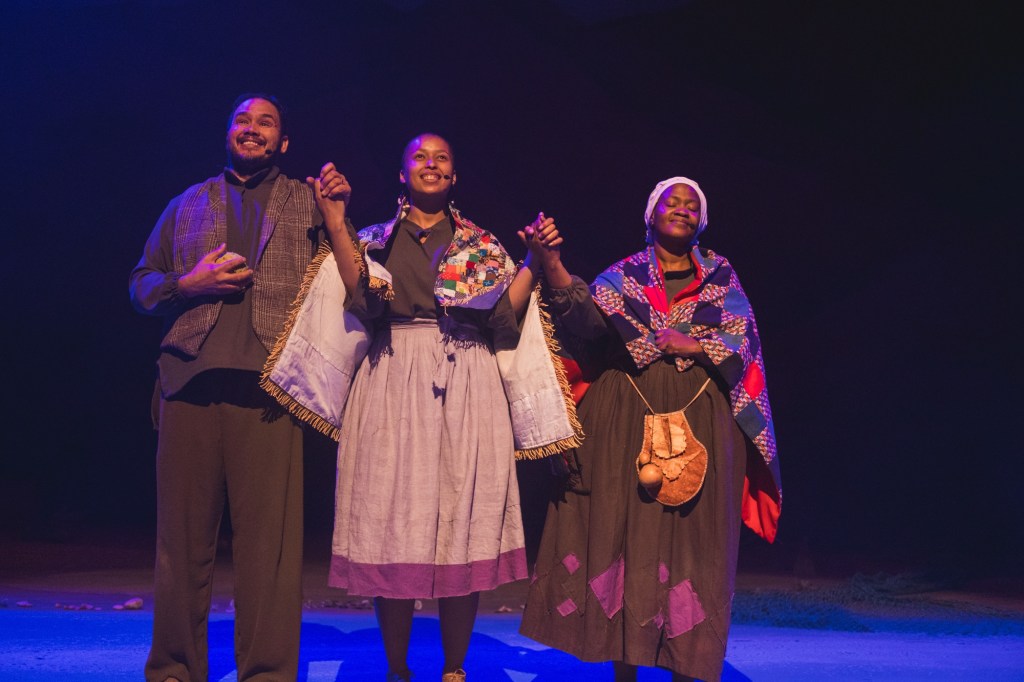
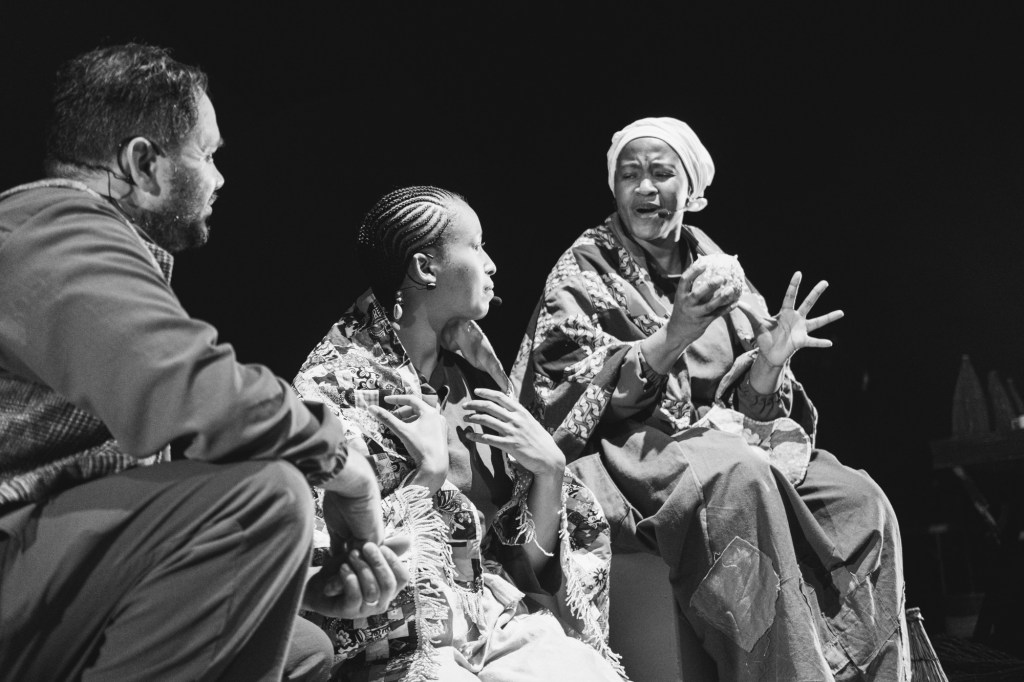
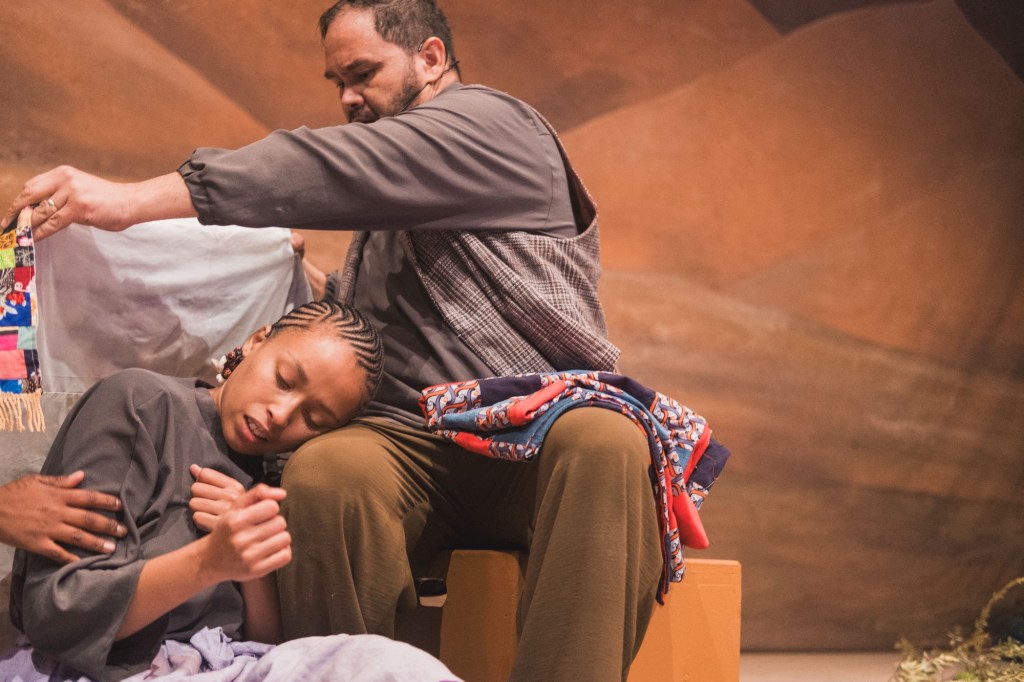
A phenomenal production retelling the story of the ǂAoni people and the ocean. The play consists of a cast of three, the father (Dawie Engelbrecht), the mother played by Hazel Hinda and their daughter Khoendikhoes, played by Chantell Uiras (Diolini). The story follows the three as they revisit the events of the colonial past and how these impacted on the current socioeconomic position of the ǂAoni people, a clan of Nama people mostly found around the !Kuiseb river in the Erongo region also referred to as the Topnaar community.
Setting things straight
One of the main issues covered in this play is that of the history of the community. Colonial era historians alleged that the community’s displacement during the colonial era was in response to countering fighting within the community and harm to the natural environment. The story starts by letting us know who these people were recognized as, ‘the water people’ or guardians of the water and marine life. Their role as caretakers was undermined by the ambitions of the colonizers. It was also clear that they were moved without consultation and that it was carried out in a forceful and chaotic manner. They did not stand a chance against the armed invaders and had no other choice but to comply. An all too familiar history. Before anyone else felt the hit of the colonial invaders, they, being at the coast, felt the first and strongest blows, and because the settling of foreign invaders on the coastal territory did not help their case much.
They spoke of the !Nara fruit (Acanthosicyos horrida), how it was not just food, but the unique way in which each family farmed it was a way to distinguish between families. After the displacement, restoring the practices that were central to their cultural identities has been a struggle not so much because they have lost the capacity to do so, but more because of the policies put in place to make sure that they never do Policies that have seen their way into post-independence Namibia. The play was not made out to be an attack on the contemporary government, but a channel to shed light to the fact that they (the Topnaar community) too are a people that were uniquely disempowered by the apartheid system, and that their story continues to be swept under other emerging and apparent issues. The story has been written in collaboration with academic research institutes like the University of Namibia (UNAM), One Ocean Hub, Global Research Fund, and UK Research and Innovation. Researchers such as Robert Vigne are also amongst those who have showcased the significantly disproportionate level of harm faced by the Topnaar Community during the colonial era. It’s safe to say that the message shared is one grounded in facts not a baseless critique.
When speaking to the audience after the play, a leader from the ǂAonin community, Joel Kooitjie, as well as, acting chief of community Stoffel Anamab, pointed out the struggles that their people continue to face today. Some impacts include the fact that they are only about two Topnaar people in local authority offices and that decision makers in their area can sometimes fail to capture their context very well and ultimately miss their needs. Furthermore, as a community that had largely survived on marine life for sustenance, bearing witness to the harm the ocean and its creatures have faced while disempowered from taking any feasible steps to help serves as a testament to the gradual weakening of their own development, this is in part because a great amount of their income came from inland circulation of oceanic goods. The historical and cultural relevance of ocean governance in this community has been significantly undermined and resulted in having to re-adapt to a life where their strongest skills remain in the backburner. It goes without saying that this need to suppress who they are in order to be convenient for invaders is a level of robbery that digs at the core of personhood.
Conclusion
The play ǂAONI //AES is an example of the Swakopmund Protocole at work. It’s the active reclaiming of a history by the people. It is also an assertion of who they are and who this land has known them to be. The impoverishment and struggle they face today is a result of being subject to a system that has unfortunately kept them down. The post-colonial government canntot take the blame for this, but, in their continuous efforts to decolonize Namibia, they can take the Topnaar Community and their pleas into consideration.
The Swakopmund Protocol was created to make sure that Africans are the beneficiaries of all African Traditional Knowledge and it’s the central player in our latest exploration of rights in the series, Africa for Africans. We’re diving into works by some artists who have been using these intellectual property rights to pay homage to their cultures and contribute to the evolution of folk telling.
In a nutshell, this protocol was developed by the African Regional Intellectual Property Organization (ARIPO), with the goal of allowing customary groups to have their traditional knowledge and expressions of folklore protected. The colonial era brought about the consequence of demonizing African lore. All of a sudden stories that had been shared for educational purposes, entertainment and community building became sub-par. It’s no secret that such systemic changes had greater, long lasting impacts. Some notable impacts are biopiracy, the false retelling of local knowledge by invaders, and a forced depersonalization of cultural identities.
Protecting the knowledge and how it is expressed and who gets to express in allows African groups to reclaim narratives and forge new, desired identities. In this legal tool, “expressions” include:
verbal expressions, such as stories, epics, legends, poetry, riddles and other narratives such as signs, words, symbols and names;
musical expressions, such as songs and instrumental music;
expressions by movement, such as dances, plays, rituals and other performances, whether or not reduced to a material form; and
tangible expressions, such as productions of art, in particular, drawings, designs, paintings, carvings, sculptures, pottery, terracotta, mosaic, woodwork, metal ware, jewellery, basketry, needlework, textiles, glassware, carpets, costumes, handicrafts, musical instruments and architectural forms.
ARIPO was established in 1976 in Lusaka, to specifically regulate and address the intellectual property rights of Africans. Soon after this, the Harare protocol was created in 1982, giving special attention to patents and industrial designs. Following this was the Banjul Protocol of 1993 which addressed trademarks and service marks.
Neither addressed traditional knowledge and folklore. In 2004 ARIPO sought assistance from the World Intellectual Property Organisation seeking assistance with formulating a legal tool that could address this. After all, traditional stories, lore, music and art are aspects of cultural identities and are not like other creative works that can be copywritten and attributed to specific, clearly identifiable, individual artists.
So, the Swakopmund Protocol was created to address the need to protect traditional knowledge and folklore in August 2010. There are still some conflicts surrounding rights over traditional knowledge, like ownership of brewing processes or rock painting styles that stretch across different cultures, these aspects are still being worked around and well dive into them more in upcoming releases. This introductory post gives a brief glance at this tool, stay tuned as we talk more about how this has helped in the development of Afrofuturism, contemporary artworks and economic development in different African countries.
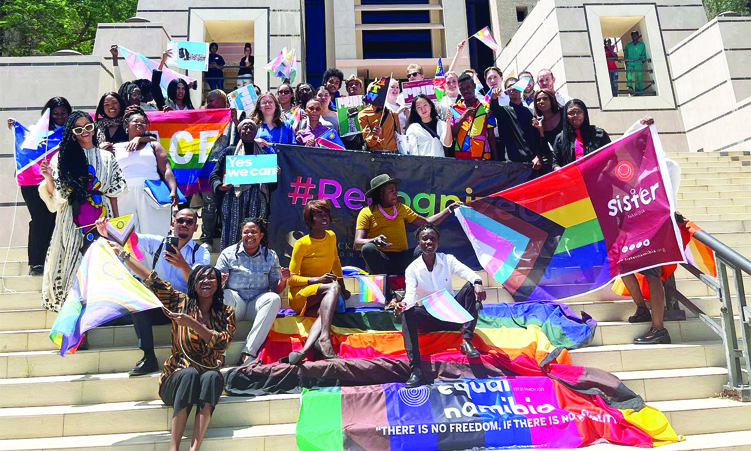
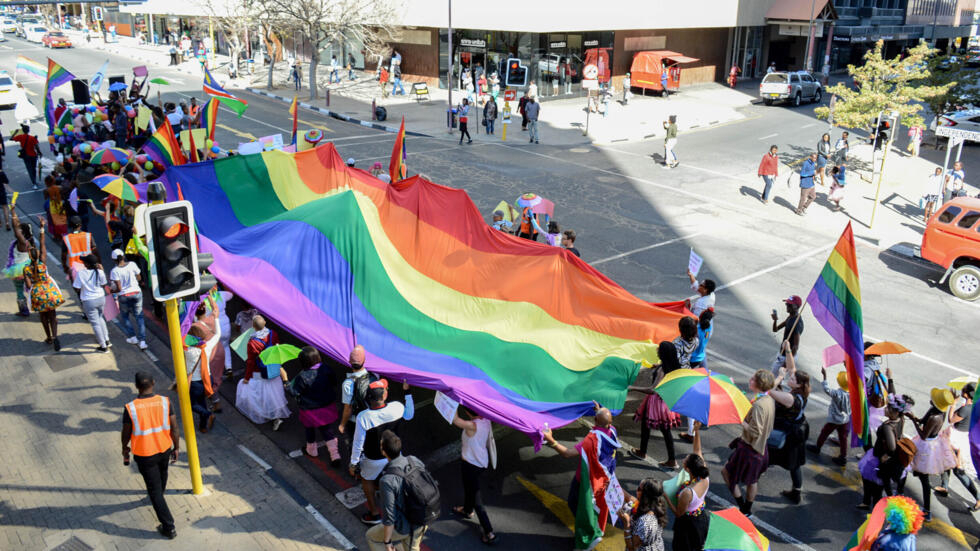
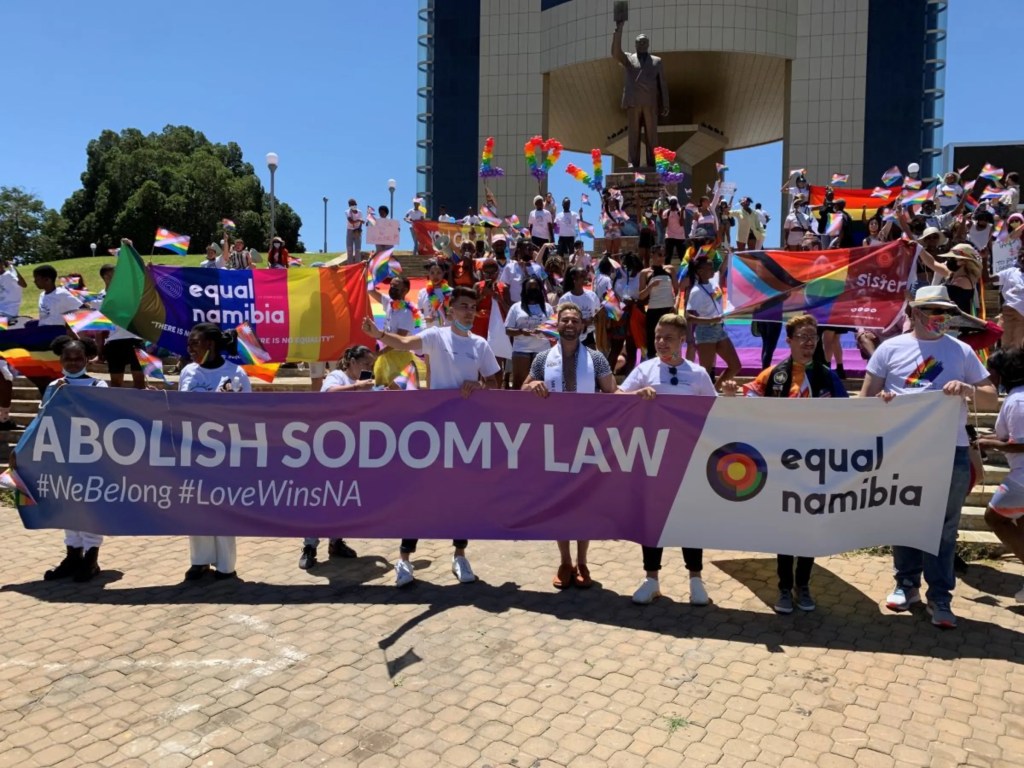
On the 21st of June 2024 the High Court of Namibia ruled in favour of declaring the sodomy law unconstitutional in the case of Dausab v the Government of Namibia. This follows years of activism alongside a steadily rising amount of homophobic attacks and an Anti-Gay Bill. We are in a pride revolution and here’s why its an important step against colonialism and genocide…
What does this have to do with colonialism?
Before colonialism, being gay was a norm. This sounds like a taboo to many who have fed into the false idea that tradition justifies homophobia. In many African countries, the word “gay” was normal enough to acquire its own title. For example; Eshenge in OshiWambo, Ngochani in ChiShona and Adofuro in Yoruba.
In the Namibian Ovambo cultural context it was believed that these men simply possessed a feminine spirits and were regular members of the community rather than ostracized minorities. German anthropologist Kurt Falk confirmed this during the 1920s having spent time with several Namibian tribes, including the Ovambo, OvaHerero, Nama and Himba. Ethnologist, Carlos Estermann supported this during the 1970’s and added that it was a culturally acknowledged ‘third gender’. The very first anti-homosexual trial was conducted under the German colonial rule. Four German men were banished for having defied paragraph 145 of the German Code which outlawed sodomy. This outlawing of sodomy was carried on by the South African colonial regime after taking over Namibia as a protectorate. If it isn’t already clear, the anti-homosexual laws were not born of tradition but of colonialism.
Over time, the colonial effect of self-rejection (a phenomenon whereby subjects to colonialism consciously reject colonialism but have learned to look down on their ethnic origins, cultural groups, cultures and customs) included a rejection of the LGBTQ+ community. Colonialism left in its wake, many with the idea that “all are equal but some more equal than others.” In our context, this idea from George Orwell’s animal farm wasn’t limited to just financial pursuits, but to the pursuit of love and happiness as well. A 2013 baseline study revealed that about 73% of nmaibians were under the impression that members of the LGBTQ+ community were accorded equal rights. This has not been true since the pre-colonial era. It has since become more evident that many are more aware of their own rights than those of others. So when words like moffie are blurted out in the same tone as the word nigger or kaffer , it is easy to play it off as common rhetoric despite the fact that such terms are intended to humiliate and undermine an entire group of people for natural differences that they have no control over. Worse still, many have used these rhetorics and the laws supporting them to justify their violence and hatred, and further to pervert religion to suit these hateful narratives in the name if dispensing justice for God’s wrath. But that’s another conversation. In short, the same way colonial laws emboldened racist attacks, is the same way anti-homosexual laws embolden homophobic attacks. The same way racism was rationalized to seem like something morally acceptable, is the same way homophobia is rationalized to seem like the more morally acceptable stance. It is not.
The Dausab v Government of Namibia Judgement
Fortunately many LGBTQ+ people and allies have taken a stand against these senselessly exclusive laws. Everyone should have the opportunity to freely pursue romantic relationships. Human rights are a core aspect of the Namibian Constitution and are found in Chapter three. These have been developed with various religious and ethical concepts in mind, with the goal of ensuring that the law treats us all fairly. That we treat each other fairly.
The court in this case had to deliberate on three issues that relate to this;
Whether the sodomy law violates the right to equality (Article 10(1))
Whether the criminalization of same-sex relationships between men serves a justifiable purpose
The balance between the interests of society and the interests of gay men
A few interesting points came up during the discussion that led to the decision that the sodomy law is unconstitutional. These are that;
If the same act takes place between men and women, it is not criminalized, which means that this law targets and unfairly discriminates against men on the basis of gender.
This law does not serve a legitimate purpose. The moralistic justification that sex between men is unnatural is subjectively held by people whose rights are not infringed by the existence of these consensual relationships. Upholding these peoples morals over those directly affected by this law goes against the principle of democracy.
Outlawing these men’s private relationships is irrational and serves no justifiable purpose.
Although the discrimination differentiating heterosexual men from homosexual men is not covered by the grounds listed in article 10, it still amounts to unfair discrimination.
This landmark judgement has made room for more Africans to enjoy their sovereignty within the continent. If we keep moving in this direction, LGBTQ+ may not be discouraged from living and thriving in their own continent, and in turn, will not move away from helping their continent thrive. LGBTQ+ rights are human rights. Let’s change the statutory provisions to make them more inclusive of LGBTQ+ people.
Happy April first, we’ve got a new addition to our mini-March stories series, where we’re sharing stories written that center the holidays that we celebrated in the month of March, International Women’s Day, Independance Day and Easter. Girls Night Out is a story that acknowledges violence against women and girls following independence, how it has become something that spoils freedoms hoped for by many freedom fighters and how these terrifying situations have often become just common cautionary tales.
The dance started promptly at 6pm. Thandeka and Mary and I were already there by 5:30 , we didn’t know that people never came early for these events and we’d soon find out that we didn’t need to save up for new high heels unfamiliar make-up and heavy jewelry, we could have easily pulled off a look with some high tops, tube-tops and flared mini-skirts or shorts and lipstick. But it didn’t matter, we had just made it to our first school dance and that’s what mattered the most.
It was well orchestrated, we had told our parents that we would have a hockey match, an away game, and that’d work for a good cover to see the dance through to the end. None of us was particularly good at hockey, we’d made the team thanks to a quota formality and would tag along and bench. There was no game this weekend though, but we needed an excuse to make this happen, it was the last year of high school and we were going to make it count. The night would end with a sleepover at the home of Thandeka’s aunt, Ms Marange.
She was one of the teachers at the school with a house on campus, and, had played the role of a fairly open-minded older sister to her rather than that of an older mother as her familial title “mainini, young mother” had demanded. She’d go along with their plan as long as they promised to report to her every 15 minutes and to make sure they would head home and do their homework as soon as the dance was over. She was in her late forties, a former soldier who met her husband when he was in exile and moved to his home town soon after the war. He’d remained in the army, and travelled on missions with the NDF and she left that life and was now a drama teacher and writer, known for being unreserved and amicable enough for students to be very liberal in her presence yet firm enough to innerve cold-feet in anyone who thought of disrespecting her. “Yho, maborn-free with your pre-occupations” she mused upon seeing our shoes. I felt a slight wash of embarrassment because I really felt like an adult in my peep-toed heels.
People started piling into the school hall by 6:30, this was the big Independence day bash that took place annually and was always the source of the juiciest gossip and stories that would illicit a fear of missing out that served as enough justification for lying to our parents. “We were doing this for a greater cause…we must enjoy our youth,” we agreed. By the time everyone was settling in, we were barefoot, dancing in the glory of a very well executed con on our parents and a coming of age moment being experienced. Our fifteen minute report-backs to Ms Marange started off as a group endeavor and after around 8pm became individual check-ins. We’d separated after Terrance, a classmate of ours, had asked Thandeka to dance, Mary and I didn’t want to hover around them, so we moved away and soon enough Mary was swept away by Ndapewa, a girl she’d been enthralled with in the previous year while I remained absorbed in the music and dancing. Ms Marange didn’t seem to mind us splitting up, her responses to our check-ins were a slight nod and waving away while talked to some of the other teachers.
I was just about to show off my routine to Soulja-Boy’s CrankThat when Mary tugged at my arm asking where Thandeka was. My impulsive shrug-off was met with a loud, “Where did she go!” from a raging Ms Marange. I knew the fifteen minute mark had just passed but this was a rare opportunity to show off that I knew all the moves from the music video. “I told you girls to make sure you report back every fifteen minutes. Both of you, go and find Thandeka now!” We raced out of the room, averting our eyes from the gaze of our nosey peers, none of whom had a word to say about Thandeka’s whereabouts.
“You were on the dance floor, didn’t you see where she went?” Mary asked.
“Honestly Mary, I wasn’t paying attention. Where’s Ndapewa, why isn’t she helping us look?” I responded in a tone that made my irritability very apparent.
“She’s checking the bathrooms, Marange started with me before we got to you, Ndapewa and a couple of other students were told to go check the bathrooms and the junior classes, you and I should probably head over to the car-park, the sports field and senior block.” Mary remained unbothered
“Why is she so furious, it’s not like Thandeka has been missing for hours, it’s just been a few minutes. Did you tell her she was with a boy?”
“No, and let’s keep it that way, you just know she would never let us forget if we did.”
“I don’t know, all I know is that I would rather search for Thandeka for the rest of the night than have my mother know where I really am.” Mary said, making me focus on the bigger picture.
We called for Thandeka and Terrence, scanning through the car park and the sports fields. The more we looked, the more the thought that they were somewhere fooling around eroded. She and Terrance flirted often and passed each other notes from time to time. She once said they had been texting on Mxit throughout the holiday before her phone was confiscated. So we had no reason to suspect that anything was awry. Our walk up to the classes was silent. Neither one of us wanted to discuss the possibility of anything terrible happening to Thandeka. The distress Ms Marange had shown had caught up to us, but neither of us would acknowledge it, jokes about horrid possibilities and expressions of annoyance turned into fast paced marches and echoed calls.
So when we headed back up-school to a crowd in front of the science lab, I was certain that the anvil I felt weighing on my chest had also struck Mary. She was braver than I was though, she shoved through the crowd to find a bleeding Thandeka centering this crowd of mumbling students being herded back by teachers. A teary eyed Ms Marange pacing rapidly on the phone, coupled with involuntary eaves dropping confirmed a worst case scenario that had just been too convoluted for us to plan for. Thandeka wasn’t moving, and Terrance had been taken to a separate classroom. My mind couldn’t comprehend it. Suddenly what had been my worst fear earlier that night paled in comparison to the actual reality. My parents were called, and they too were caught in the surrealness of what had taken place.
A combination of piecing together questions from the police interrogations and newspaper articles eventually helped us draw pictures of what had happened.
Thandeka and Terrence had been dancing, a supervisor who had been reminding them to stay at an arm’s length distance apart, claimed they stopped keeping track of them after realizing that they had been reporting to Ms Marange, and that they generally had been trusted students, so “…they didn’t require as much monitoring as more rowdy students.” A line in a newspaper article read. Eventually they left the hall and snuck into one of the science labs. They began to make-out and eventually she worried about her aunt looking for her, she wanted to head back to check-in, but Terrance insisted that she stay longer, he claimed that they tussled and she fell and hit her head on the corner of the table. Mary and I think he wanted a lot more, she’d wanted to save herself for marriage, and was deathly paranoid about becoming a mother before she was ready. But we only had his version of events.
We didn’t get to talk to Ms Marange after that night, not even at the funeral. To apologize for being lackadaisical about her panic that night. To apologize for putting her in that position and for causing this, to be part of her legacy at the school.
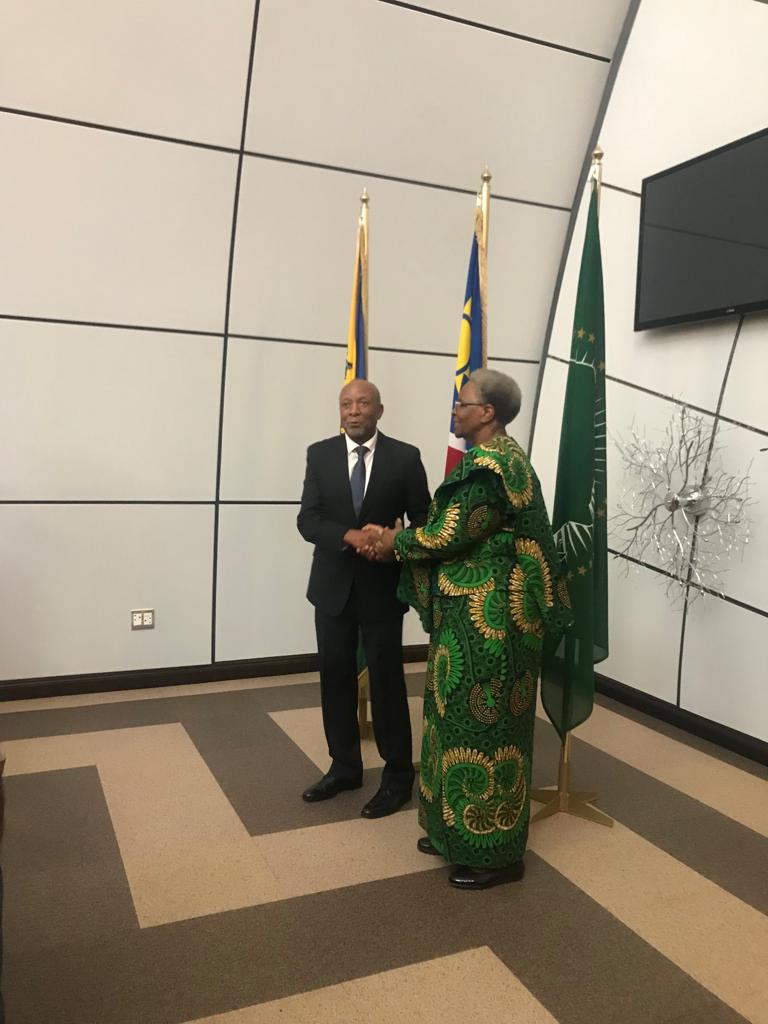
Figure 1: President Nangolo Mbumba (Left) and Vice-President Netumbo Nandi-Ndaitwah (Right)
The former president, Hage G Geingob is to be buried on Sunday the 25th of February 2023, as we draw nearer to the day, more and more people are curious about who this man was, the legacy he left and the successor to his office. In what turned out to be nearly clandestine, the Zenze page got access to the inauguration of the vice president who is being elected in accordance with Article 34 of the constitution of Namibia.
Article 34 requires the vice-president to take over as the interim president in circumstances such as the present one. President Mbumba will be the interim president until a new president is elected.
The Zenze team is no island to this curiosity, and so on the 4th of February 2024 a teammate found herself at this inauguration, hearing about the man, the legacy and the successor from some of those who were closest to him would beat a Google search rabbit-hole. It was without a doubt the type of nerve wrecking adventure for the young journalist, that makes it into an individuals’ “Hi, that’s me, I bet you’re wondering how I got here…” life reels. The room was top-full of dignitaries, head-officials from the NDF, Correctional Services and Police, not to mention members of the very slight 1% in Namibia.
“I just wore the face of someone who was meant to be in the room, broken camera in one hand and a phone on just 2% in the other…I just knew I had to be there,” she recounted a story that’ll make a good analogy for overcoming imposter syndrome someday. None apart from a keen-eyed correctional services official questioned her presence there after noticing that her camera wasn’t working. The room was sullen, sure, a new leader was being promoted, a woman becoming the first female vice-president of the nation, the occasion had all the elements of a celebration, but the circumstances that led to this were the undertone of the entire proceeding.
The somberness of it all was unavoidable, with congratulations delivered in light of shoes that needed to be filled rather than a new job attained. To say, “no pressure,” to President Mbumba would be like pointing at the eggshells surrounding his current role, and to say that to the newly elected Vice-President Netumbo Nandi-Ndaitwah, the first female vice-president of Namibia would be like telling her “hey, there’s a nail under one of these eggshells you’re treading on.” President Nangolo Mbumba has said that he will not be running for office in the November 2024 elections, and further added that even though he’s become president, he’d only ever dreamt of becoming a school principal, when they say “trust the journey” it’s because of stuff like this, you never really know how far that trust can take you, a title humbly claimed in light of the departure of his predecessor. Vice-President Nandi-Ndaitwah additionally takes up the role of the new presidential candidate for the South West Africa People’s Organisation (SWAPO).
The Minister of Information Communication and Technology has announced that President Hage G Geingob will be buried at the Heroes Acre in Windhoek on Sunday 25 February and the event is set to be broadcasted to the nation. Presidential elections will be held in November 2024 and youths all across the nation are becoming engaged in civic action and voters are highly encouraged to go through the manifestos of the parties to make informed decisions as voters.
Follow us on instagram @zenze_blog for more updates on what we’re up to and listen here for the latest podcast episode.
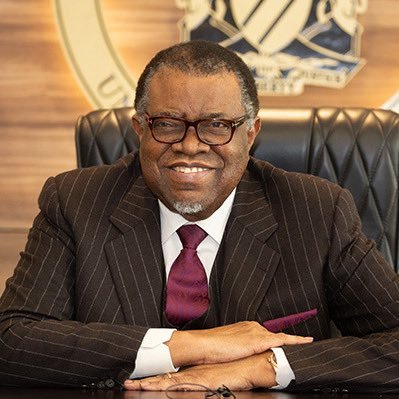
The third President of Namibia, Dr Hage Geingob passed away recently on the 4th of January 2024. The news followed updates on treatment for cancer that had been taking place in the days leading up to his passing. While his office was laced with evidence of corruption, his leadership upheld the type of Pan-Africanism that seeks to unite. One mark of this was his endorsement of the abolishment of the Namibia and Botswana use of passports which contributes to the Pan-African United Africa vision. Let’s take a look at some of the great work he carried out to feed into this vision:
A progressive constitution
The Constitution of Namibia was finalized in 1990 soon after Namibia had gained its independence amongst its chief contributors was the former president Dr Hage Geingob. The Constitution has been credited for the largely inclusive principles that it is based on as well as being as a well crafted guiding tool for the nation.
This attitude has not gone unnoticed. On Friday the 9th of February, a vigil is being held in his honour by the LGBTQ+ community.
Charisma Charisma Charisma
While politics and corruption scandals had resulted in a plunge in support, his wit and charisma did not alienate the youth from political discourse. Many leaders’ tone and discourse can come off dictatorial in a way that is alienating. African politics and cultures have often coincided at the “respect your elders” mantra. This, while important for social relationships, can, in many places plays out as authoritarian leadership with little room to have contrarian opinions. The Namibia led by President Hage saw the formation and rising of youth empowerment movements, voices and in some instances, visible, respectful and non-demeaning responses from officials. Of note was the meeting with the #shutitalldown leaders. The rhetoric of putting heads down to “respect the elders” even in the face of violations, is gradually being replaced with a politics of respect and tolerance, in part, because of the way he led.
Representation
Apart from the visible youth participation, in his time in power, women’s representation in parliament increased to an impressive 44%, the number of over 90% of laws have been gender responsive and his successor as leader of the SWAPO party was to be a woman. His approach to public scrutiny seemed to be that of collaboration and humour rather than being dismissive and undermining in some instances, I say this with the response to the #shutitalldown marches in mind, however much of a sell out, it may appeared to some, it can be translated into an effort towards recognizing citizens’ concerns.
Namibia is by no means a perfect country and President Hage Geingob was by no means the perfect president, but he made significant efforts which are deeply revered by many of those who lived in the country under his leadership. The passing of the president was a massive shock to many and his loss will be deeply felt. May he rest in eternal peace.



 ZENZE
ZENZE 