WHUDA: Preserving the art of Stonemasonry 

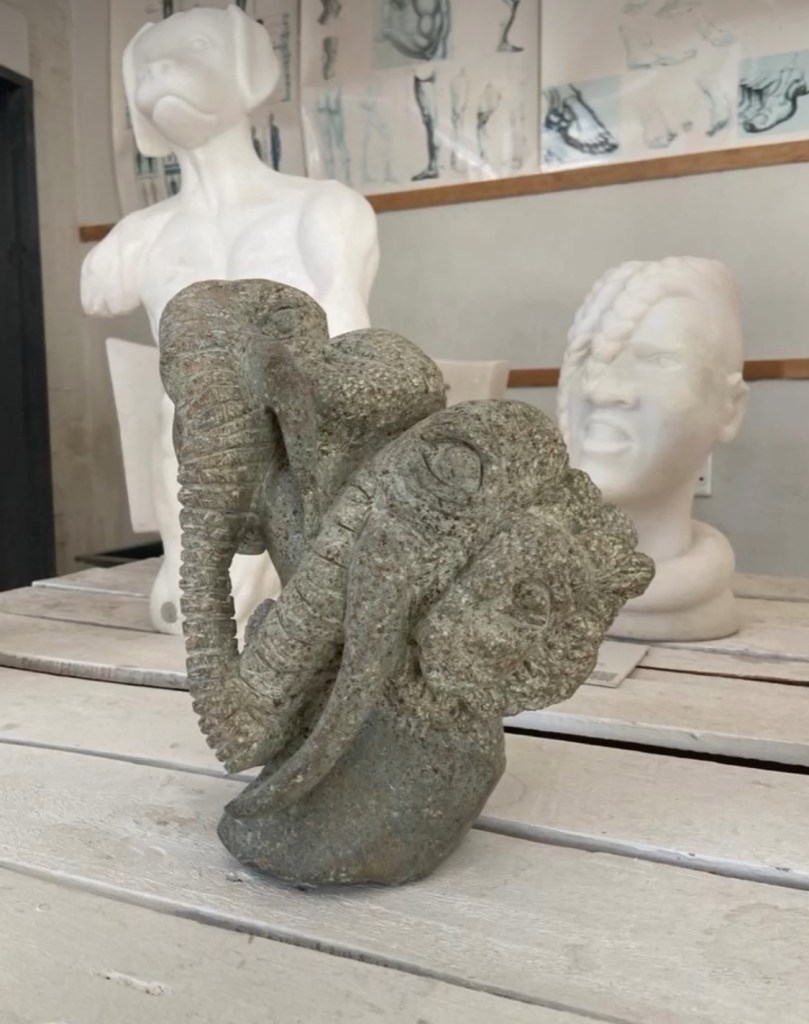
Stonework by Rivaldo Diamoh Sithole of WHUDA

WHUDA  (Winfried Holze Urban Design Architectures) a marble artworks studio which was started by Winfried  Holze in 2018. It has since become one of the few marble arts companies actively preserving and transferring the art of stonemasonry. 

Stonemasonry has, in the past decade, been cited as being amongst the fading forms of indigenous knowledge in Southern African countries. The Great Zimbabwe Museum, with the support of the Endangered Material Knowledge Programme, has been particularly focused on conserving the knowledge around dry stone masonry and encouraging a movement to reinvigorate the practice. It is an understatement to say that patronising this craft is a positive step in cultural appreciation.

The WHUDA team not only preserves this craft as artisans but they extend this skill to explore contemporary social narratives as well. 

On the 6th of March 2025 the National Art Gallery of Namibia will be hosting WHUDA in an exhibition titled “Earth to Light” and the possibility of seeing some great works while exploring some insightful themes is palpable. The team’s recent works include an exhibition during KIFA Week 2024 (Kalahari International Festival of Arts), where the WHUDA team showcased works inspired by cultural integrity and mental healthcare which are very crucial subjects in our globalised world. Their latest work, “Silhouette Evolution” was a multidisciplinary event which portrayed the potent role of stonemasonry in contemporary arts and culture. Here’s a dive into that event;

Silhouette Evolution: Stonemasonry on perception and transformation 
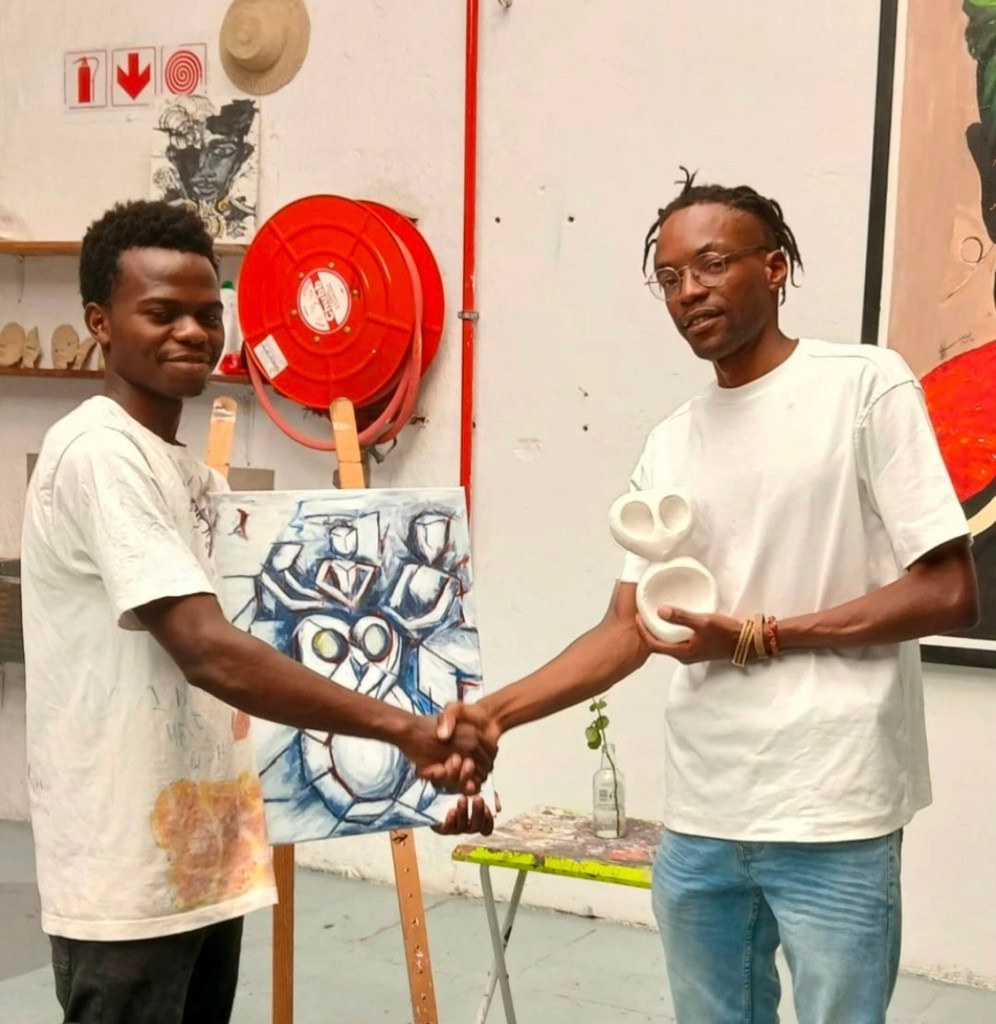
William Tonderai (Left) and Ino Ati the painter (Right)

On the 25th of January 2025, I had the exciting experience of attending the Silhouette Evolution live session by William and Ino Ati. A silhouette is an image often in a single hue and tone against a brighter background, usually a black shadow against a white backdrop. Evolution has to do with the gradual development of something. This event made use of these concepts to explore perception and transformation.

This was the scene of the event; a painter painting the image of a sculptor who was in the process of sculpting while the audience dipped in and out of observing that process. Going to add their strokes on two group paintings that were in the next room, having conversations and drinks or playing a game of pool. Meanwhile, the stone being carved, the reason we were all there, was going through its transformation amid all these activities. 

This event  was without a doubt, an insanely creative way to explore the nature of transformation. That the world doesn’t stop to watch you change and grow, you just do as the world goes on, so that Pinterest quote saying “Stop waiting for the right time, and just start working on being who you want to be” has some truth to it. 

One of the collective paintings the audience worked on, led by Shamoulla

In terms of perception, it seemed, the idea of a silhouette captures this very well. Fundamentally “what is your single hue image as everything else falls in the background?” and that “simply because it’s not the center of your perception doesn’t mean it loses value or ceases its own evolution” (your main character is not the only main character).

The event masterfully showcased three ideas associated with perception;

  1. That it is uniquely held;  different people may look at the same things yet walk away with different ideas of it.
  2. That to be perceived is not a requirement of transformation.
  3. That what we perceive to be of highest importance is often what shapes our experiences.

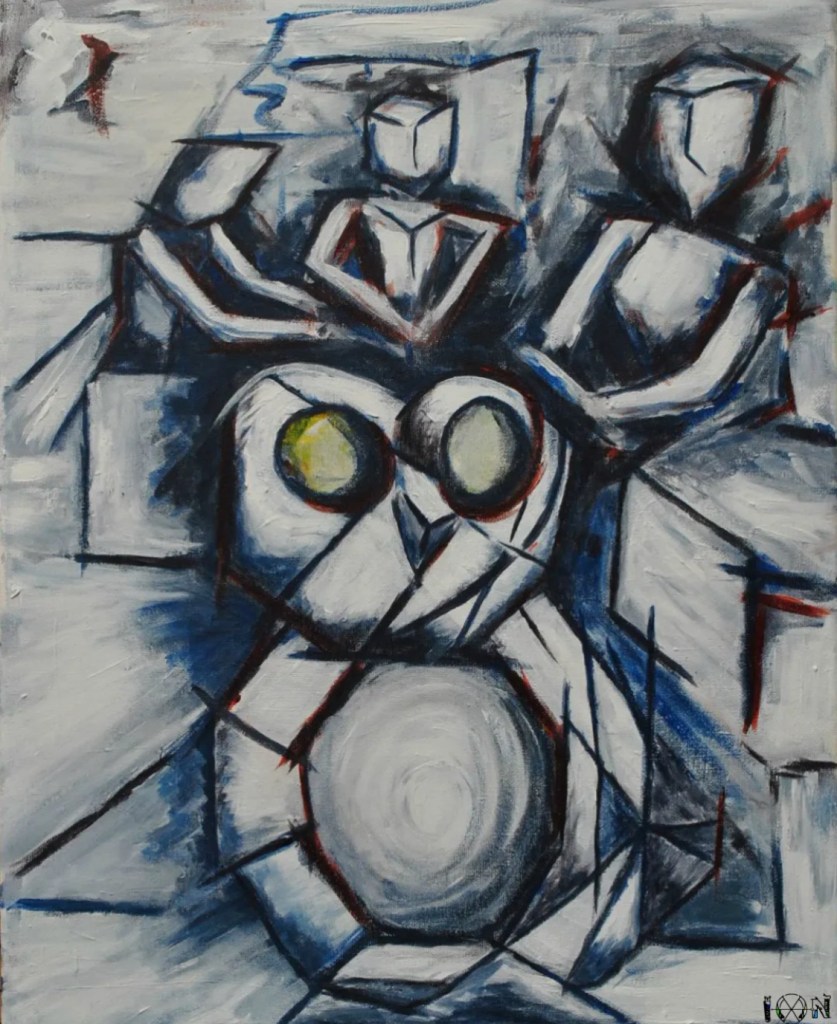
While the audience simply watched a man turn a rock into a rock shaped like an owl. The painter created a much more dynamic image,capturing the sculptor’s movements while centering the owl with yellow eyes emerging from a block of marble. I mention the stonework as being at center stage, but, gathering from the painting  titled “The sculptor’s nest”  it could easily be the sculptor’s immense focus around all the movement and noise that could be said to be the crowning piece of the event, or the painter’s creative eye and craft in his portrayal of the transformation taking place in front of him that were the event’s masterpieces, or the paintings in the next room that the audience passively worked on together with less attention given to them until the sculpture was done. Or someone could’ve walked away remembering the owl in the painting and how it’s yellow eyes were watching us, and the guys playing pool could be looking on the day they had a great game of pool which stopped because it rained.

Ultimately, the title Silhouette Evolution perfectly captures this idea of a fantastic transformation taking place in the background. The question of which fantastic transformation takes the forefront depends on the viewers perspective, at the same time, that single perspective doesn’t lessen the value of the other transformations taking place. 
William at work
Close Up of the Sculptors Nest by Ino Ati

Conclusion

Go visit the exhibition on the 6th of March 2024 at the NAGN to experience WHUDA artworks. The Silhouette Evolution is only one of the many means of storytelling and exploring of concepts that the WHUDA team has participated in. As they continue to contribute to the preservation of stonemasonry as an art form, their creations and the narratives they explore effectively document the times in culturally specific forms, while having the potential to address several contemporary issues.
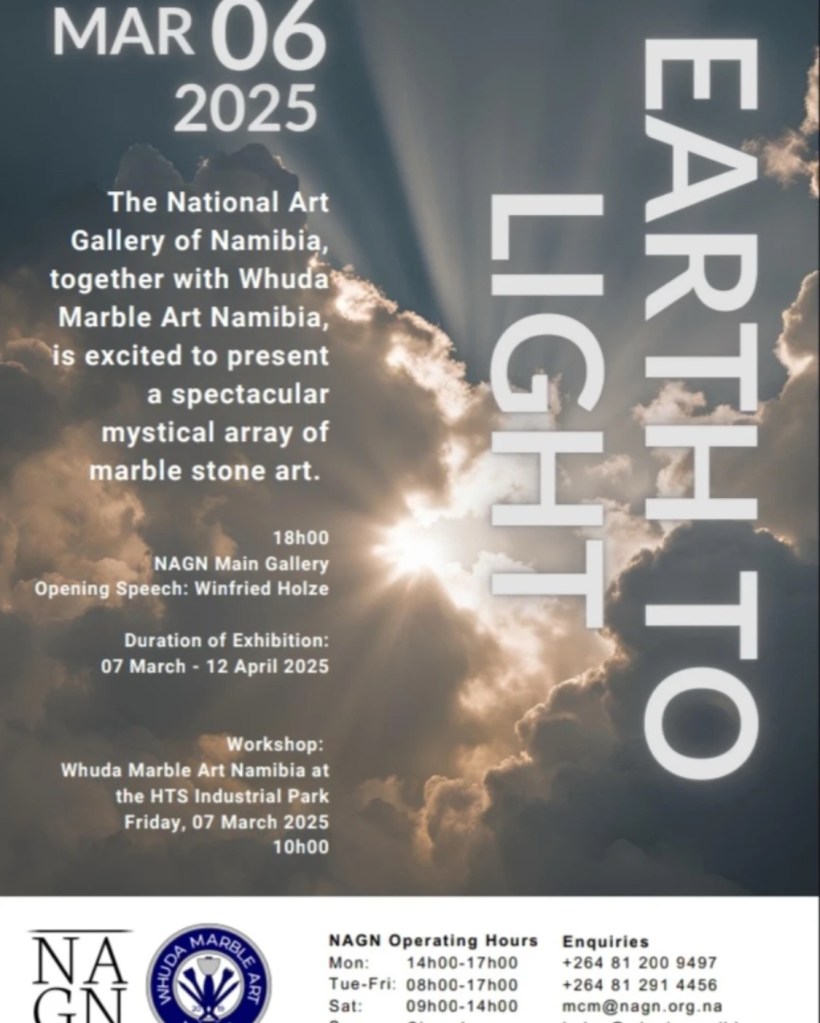
Earth to Light Exhibition Poster

Reach out;

WHUDA: 

Instagram: @whudamarbleartnamibia

Website : http://www.whudamarbleart.com

Ino Ati (Painter of “The sculptors nest”) : @by_ino_ati (instagram)

Shamoulla (Coordinator of the group paintings): @shamoulla_creating (instagram)
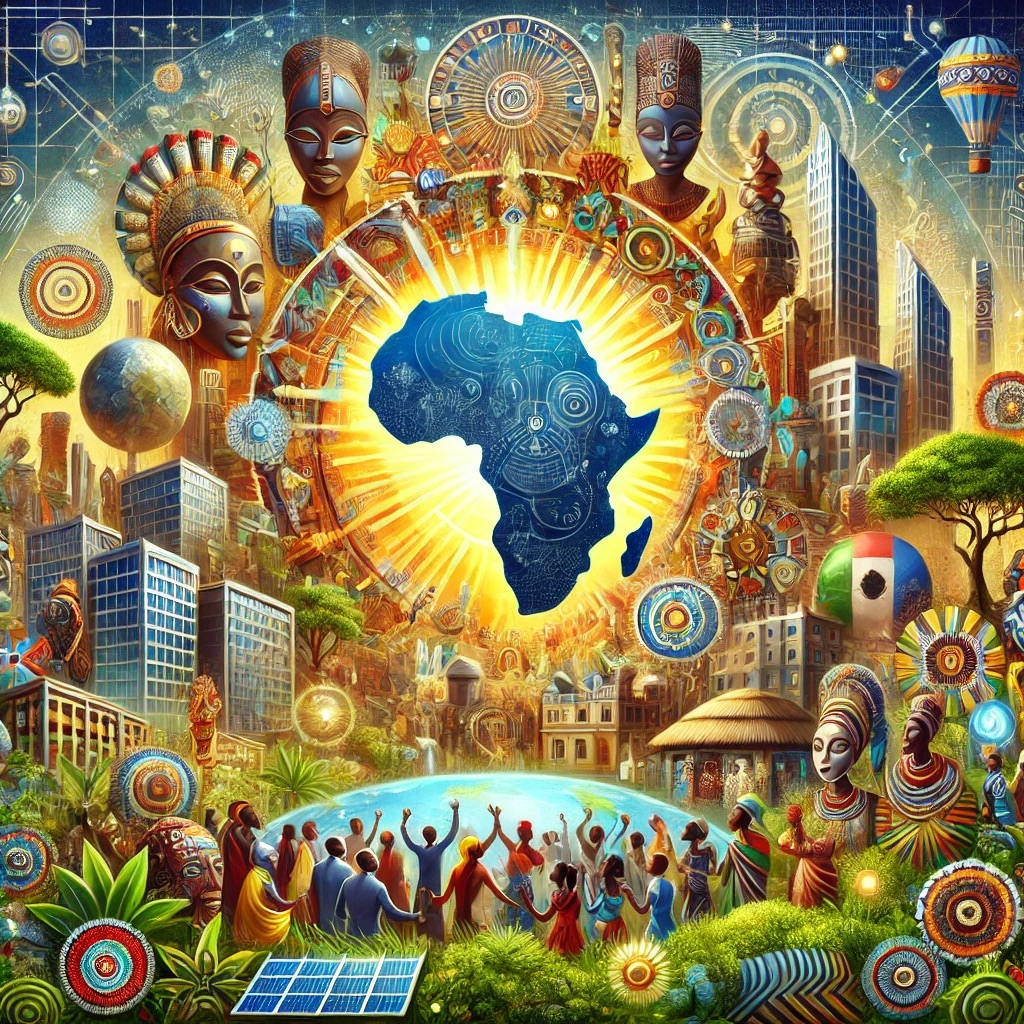
Global Africanism and the African Renaissance

The  African Renaissance is taking place and through it we are fortunate to be at the forefront of seeing Africa take her place in the world. There are ongoing efforts at decolonising several industries, reclaiming narratives as well as embracing and contextualising  cultures. The idea of  Global Africanism looks at where Africa finds herself during this transformative era and how she interacts with her global peers. 

The term was popularised in an edition of the General History of Africa project which was introduced by UNESCO in an effort to support Africans reclaiming their narratives. The purpose of the Global African movement was to bridge the militant goals of the Pan-African movement with the diplomatic efforts of international bodies such as the AU and the UN. On one end, making PanAfricanism fit global diplomacy standards has been seen as a form of giving up and folding over to forceful powers, with leaders such as Malcom X fervently urging his followers to remain distrustful when it came to diplomatic approaches to conflict resolution. On the other hand it is the diplomatic approaches of leaders such as Nelson Mandela, that helped translate PanAfrican goals and get state freedom.

In his 2019 paper A call for a ‘right to development’- informed pan-Africanism in the twenty-first century, Kamga discusses how the rest of the world can take part in the African Renaissance particularly in the realisation of the right to development. That way, he essentially incorporates Global Africanism in his arguments. Outlining how international tools created to maintain diplomatic relations, can be useful pathways for development only if Pan-African goals are centralised rather than the neo-colonialist outcomes that many African countries have become subjected to. This right  is  outlined in Article 22 of the 1981 African Union Charter, the basis of the 2001 New Partnerships for Africa’s Development program by the Au as well as Resolution 41/128 of the UN General Assembly (the Declaration on the Right to Development) and is embodied in the 2030 Agenda for Sustainable Development.

In a 1998 speech Thabo Mbeki made a reference to the Japanese Meiji period when illustrating the possibilities of the African Renaissance, a time of industrialisation for the Japanese and successful resistance to being colonised. In this it’s made clear that  most important means of achieving this is building such an interest, especially amongst the emerging young Africans, to form united African nations, to learn and contextualise what’s working for others, all while maintaining cultural integrity.

Thabo Mbeki spoke a lot about the African Renaissance during his presidency, making clear his ambitions to bring South Africa to a level playing field with global superpowers. This ambition and vision stirred up hope for a much more successful South Africa, but in implementation, he faced criticism for placing so much focus on these diplomatic relations that he’d neglect meeting many South Africans’ immediate needs like employment for a great amount of the youths. That being said, Kamga’s approach seems to address what much of Thabo Mbeki’s approach missed. Voicing how the need to meet practical needs is an international objective that can still be met.

Global Africanism and the African Renaissance are PanAfrican concepts that, not only call for the imagination of a better future, but collaborative efforts to making that future a reality. Kamga makes it clear that the potential exists for everyone to take part in this. We’re one year closer to the Global Agenda for Sustainable Development’s vision 2030 and it’s exciting to see ideas that aim to make PanAfrican goals a reality.

ǂAONI //AES : Reclaiming the Historic Narrative of the ǂAoni People Through Theatre

Section 6 of the Swakopmund Protocole

The owners of the rights shall be the holders of traditional knowledge, namely the local and traditional communities, and recognized individuals within such communities, who create, preserve and transmit knowledge in a traditional and intergenerational context in accordance with the provisions of section 4.

The application of this section is partially significant for how it allows customary groups to take ownership of their stories. The colonial era had oppressors taking the role of the authority on people’s stories. While we remain grateful for education, we can’t neglect the messaging that, “foreign knowledge is superior to indigenous knowledge.” This has played out as indigenous people not often being at the forefront of being historians of their own cultures. Since independence, many cultural groups have been making efforts to correct the stories that have been told about them. In this article we’re covering two works that have been conducted in Namibia, surrounding the cultural relationship between people and the ocean.

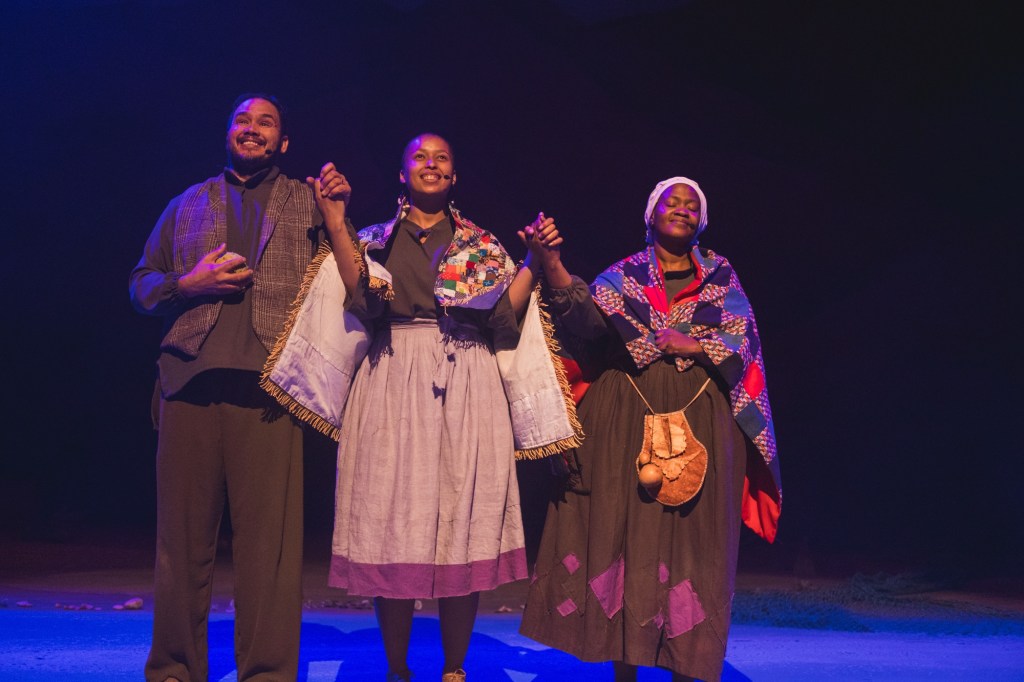
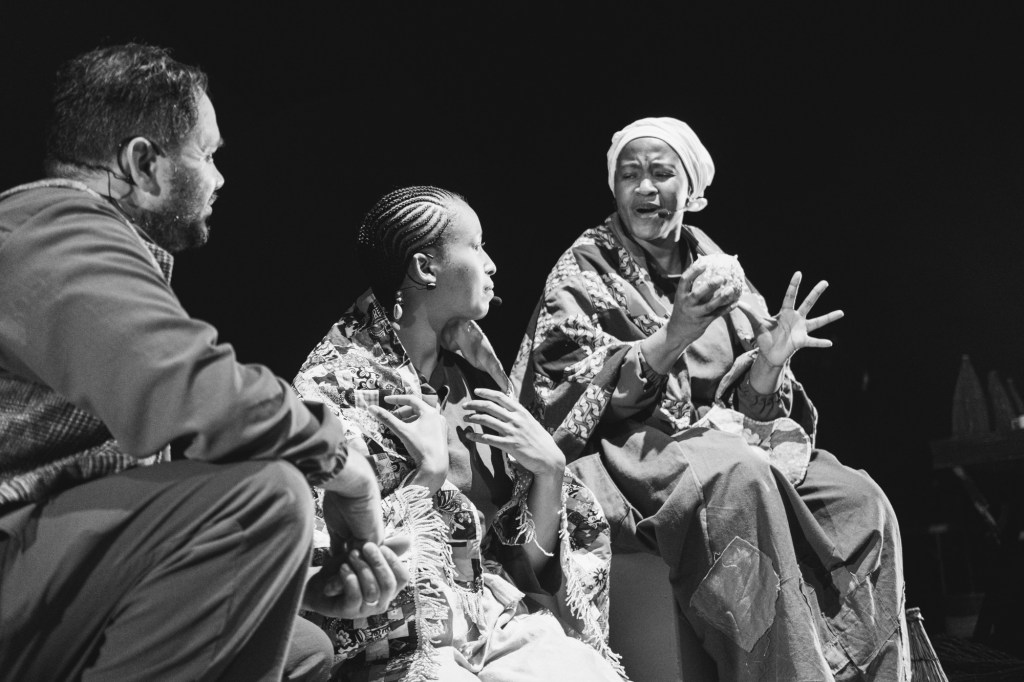
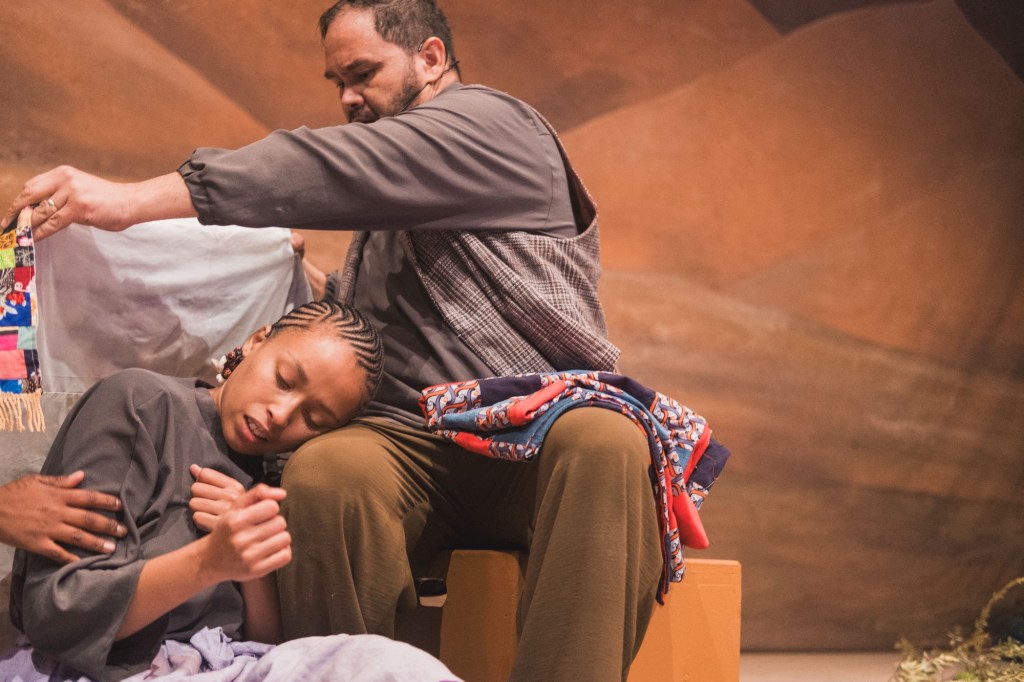
A phenomenal production retelling the story of the ǂAoni people and the ocean. The play consists of a cast of three, the father (Dawie Engelbrecht), the mother played by Hazel Hinda and their daughter Khoendikhoes, played by Chantell Uiras (Diolini). The story follows the three as they revisit the events of the colonial past and how these impacted on the current socioeconomic position of the ǂAoni people, a clan of Nama people mostly found around the !Kuiseb river in the Erongo region also referred to as the Topnaar community.

Setting things straight

One of the main issues covered in this play is that of the history of the community. Colonial era historians alleged that the community’s displacement during the colonial era was in response to countering fighting within the community and harm to the natural environment. The story starts by letting us know who these people were recognized as, ‘the water people’ or guardians of the water and marine life. Their role as caretakers was undermined by the ambitions of the colonizers. It was also clear that they were moved without consultation and that it was carried out in a forceful and chaotic manner. They did not stand a chance against the armed invaders and had no other choice but to comply. An all too familiar history. Before anyone else felt the hit of the colonial invaders, they, being at the coast, felt the first and strongest blows, and because the settling of foreign invaders on the coastal territory did not help their case much.

They spoke of the !Nara fruit (Acanthosicyos horrida), how it was not just food, but the unique way in which each family farmed it was a way to distinguish between families. After the displacement, restoring the practices that were central to their cultural identities has been a struggle not so much because they have lost the capacity to do so, but more because of the policies put in place to make sure that they never do Policies that have seen their way into post-independence Namibia. The play was not made out to be an attack on the contemporary government, but a channel to shed light to the fact that they (the Topnaar community) too are a people that were uniquely disempowered by the apartheid system, and that their story continues to be swept under other emerging and apparent issues. The story has been written in collaboration with academic research institutes like the University of Namibia (UNAM), One Ocean Hub, Global Research Fund, and UK Research and Innovation. Researchers such as Robert Vigne are also amongst those who have showcased the significantly disproportionate level of harm faced by the Topnaar Community during the colonial era. It’s safe to say that the message shared is one grounded in facts not a baseless critique.

When speaking to the audience after the play, a leader from the ǂAonin community, Joel Kooitjie, as well as, acting chief of community Stoffel Anamab, pointed out the struggles that their people continue to face today. Some impacts include the fact that they are only about two Topnaar people in local authority offices and that decision makers in their area can sometimes fail to capture their context very well and ultimately miss their needs. Furthermore, as a community that had largely survived on marine life for sustenance, bearing witness to the harm the ocean and its creatures have faced while disempowered from taking any feasible steps to help serves as a testament to the gradual weakening of their own development, this is in part because a great amount of their income came from inland circulation of oceanic goods. The historical and cultural relevance of ocean governance in this community has been significantly undermined and resulted in having to re-adapt to a life where their strongest skills remain in the backburner. It goes without saying that this need to suppress who they are in order to be convenient for invaders is a level of robbery that digs at the core of personhood.

Conclusion

The play ǂAONI //AES is an example of the Swakopmund Protocole at work. It’s the active reclaiming of a history by the people. It is also an assertion of who they are and who this land has known them to be. The impoverishment and struggle they face today is a result of being subject to a system that has unfortunately kept them down. The post-colonial government canntot take the blame for this, but, in their continuous efforts to decolonize Namibia, they can take the Topnaar Community and their pleas into consideration. 

An Africa for Africans: Alternative Political Theories; Black Anarchism and Democracy

In this series of An Africa for Africans we’re exploring alternative political philosophies and we’re kicking it off with Black Anarchism. Black Anarchism evokes thoughts of chaos and radicalism in its most extreme form, it did start off that way with movements like the Black Panthers in the USA and the Zabalaza Anarchist Communist Front in South Africa. Contemporary Anarchism is far tamer than that. It involves questioning the legitimacy of power and promoting agency. The goals of anarchism are not to replace one power with another but to completely do away with imperialism. In an anarchist society, everyone is in charge. It’s election season in many parts of the world and it seems like a good time to discuss power and politics, why not shake things up by starting with a theory that advocates against hierarchical power? 

It’s election season in many places. In this decade, Guinea-Bissau followed Zambia got the opposition party elected. Zimbabwe’s elections this year had the same old result, and aftermath of a witch hunt of opposition party leaders because the results were just too close this time, this is the story in many African countries. 

The notion “If you don’t vote you lose the right to complain” is what led me to anarchism. Anarchism is a philosophy that was mainly founded by Robert Nozick. His philosophy was adopted by Black Anarchists who had been frustrated by being overpowered by state violence and identified with the philosophy’s goal to promote agency in citizens. Contemporary Black Anarchists often steer clear of promoting violence, especially because Black anarchists like Kuwasi Balagoon were very militant and unafraid to kill. Contemporary Black Anarchism is combined with other philosophies that make up for the areas where extreme militant action would have been put. Feminist Black Anarchism for example acknowledges that there are useful policies in place, but asks us to question the legitimacy of institutes if things like victim blaming can, in some instances be accepted, debatably the legal concept of ‘reasonable care’ could fall into this. It takes the ‘radical view’ that the most effective system is one where people don’t have to be careful. This is something that would be difficult to apply without some heavy policing. It’s taken place in the form of cancel culture, which has some hectic pros and cons.

Its election season, are we capable of a social structure with no leaders? I’m no politics expert, there’s something a little sad and funny about the differences in how politics play out in the west and in many parts of Africa. The west has the liberals and the conservatives, and many of us in Africa have the state party and the opposition parties. Politics in Africa is more a game of ‘who can topple them off’ rather than a contest of ideologies in many African countries. It has for a long time been about patronage. This is after all how the professional sphere of African communities works, the ubuntu of business is to remain a loyal customer. Your fellow citizen, found family, has given you good service, you must keep them alive. This is how we can help each other to sustain ourselves. Somehow politicians in Africa have turned power into a closed community business that many must keep alive. Yet teach us about rotational leaderships that take place within democratic systems. 

The politics has become caught between those who seek to remain loyal to what they have always known, even if what they have known has been failing them in ways that they also complain about (e.g. land, unemployment, homelessness…), and those who want change and to address other problems that are treated as too foreign because a lot of people turn a blind eye to the practical harms to human rights that are pointed out by these movements, yet the harm still persists, (climate justice, LGBTQ+ rights, animal rights…)  

Voting in many places does not seem to be about the agenda and goals of the candidates, but more about displacing the one in power. Let’s face it, elections are the most accessible form of participation in the democratic system that most citizens get. Parliamentary procedures and public hearings often don’t incite participation because they seem more complicated and boring than most people would be put up with. It’s the formality of it all, the lack of movie magic, civic engagement seems too serious and divisive without much of a payout because decision makers seem to have the final word anyway. Anarchist politics calls for people to determine that on their own, what could that look like in a time when technology is being used to make most activities entertaining? But then again, too many cooks in the kitchen spoils the soup.

That’s it from me for now, comment below, what are your thoughts on Black Anarchism?