

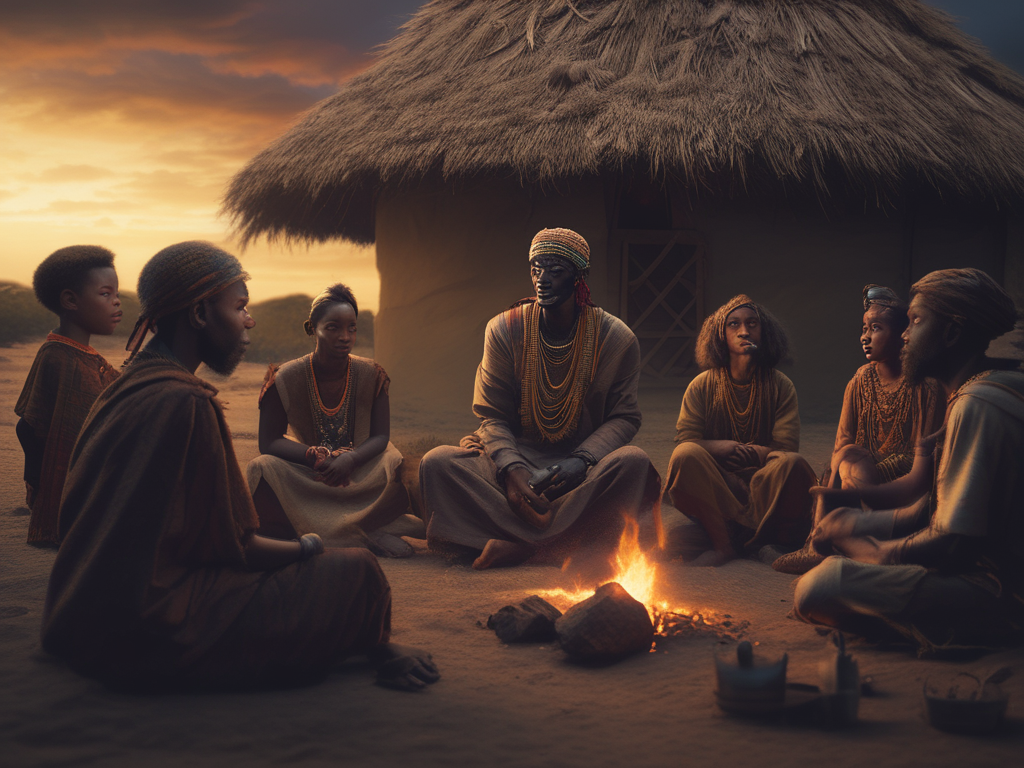
The Swakopmund Protocol was created to make sure that Africans are the beneficiaries of all African Traditional Knowledge and it’s the central player in our latest exploration of rights in the series, Africa for Africans. We’re diving into works by some artists who have been using these intellectual property rights to pay homage to their cultures and contribute to the evolution of folk telling.
In a nutshell, this protocol was developed by the African Regional Intellectual Property Organization (ARIPO), with the goal of allowing customary groups to have their traditional knowledge and expressions of folklore protected. The colonial era brought about the consequence of demonizing African lore. All of a sudden stories that had been shared for educational purposes, entertainment and community building became sub-par. It’s no secret that such systemic changes had greater, long lasting impacts. Some notable impacts are biopiracy, the false retelling of local knowledge by invaders, and a forced depersonalization of cultural identities.
Protecting the knowledge and how it is expressed and who gets to express in allows African groups to reclaim narratives and forge new, desired identities. In this legal tool, “expressions” include:
- verbal expressions, such as stories, epics, legends, poetry, riddles and other narratives such as signs, words, symbols and names;
- musical expressions, such as songs and instrumental music;
- expressions by movement, such as dances, plays, rituals and other performances, whether or not reduced to a material form; and
- tangible expressions, such as productions of art, in particular, drawings, designs, paintings, carvings, sculptures, pottery, terracotta, mosaic, woodwork, metal ware, jewellery, basketry, needlework, textiles, glassware, carpets, costumes, handicrafts, musical instruments and architectural forms.
ARIPO was established in 1976 in Lusaka, to specifically regulate and address the intellectual property rights of Africans. Soon after this, the Harare protocol was created in 1982, giving special attention to patents and industrial designs. Following this was the Banjul Protocol of 1993 which addressed trademarks and service marks.
Neither addressed traditional knowledge and folklore. In 2004 ARIPO sought assistance from the World Intellectual Property Organisation seeking assistance with formulating a legal tool that could address this. After all, traditional stories, lore, music and art are aspects of cultural identities and are not like other creative works that can be copywritten and attributed to specific, clearly identifiable, individual artists.
So, the Swakopmund Protocol was created to address the need to protect traditional knowledge and folklore in August 2010. There are still some conflicts surrounding rights over traditional knowledge, like ownership of brewing processes or rock painting styles that stretch across different cultures, these aspects are still being worked around and well dive into them more in upcoming releases. This introductory post gives a brief glance at this tool, stay tuned as we talk more about how this has helped in the development of Afrofuturism, contemporary artworks and economic development in different African countries.
 ZENZE
ZENZE 