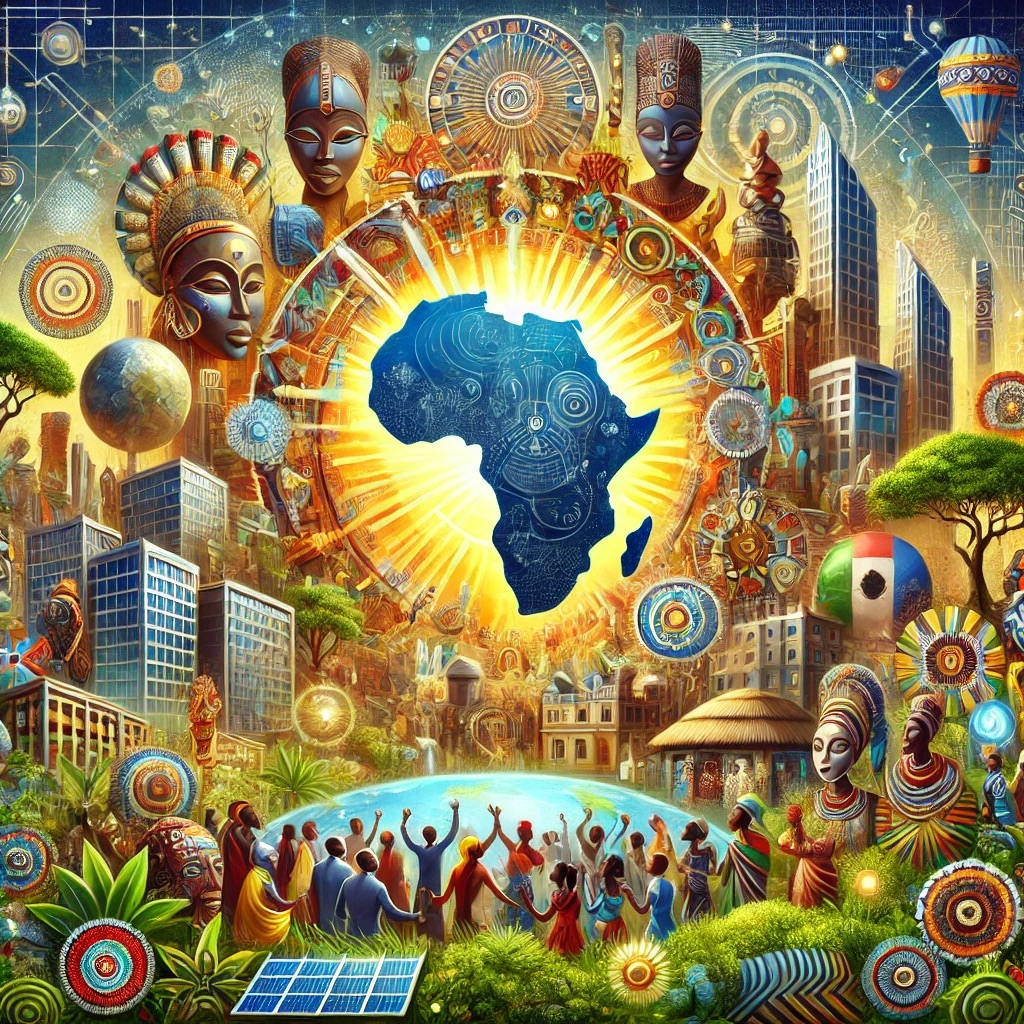
The African Renaissance is taking place and through it we are fortunate to be at the forefront of seeing Africa take her place in the world. There are ongoing efforts at decolonising several industries, reclaiming narratives as well as embracing and contextualising cultures. The idea of Global Africanism looks at where Africa finds herself during this transformative era and how she interacts with her global peers.
The term was popularised in an edition of the General History of Africa project which was introduced by UNESCO in an effort to support Africans reclaiming their narratives. The purpose of the Global African movement was to bridge the militant goals of the Pan-African movement with the diplomatic efforts of international bodies such as the AU and the UN. On one end, making PanAfricanism fit global diplomacy standards has been seen as a form of giving up and folding over to forceful powers, with leaders such as Malcom X fervently urging his followers to remain distrustful when it came to diplomatic approaches to conflict resolution. On the other hand it is the diplomatic approaches of leaders such as Nelson Mandela, that helped translate PanAfrican goals and get state freedom.
In his 2019 paper A call for a ‘right to development’- informed pan-Africanism in the twenty-first century, Kamga discusses how the rest of the world can take part in the African Renaissance particularly in the realisation of the right to development. That way, he essentially incorporates Global Africanism in his arguments. Outlining how international tools created to maintain diplomatic relations, can be useful pathways for development only if Pan-African goals are centralised rather than the neo-colonialist outcomes that many African countries have become subjected to. This right is outlined in Article 22 of the 1981 African Union Charter, the basis of the 2001 New Partnerships for Africa’s Development program by the Au as well as Resolution 41/128 of the UN General Assembly (the Declaration on the Right to Development) and is embodied in the 2030 Agenda for Sustainable Development.
In a 1998 speech Thabo Mbeki made a reference to the Japanese Meiji period when illustrating the possibilities of the African Renaissance, a time of industrialisation for the Japanese and successful resistance to being colonised. In this it’s made clear that most important means of achieving this is building such an interest, especially amongst the emerging young Africans, to form united African nations, to learn and contextualise what’s working for others, all while maintaining cultural integrity.
Thabo Mbeki spoke a lot about the African Renaissance during his presidency, making clear his ambitions to bring South Africa to a level playing field with global superpowers. This ambition and vision stirred up hope for a much more successful South Africa, but in implementation, he faced criticism for placing so much focus on these diplomatic relations that he’d neglect meeting many South Africans’ immediate needs like employment for a great amount of the youths. That being said, Kamga’s approach seems to address what much of Thabo Mbeki’s approach missed. Voicing how the need to meet practical needs is an international objective that can still be met.
Global Africanism and the African Renaissance are PanAfrican concepts that, not only call for the imagination of a better future, but collaborative efforts to making that future a reality. Kamga makes it clear that the potential exists for everyone to take part in this. We’re one year closer to the Global Agenda for Sustainable Development’s vision 2030 and it’s exciting to see ideas that aim to make PanAfrican goals a reality.
The owners of the rights shall be the holders of traditional knowledge, namely the local and traditional communities, and recognized individuals within such communities, who create, preserve and transmit knowledge in a traditional and intergenerational context in accordance with the provisions of section 4.
The application of this section is partially significant for how it allows customary groups to take ownership of their stories. The colonial era had oppressors taking the role of the authority on people’s stories. While we remain grateful for education, we can’t neglect the messaging that, “foreign knowledge is superior to indigenous knowledge.” This has played out as indigenous people not often being at the forefront of being historians of their own cultures. Since independence, many cultural groups have been making efforts to correct the stories that have been told about them. In this article we’re covering two works that have been conducted in Namibia, surrounding the cultural relationship between people and the ocean.
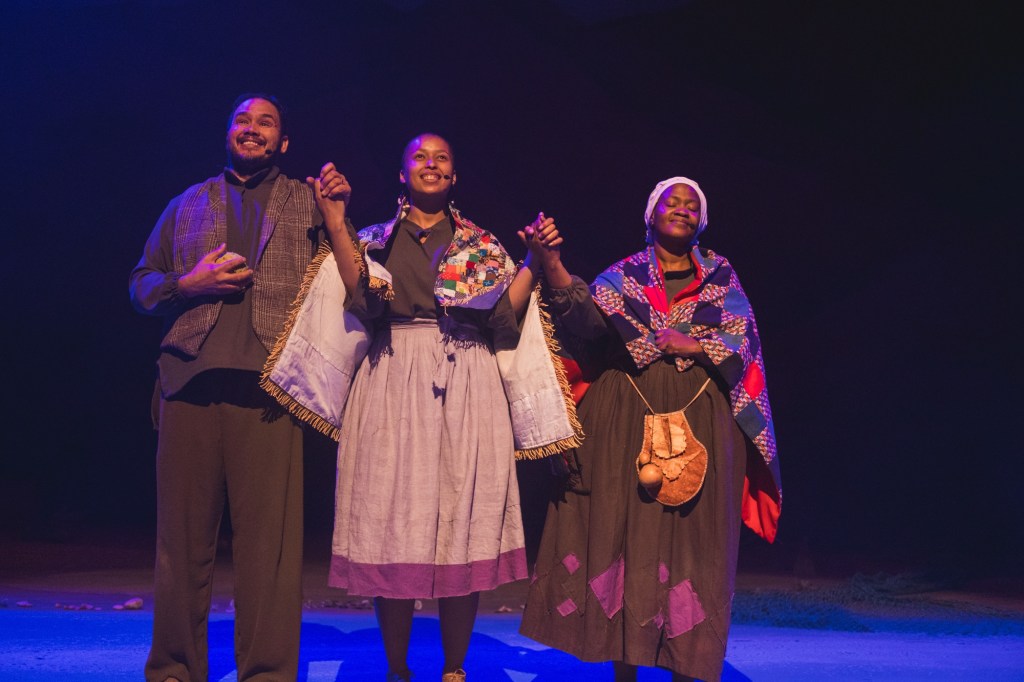
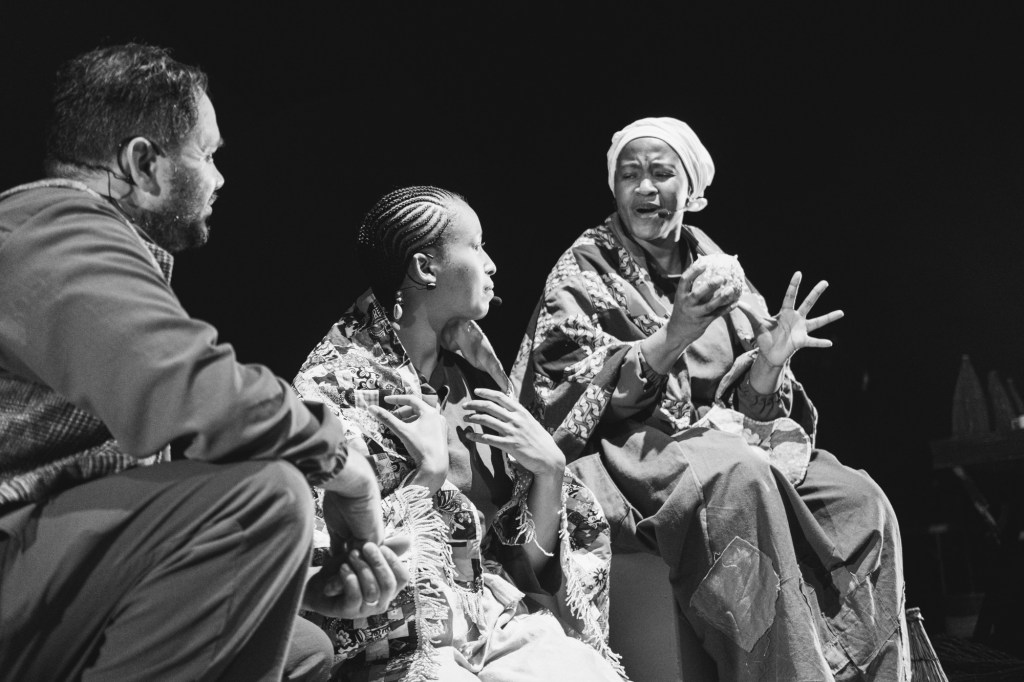
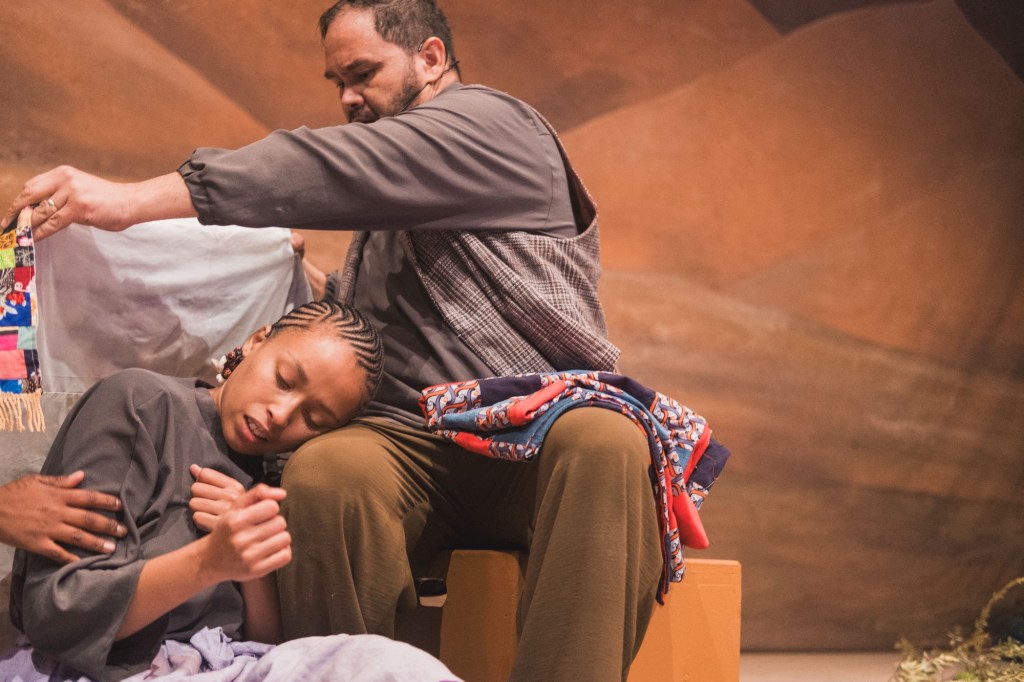
A phenomenal production retelling the story of the ǂAoni people and the ocean. The play consists of a cast of three, the father (Dawie Engelbrecht), the mother played by Hazel Hinda and their daughter Khoendikhoes, played by Chantell Uiras (Diolini). The story follows the three as they revisit the events of the colonial past and how these impacted on the current socioeconomic position of the ǂAoni people, a clan of Nama people mostly found around the !Kuiseb river in the Erongo region also referred to as the Topnaar community.
Setting things straight
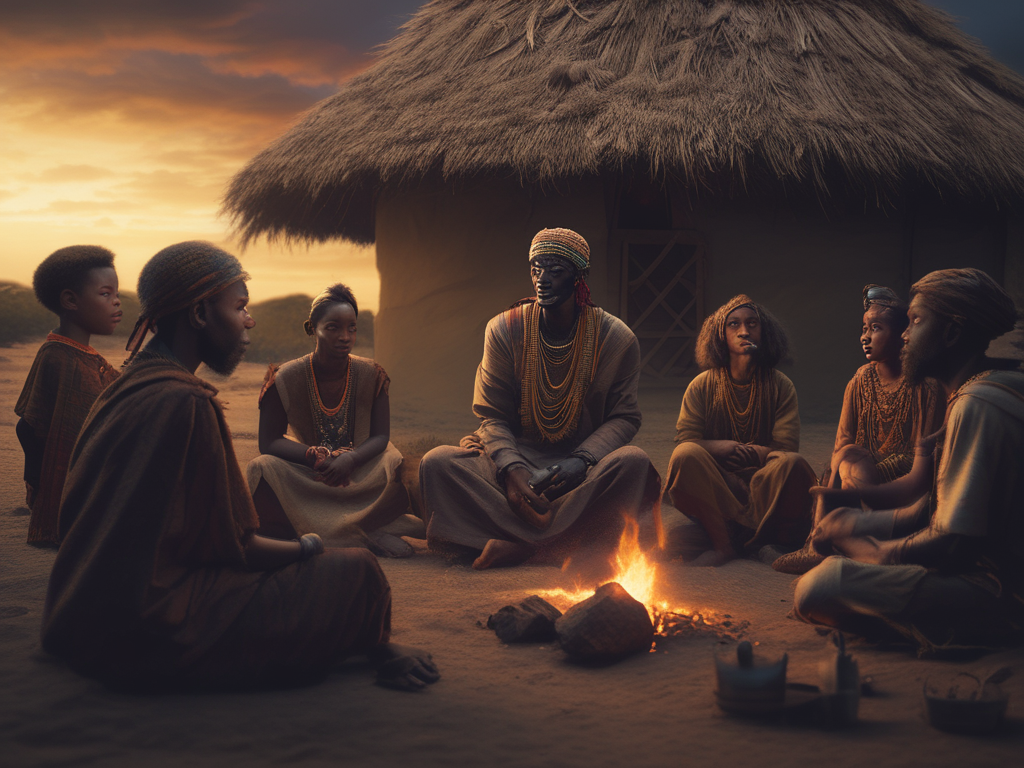
One of the main issues covered in this play is that of the history of the community. Colonial era historians alleged that the community’s displacement during the colonial era was in response to countering fighting within the community and harm to the natural environment. The story starts by letting us know who these people were recognized as, ‘the water people’ or guardians of the water and marine life. Their role as caretakers was undermined by the ambitions of the colonizers. It was also clear that they were moved without consultation and that it was carried out in a forceful and chaotic manner. They did not stand a chance against the armed invaders and had no other choice but to comply. An all too familiar history. Before anyone else felt the hit of the colonial invaders, they, being at the coast, felt the first and strongest blows, and because the settling of foreign invaders on the coastal territory did not help their case much.
They spoke of the !Nara fruit (Acanthosicyos horrida), how it was not just food, but the unique way in which each family farmed it was a way to distinguish between families. After the displacement, restoring the practices that were central to their cultural identities has been a struggle not so much because they have lost the capacity to do so, but more because of the policies put in place to make sure that they never do Policies that have seen their way into post-independence Namibia. The play was not made out to be an attack on the contemporary government, but a channel to shed light to the fact that they (the Topnaar community) too are a people that were uniquely disempowered by the apartheid system, and that their story continues to be swept under other emerging and apparent issues. The story has been written in collaboration with academic research institutes like the University of Namibia (UNAM), One Ocean Hub, Global Research Fund, and UK Research and Innovation. Researchers such as Robert Vigne are also amongst those who have showcased the significantly disproportionate level of harm faced by the Topnaar Community during the colonial era. It’s safe to say that the message shared is one grounded in facts not a baseless critique.
When speaking to the audience after the play, a leader from the ǂAonin community, Joel Kooitjie, as well as, acting chief of community Stoffel Anamab, pointed out the struggles that their people continue to face today. Some impacts include the fact that they are only about two Topnaar people in local authority offices and that decision makers in their area can sometimes fail to capture their context very well and ultimately miss their needs. Furthermore, as a community that had largely survived on marine life for sustenance, bearing witness to the harm the ocean and its creatures have faced while disempowered from taking any feasible steps to help serves as a testament to the gradual weakening of their own development, this is in part because a great amount of their income came from inland circulation of oceanic goods. The historical and cultural relevance of ocean governance in this community has been significantly undermined and resulted in having to re-adapt to a life where their strongest skills remain in the backburner. It goes without saying that this need to suppress who they are in order to be convenient for invaders is a level of robbery that digs at the core of personhood.
Conclusion
The play ǂAONI //AES is an example of the Swakopmund Protocole at work. It’s the active reclaiming of a history by the people. It is also an assertion of who they are and who this land has known them to be. The impoverishment and struggle they face today is a result of being subject to a system that has unfortunately kept them down. The post-colonial government canntot take the blame for this, but, in their continuous efforts to decolonize Namibia, they can take the Topnaar Community and their pleas into consideration.
The Swakopmund Protocol was created to make sure that Africans are the beneficiaries of all African Traditional Knowledge and it’s the central player in our latest exploration of rights in the series, Africa for Africans. We’re diving into works by some artists who have been using these intellectual property rights to pay homage to their cultures and contribute to the evolution of folk telling.
In a nutshell, this protocol was developed by the African Regional Intellectual Property Organization (ARIPO), with the goal of allowing customary groups to have their traditional knowledge and expressions of folklore protected. The colonial era brought about the consequence of demonizing African lore. All of a sudden stories that had been shared for educational purposes, entertainment and community building became sub-par. It’s no secret that such systemic changes had greater, long lasting impacts. Some notable impacts are biopiracy, the false retelling of local knowledge by invaders, and a forced depersonalization of cultural identities.
Protecting the knowledge and how it is expressed and who gets to express in allows African groups to reclaim narratives and forge new, desired identities. In this legal tool, “expressions” include:
verbal expressions, such as stories, epics, legends, poetry, riddles and other narratives such as signs, words, symbols and names;
musical expressions, such as songs and instrumental music;
expressions by movement, such as dances, plays, rituals and other performances, whether or not reduced to a material form; and
tangible expressions, such as productions of art, in particular, drawings, designs, paintings, carvings, sculptures, pottery, terracotta, mosaic, woodwork, metal ware, jewellery, basketry, needlework, textiles, glassware, carpets, costumes, handicrafts, musical instruments and architectural forms.
ARIPO was established in 1976 in Lusaka, to specifically regulate and address the intellectual property rights of Africans. Soon after this, the Harare protocol was created in 1982, giving special attention to patents and industrial designs. Following this was the Banjul Protocol of 1993 which addressed trademarks and service marks.
Neither addressed traditional knowledge and folklore. In 2004 ARIPO sought assistance from the World Intellectual Property Organisation seeking assistance with formulating a legal tool that could address this. After all, traditional stories, lore, music and art are aspects of cultural identities and are not like other creative works that can be copywritten and attributed to specific, clearly identifiable, individual artists.
So, the Swakopmund Protocol was created to address the need to protect traditional knowledge and folklore in August 2010. There are still some conflicts surrounding rights over traditional knowledge, like ownership of brewing processes or rock painting styles that stretch across different cultures, these aspects are still being worked around and well dive into them more in upcoming releases. This introductory post gives a brief glance at this tool, stay tuned as we talk more about how this has helped in the development of Afrofuturism, contemporary artworks and economic development in different African countries.
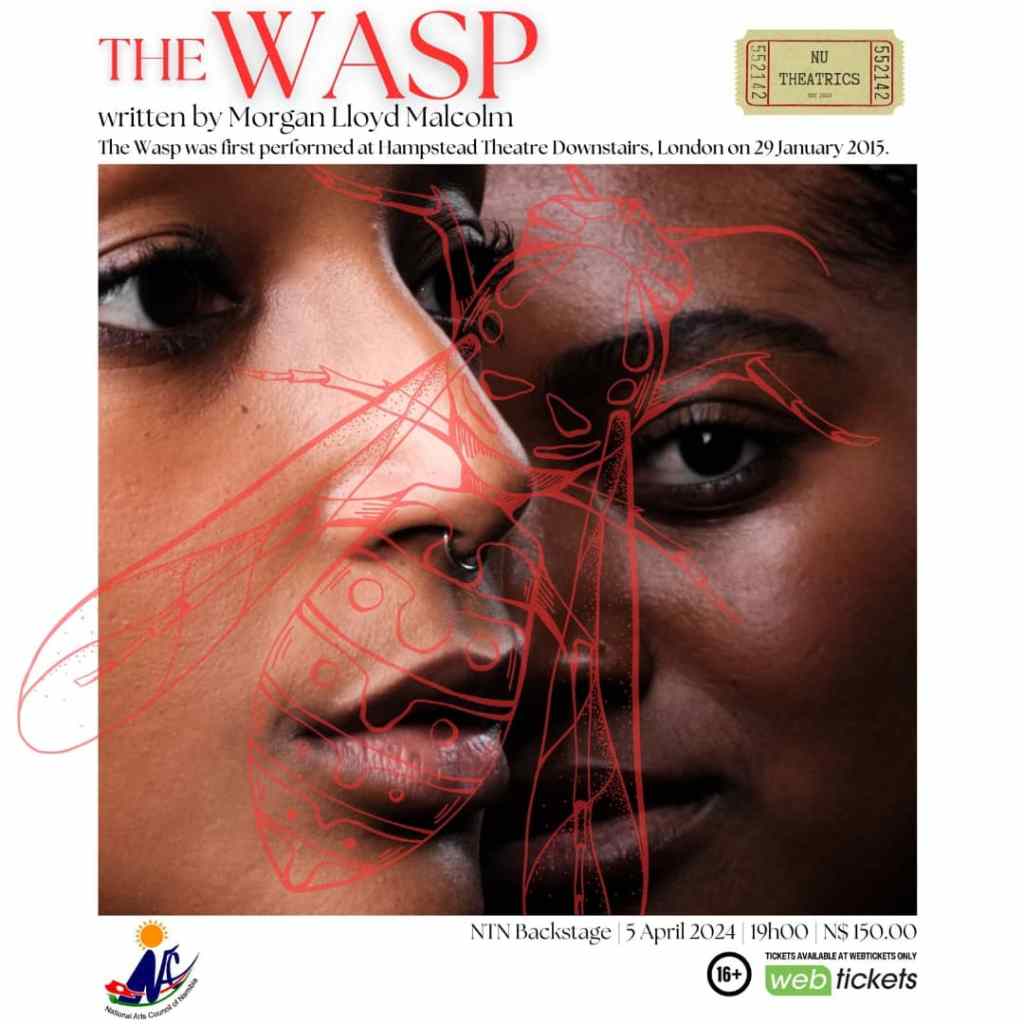
NTN (The National Theatre of Namibia) came back with a bang and I am more than glad that I didn’t skip this play, The Wasp was, in one word, jaw-dropping. When we act like there’s no elephant in the room, it will eventually stomp us. That’s one of the major themes in NTN’s latest production “The Wasp.” This play is not for the feint-hearted, you might just question your own ethics while watching it, at least that’s what I found myself doing during the climax of this, thriller.
The Wasp is the story of two women, who reconnect after years to rekindle what they keep referring to as a friendship, but, friendship is the furthest term I’d use to describe this relationship. They are the only two characters we meet and they’re all we need, Morgan Lloyd Malcom’s writing this had a fly on the wall effect to it, giving us the sense that we know the characters very well through us eavesdropping on some very hush hush conversations, meanwhile still being able to deliver twists that keep the audience hooked. So a 10/10 from me on those stage directions and the dialogue. Here are my biggest takeaways from this play:
On Friendships and “Friendships”
Ever wondered what the worst case scenario could be in a friendship where unaddressed competition and bitterness are at the core? Well The Wasp does a great job at showing us just what might happen if you and that frienemy keep walking on blurred lines. This play shows us that things can change and eventually something has to give in blurred line based relationships.
The play starts with a meeting at a café between the two, Heather and Carla. Heather has become wealthy since their school days while Carla lives more paycheck to paycheck, the remnants of what was a love-hate relationship between the two are clear in how they speak to eachother. In in their first meeting in years, the awkwardness of an unlikely meeting between two people who had fallen out was very well portrayed and spilt over into the audience. It was clear that there were a lot of unspoken words between them throughout that first meeting. Carla has little patience for any outside opinions about her, she has shown up fully prepared to fight Heather, should the need arise, it doesn’t, but if it had, best believe Carla was ready to go from the very beginning. Meanwhile, Heather is the embodiment of the seemingly polite aristocrat whose back handed statements are delivered like they are either facts or gifts.
Heather has a proposition, for Carla to kill her husband. Why Carla? A strong belief in her capacity to be callous. The oddness of the proposition struck us all, a very much needed “o O” from one of the audience members, vocalized what we were all thinking. If someone wants their husband, or anyone killed, why would they reach out to an old high school frienemy? Well the twist ending was the perfect pay-off for this confusion.
All too often fears of being alone, the need to assimilate or be one of the ‘cool kids’ can lead to whitewashing rather than confronting violations. This play shows how, if left unaddressed, these dynamics can spill over well into adulthood. How talks of ‘healing the wounded inner child’ don’t just stop at some internal reflection, but also involve looking at addressing conflict and hurts from other people, and how if that doesn’t happen, the cycles continue until either you or the cycle are broken.
The Authority of the Sacred Victim
*Big spoilers here*
Molly Brigid McGrath published a paper called “The Authority of the Sacred Victim” in 2020 which talks about the harms of maintaining a template of how a victim should be observed. That the possibility of harm by a social victim can result in the creation of new villains. It is wrong when an individual uses their trauma to justify causing trauma, it explains it, but it definitely doesn’t make it right or acceptable. This play does an excellent job at exploring that. It takes this a step further by giving us two protagonists who have understandable backstories for why they are the way they are, and why they do the things they do. Heather is the one looking to murder her husband for infidelity, resorting to catfishing Carla and spying on her before presenting this proposition, and even convincingly threatening to torture and kill Carla after the proposition is made. On the other hand, Carla violently bullied and sexually assaulted Heather in high school, because she was the more teacher’s pet type and her family was more loving than Carla’s abusive family. I’ll admit that it’s easier for me to lean towards Heather in this situation, bullies, especially the ones who do it intentionally not out of ignorance, are disgusting. Yup, I said it and I’d say it again. But the play is written in a way that asks us to both empathize with and dislike these two. Both are ‘sacred victims’ and the finale has one offering the other a way out, to choose to walk away and be forgiving, and start a new chapter or to embrace animosity. The choice she made was definitely worth the wait (not spoiling everything ).
Perfect is in the eye of the beholder
We are introduced to Carla the pregnant Mother of five sitting outside a café and smoking and Heather enters the scene making her out-of-placeness apparent. This place is a casual enough place for Carla yet too casual for the likes of Heather. On first listening their ‘have and have not’ relationship makes Heather’s situation more preferable until she speaks about how much she’s been struggling to have children. Carla dangles her upper hand in this instance and even offers to become a surrogate for some money, bragging about how easily she can get pregnant. After some awkwardness over this, the two gossip a little about a former classmate who is in a relationship with a serial cheater, briefly sharing a high horse over this before even that high horse is broken by how differently they think about it. Carla thinks its normal for men to cheat, the role of the woman is to tighten the leash on him, while Heather believes men should not be excused for such behavior. (Very much noted the heteronormativity of these views and their normalcy.)
Each woman is desperate to escape aspects of their lives. Heather longing for a healthy family of her own while Carla hopes for financial freedom. In our discovery of this, each one is free and confident with whatever they have over the other, and to point out the inferiority of the other. It is Heather who announces Carla’s difficult financial situation, repeating how desperate she must be, and that she’d “obviously” do anything for money. And while Heather speaks of her marital and fertility struggles, it is Carla who emphasizes how easy this part of life should be and adds salt to the wound by making light of Heather’s struggle, the discovery of the abuse in high school make Carla’s jokes more jarring and almost make her seem inhumanely cruel.
Conclusion
All in all, this play is fully worth the watch. If the opportunity ever presents itself, GO WATCH IT!!! These are only a few of the themes I picked up but there’s a lot more I left out. The cast, stage design, directions, all of it were a superb “welcome back to the theatre.” I hope to see more from this writer and can’t wait to see what else NTN has in store for us.
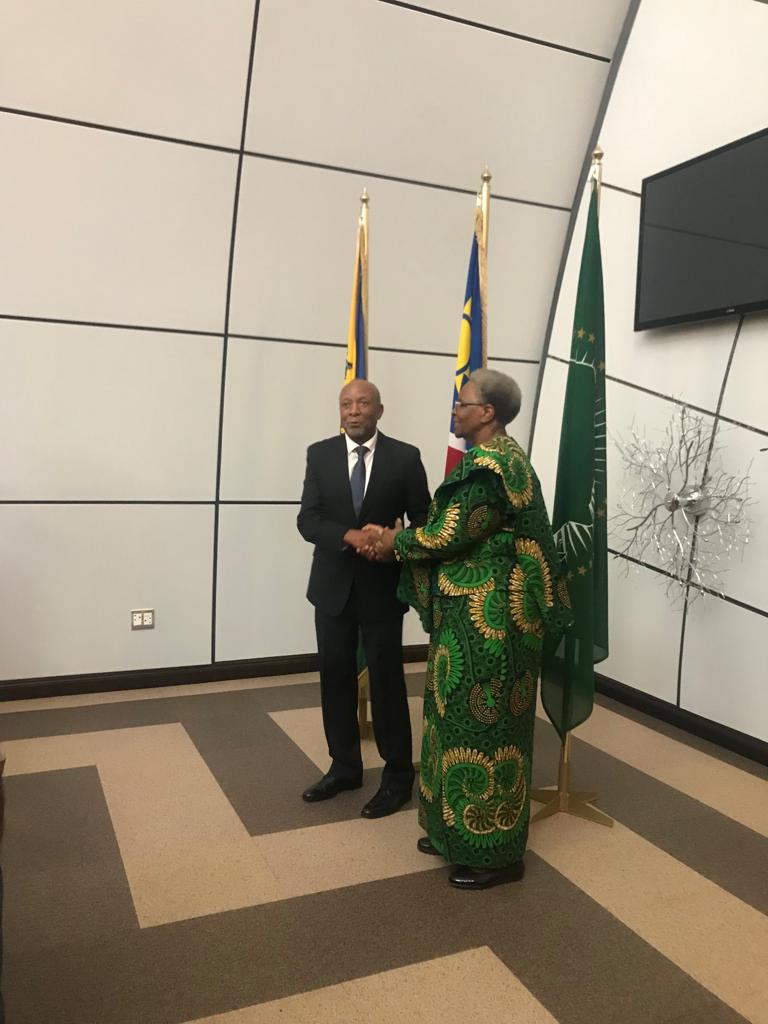
Figure 1: President Nangolo Mbumba (Left) and Vice-President Netumbo Nandi-Ndaitwah (Right)
The former president, Hage G Geingob is to be buried on Sunday the 25th of February 2023, as we draw nearer to the day, more and more people are curious about who this man was, the legacy he left and the successor to his office. In what turned out to be nearly clandestine, the Zenze page got access to the inauguration of the vice president who is being elected in accordance with Article 34 of the constitution of Namibia.
Article 34 requires the vice-president to take over as the interim president in circumstances such as the present one. President Mbumba will be the interim president until a new president is elected.
The Zenze team is no island to this curiosity, and so on the 4th of February 2024 a teammate found herself at this inauguration, hearing about the man, the legacy and the successor from some of those who were closest to him would beat a Google search rabbit-hole. It was without a doubt the type of nerve wrecking adventure for the young journalist, that makes it into an individuals’ “Hi, that’s me, I bet you’re wondering how I got here…” life reels. The room was top-full of dignitaries, head-officials from the NDF, Correctional Services and Police, not to mention members of the very slight 1% in Namibia.
“I just wore the face of someone who was meant to be in the room, broken camera in one hand and a phone on just 2% in the other…I just knew I had to be there,” she recounted a story that’ll make a good analogy for overcoming imposter syndrome someday. None apart from a keen-eyed correctional services official questioned her presence there after noticing that her camera wasn’t working. The room was sullen, sure, a new leader was being promoted, a woman becoming the first female vice-president of the nation, the occasion had all the elements of a celebration, but the circumstances that led to this were the undertone of the entire proceeding.
The somberness of it all was unavoidable, with congratulations delivered in light of shoes that needed to be filled rather than a new job attained. To say, “no pressure,” to President Mbumba would be like pointing at the eggshells surrounding his current role, and to say that to the newly elected Vice-President Netumbo Nandi-Ndaitwah, the first female vice-president of Namibia would be like telling her “hey, there’s a nail under one of these eggshells you’re treading on.” President Nangolo Mbumba has said that he will not be running for office in the November 2024 elections, and further added that even though he’s become president, he’d only ever dreamt of becoming a school principal, when they say “trust the journey” it’s because of stuff like this, you never really know how far that trust can take you, a title humbly claimed in light of the departure of his predecessor. Vice-President Nandi-Ndaitwah additionally takes up the role of the new presidential candidate for the South West Africa People’s Organisation (SWAPO).
The Minister of Information Communication and Technology has announced that President Hage G Geingob will be buried at the Heroes Acre in Windhoek on Sunday 25 February and the event is set to be broadcasted to the nation. Presidential elections will be held in November 2024 and youths all across the nation are becoming engaged in civic action and voters are highly encouraged to go through the manifestos of the parties to make informed decisions as voters.
Follow us on instagram @zenze_blog for more updates on what we’re up to and listen here for the latest podcast episode.
Lately we’ve been exploring the freedom to practice any religion which is found at Article 21 (1)(c) of the Constitution of Namibia. In previous posts we’ve mentioned that this freedom is based on international agreements. These fundamental freedoms don’t exist in a vacuum, here is a small reference list on some international agreements that form the basis of this freedom in Namibia.
Universal Declaration of Human Rights
Article 18 (Freedom of religion)
Article 20 (Freedom of Association)
Article 2 ( Anti-discrimination)
International Covenant on Civil and Political Rights
Article 18 (Freedom of thought, conscience and religion)
Article 22 (The right to freedom of association)
Article 2 (Non-discrimination on the basis of religion or belief)
Article 26 (All persons are equal before the law)
Article 27 (Protection for religious minorities)
1981 Declaration on the Elimination of All Forms of Intolerance and of Discrimination based on Religion or Belief
“Everyone shall have the right to freedom of thought, conscience and religion. The right shall include freedom to have or to adopt a religion or belief of hid choice and freedom either individually or in community with others and in public or private, to manifest his religion or belief in worship, observance, practice and teaching.“Everyone shall have the right to freedom of thought, conscience and religion. The right shall include freedom to have or to adopt a religion or belief of hid choice and freedom either individually or in community with others and in public or private, to manifest his religion or belief in worship, observance, practice and teaching.“
Article 18
Now that we’ve covered some of the rules and grounds on this, lets take a look at some opposing perspectives on how this right is enjoyed. Recently the comment below was mentioned in referenced in relation to the Catholic Church creating a more inclusive policy which allows for the church to bless same sex marriages, something which the Namibian branch is strongly opposed to.
This is one interpretation of the African ethos in relation to the Christian African LGBTQ community.
On the other hand…
The African ethos has been seen to be broader than expressed in this statement. Works written by Adriaan Van Klinken voice an opposing opinion that you can check out. Adriaan Van Klinken is a Professor of Religion and African Studies at the University of Leeds has some interesting views we can consider.
A lot of religious leaders see religion as being inclusive
He talks about the advocacy work of Bishop Desmond Tutu in this article, pointing out that while he faced some opposition from his colleagues he, and thought leaders like him, viewed homophobia, heterosexism and racism in the same light. In Namibia there are organisations that advocate for religious LGBTQ+ persons and their allies such as Tulinam.
2. The Bible can be interpreted in a way that upholds Ubuntu
In a book he co-wrote with Ezra Chitando, Reimagining Christianity and Sexual Diversity in Africa, they explore a radical theology of inclusivity, where they unpack two myths. The first ‘myth’, commonly articulated in African nationalist discourse, both within the churches and in wider African society, is that homosexuality is a purely Western phenomenon, imposed on Africa by the ‘gay lobby’ and other international human rights advocacy groups, a product of neo-colonialism and neo-liberalism. The second stereotype originates in Western secular discourse, which often characterises Africa as intractably homophobic, fuelled by a regressive, pre-enlightenment version of Christianity.
3. Homophobic attacks can be dehumanising to an extent of missing crucial lessons in Christianity
The human rights listed above also apply to LGBTQ+ people who are religious. In this article, he speaks about a wide array of effort against the LGBTQ mentioning how those who have been discriminated against in Uganda seek refuge in Kenya but are also subject to harrassment there. In the article he also talks about the documentation of lives of African LGBTQ+ people through art, one work he cites is a collection of stories titled Stories of Our Lives, wherein 250 stories are submitted by Kenyan people showcasing everyday human experiences.
Conclusion
A view of religion in Africa that is inclusive also promotes concepts that are central to Africa like Ubuntu. While neutrality and middle grounds are difficult in most instances, Adriaan van Klinken believes that room seems to exist for an interpretation of religion and the freedoms associated with it, which promotes togetherness rather than division and conflict.
In this series of An Africa for Africans we’re exploring alternative political philosophies and we’re kicking it off with Black Anarchism. Black Anarchism evokes thoughts of chaos and radicalism in its most extreme form, it did start off that way with movements like the Black Panthers in the USA and the Zabalaza Anarchist Communist Front in South Africa. Contemporary Anarchism is far tamer than that. It involves questioning the legitimacy of power and promoting agency. The goals of anarchism are not to replace one power with another but to completely do away with imperialism. In an anarchist society, everyone is in charge. It’s election season in many parts of the world and it seems like a good time to discuss power and politics, why not shake things up by starting with a theory that advocates against hierarchical power?
It’s election season in many places. In this decade, Guinea-Bissau followed Zambia got the opposition party elected. Zimbabwe’s elections this year had the same old result, and aftermath of a witch hunt of opposition party leaders because the results were just too close this time, this is the story in many African countries.
The notion “If you don’t vote you lose the right to complain” is what led me to anarchism. Anarchism is a philosophy that was mainly founded by Robert Nozick. His philosophy was adopted by Black Anarchists who had been frustrated by being overpowered by state violence and identified with the philosophy’s goal to promote agency in citizens. Contemporary Black Anarchists often steer clear of promoting violence, especially because Black anarchists like Kuwasi Balagoon were very militant and unafraid to kill. Contemporary Black Anarchism is combined with other philosophies that make up for the areas where extreme militant action would have been put. Feminist Black Anarchism for example acknowledges that there are useful policies in place, but asks us to question the legitimacy of institutes if things like victim blaming can, in some instances be accepted, debatably the legal concept of ‘reasonable care’ could fall into this. It takes the ‘radical view’ that the most effective system is one where people don’t have to be careful. This is something that would be difficult to apply without some heavy policing. It’s taken place in the form of cancel culture, which has some hectic pros and cons.
Its election season, are we capable of a social structure with no leaders? I’m no politics expert, there’s something a little sad and funny about the differences in how politics play out in the west and in many parts of Africa. The west has the liberals and the conservatives, and many of us in Africa have the state party and the opposition parties. Politics in Africa is more a game of ‘who can topple them off’ rather than a contest of ideologies in many African countries. It has for a long time been about patronage. This is after all how the professional sphere of African communities works, the ubuntu of business is to remain a loyal customer. Your fellow citizen, found family, has given you good service, you must keep them alive. This is how we can help each other to sustain ourselves. Somehow politicians in Africa have turned power into a closed community business that many must keep alive. Yet teach us about rotational leaderships that take place within democratic systems.
The politics has become caught between those who seek to remain loyal to what they have always known, even if what they have known has been failing them in ways that they also complain about (e.g. land, unemployment, homelessness…), and those who want change and to address other problems that are treated as too foreign because a lot of people turn a blind eye to the practical harms to human rights that are pointed out by these movements, yet the harm still persists, (climate justice, LGBTQ+ rights, animal rights…)
Voting in many places does not seem to be about the agenda and goals of the candidates, but more about displacing the one in power. Let’s face it, elections are the most accessible form of participation in the democratic system that most citizens get. Parliamentary procedures and public hearings often don’t incite participation because they seem more complicated and boring than most people would be put up with. It’s the formality of it all, the lack of movie magic, civic engagement seems too serious and divisive without much of a payout because decision makers seem to have the final word anyway. Anarchist politics calls for people to determine that on their own, what could that look like in a time when technology is being used to make most activities entertaining? But then again, too many cooks in the kitchen spoils the soup.
That’s it from me for now, comment below, what are your thoughts on Black Anarchism?
July was the YLO pride month, possibly because of a protest against performative June pride commitments, also possibly due to scheduling delays and a lost wordpress password…I’ll never say… The discussion is non-the-less an important one. We discussed South Africa on the instagram page, which is often heralded for having progressive laws, yet we saw that changing the law often isn’t enough, social changes still restrict the enjoyment of human rights. Hate speech is often regarded as mindless opinions, yet can have the impact of harmful people justifying their violent behaviour with these views. This month we also took a look at two more conversations around LGBTQ+ rights:
The argument of diverse sexual orientations and gender identities being “unAfrican” and rejected by the Bible
The argument that there are more important issues
This is how those played out;
The argument of diverse sexual orientations and gender identities being “unAfrican”and rejected by the Bible
This has never made sense to me. The fact that measuring the extent of Africanness is in the same breath as Biblical principles doesn’t compute because it’s never been a secret that the Bible was a significant tool for colonisation to succeed. We don’t throw the baby out with the bathwater here, the Bible is also very insightful and a source of peace for many, in this instance though, it seems to me like those who rely on this argument can’t see that they have taken on the role of the coloniser, using a book of hope and love to perpetuate the idea of “hating in the name of God.”
But pushing the contradiction of this aside, suppose we accept the Bible as the standard of what should be accepted in Africa and what shouldn’t, there are things that are very obviously unAfrican and rejected by the Bible; heterosexual couples sharing clothes (Deuteronomy 22:5 technically forbids a girl from looking cute in boyfriend’s hoodie and a guy getting cosy in his girlfriend’s gown), women preaching
(1Timothy 2:11-12; 1Corinthians 14:34; Acts18:26; 1Corinthians14:35) , braiding hair (Timothy 2:9-10)….these are commonly accepted with ease and translated to purposfully accomodate more ways in which many Africans want to exist authentically and comfortably, yet relationships between consenting adults are too difficult to accept by people who are not even required to participate in those relationships.
Identity and Divisions
During this month I came across the idea that ‘if we view our roots and tell our stories from slavery the best we can hope to be is great slaves,’ similarly I’m of the view that if we focus on the lines that divide us to justify exclusion, we can only hope to be more divided. Is Africanness about who you sleep with? I got into a mini-silent protest against stating my sexual orientation and gender identity, mutually fuelled by me swivelling on the spectrum and my interest in this subject. I don’t think it’s fair that members of the LGBTQ+ community have doors closed for revealing this part of life, take for instance the Digashu case, if gender and sexual orientation were not used to make decisions about people’s choices, then a family could have peacefully moved through countries just as any heterosexual headed house does. I will acknowledge that this is also a pessimistic view of self-identifying, because this is also rooted in having pride for one’s own existence and celebrating oneself fully and loudly.
I also could not articulate this view well and my mini-protest was met with some reasonable conflict, my initial reasons were that it puts a bull’s eye to violent attackers and that its information that should only be asked by people who are romantically interested in a person, not as a means to try categorise a person. An acquaintance would tell me me that the bull’s eye is necessary because it is more harmful to hide from adversity, and that martyrdom is a risk that comes along with this, it made ‘picking the hill you would die on’ make more sense too me. This same acquaintance sees a necessity in categorising people as a way that people make sense of the world more easily, I can understand this view because it is human to do so, I do it too. But, I think its important to challenge these boxes rather than rely on them. I’m on the fence with how this can be applied because I can also see how it can result in people not being accepted as unique beings, but leaning on categories and boxes perpetuates stigma and discrimination and has the very possible effect of stopping people from broadening their experience of life.
Conclusive View: Differences in identity are part of being in a community. We aren’t all the same and its important to accept and acknowledge that. Viewing sameness and peace as synonymous is harmful. That’s the formula for oppression, because in a system like that, only those with power get to define and maintain the sameness while calling it peace. To be African intrinsically means accepting and welcoming diversity and that we don’t all understand each other and that’s okay for as long as we are not harming eachother, we have about 3000 tribes in this continent and none is more African than the other. Expanding this to diverse sexual orientations and gender identities involves accepting the reality that we are not all identical and that is something worth celebrating, each of us should be able to exist in fulll bloom of uniqueness.
The argument that there are more important issues
This argument assumes that problems can’t be solved concurrently. It undermines the whole LGBTQ+ movement and treats those in it like toddlers having a tantrum over wanting sweets when the electric bill isn’t paid. As if a group of people saying, “I can’t go to the police, they will chase me away because I’m gay, but I can’t go home because there are people who want to kill me for being gay,” shouldn’t be a human rights crisis. Had the word ‘gay’ been exchanged with the word “Christian” or “Black” the insensitive response of a passive “Then stop being that way,” wouldn’t roll so easily out of people’s mouths.
Not to mention, other issues aren’t often pitted against eachother in this way. I’m yet to hear someone respond to the issue of youth unemployment with the notion that its not important because we need to focus on more important issues like sanitation in informal settlements. I can guarantee that the outcry over how dismissive this is would lead to an almost instant loss of political power. No one likes to be dismissed, especially when they are crying out for help.
Democracy is intended to make sure all voices are heard. In practice this can be difficult for several reasons. The most clear to me are that;
“The power is in the people” seems like a formality. The power is in the administrative decision makers.
Many administrative decision makers are largely influenced by their political power and rhetoric than their administrative role.
Political power mostly rests in the hands of post-colonial war heroes and I’ve explored how these powers can be destructive in their goals to maintain power here
Innovative thinking and new ideas are only welcomed by these powers if they are profitable or if they promote their ideas.
Ultimately, it seems like the goal of democracy in action is to maintain the ideas of the political power in force, not to put the power int the hands of all the people. The question of “your rights end where mine begin” is poorly addressed when it comes to just recognising that the LGBTQ+ community is a community of human beings who deserve human rights. A common response to “You’re not part of the relationship, no one is asking you to participate in them, your life will go on as it usually does” they say it will confuse the children. Children are easily confused by many things, shall we ban taxes, mortgage, talking about puberty, mathematics and school in general because of the risk of confusion? This, in my view, is a veiled response instead of an honest admission; “I won’t know how to respond to my children if they ask.”
Love and Culture
Religious dogma and cultural beliefs provide a comfortable standard for accountability. What we owe and expect. Human Rights does this too. Unfortunately, these face the challenges of political power being very linked to control of decision making in the law.
I got into a couple of conversations with two men who were against the lgbtq+ community. Both of them argued about morals and that there are more pressing issues. Both of them pressed on the idea that the goal of romantic relationships is to produce children. Both seem to me like genuinely kind people who have different views from mine. I did get heated when they said statements that are dismissive, but I had to bite my tongue, it was not the time to shove my perspective down someone’s throat, but to listen. We may never reach an agreement, but it may be possible to create more acceptance and inclusivity, but perhaps if we see where the other side is coming from, we can foster more conversations that allow for inclusive laws and accomodating societies.
I’ll just point out that this says a lot about why the crisis of single motherhood and absent fathers is riduculously high in Namibia. It comes off as if they think they have fulfilled a duty by making someone pregnant. But I digress, love is gatekept, or rather, what love should look like is so heavily guarded by heteronormative views even when the arguments in favour of them make no sense, this isn’t new information, and sometimes its for the safety of those who cannot consent to love but are subjected to harm in the name of a one sided idea of love. We did agree on the idea of love being co-built, that consenting adult couples should help eachother determine what they want their love to look like. This idea did not translate well with my conversation buddies when I asked if we could make it about hetero and homosexual couples having that right when they are in the same community. Adult-adult relationships self-determining in general without others qualifying them by gender or what they’ll do in the bedroom. These interactions were also limited to brief 10-15 min cab rides so we didn’t really go into too much.
When I brought up couples who can’t have children, those who choose not to have children, those who vow celibacy for life, IVF, and adoption, the response would often still go back to the Bible allegedly saying that love is only for heterosexual couples for the purpose of children. The two men I spoke to seemed well intended, their belief is also in love, seemingly, love of the community. They spoke to me as caring fathers trying to correct a lost child. It felt demeaning, and whether that was their intention or not, the core of it is that they believed they were being helpful. That made me challenge the idea that homophobia is motivated by hate.
It dawned on me that their expression of care and love is control, to not listen but to just lead, after all the man is the “head.” At least that’s what I concluded from that interaction. And when I say love I don’t mean some deep sentimental connection, I mean an ethereal platonic care that religion and spirituality say exists in all people.
For a good while it would upset me that the hating in the name of God is a thing, and that many are of the view that it is necessary to do so. While some do hat in the name of God, others decide what God’s love should be and that everyone should view it that way and follow their understanding. Moral superiority. People are responsible for their own souls, we must not try to be the messiah for everyone. Everyone shoul be free to express their own spiritual views as they wish. If I decide that my god is a cricket on a cloud, and I am not harming anyone, that’s my business. Friendships, relationships and the like should be about how we relate to eachother. Conversations on morality can take place with the goal of gaining insight rather than imposing views. A general view that none is greater than the other.
These conversations would fortify my ideals on feminism, equality and human rights. Mostly that patriarchy is a massive contributing problem. These men genuinely seemed to speak from a place of concern and care, to give some context, one is a cab driver I have been familiar with for a while who often drives me from school, and during exams extended his hours specifically to drive female students who were staying late at the library. We saw each other in town and it was an instant reminder of how broad life is, that feeling when you see your school teacher doing something ordinary people do like buying bread. I knew he’d had that same feeling when he jokingly asked, “I didn’t think you went anywhere else but UNAM, so you also come to Wernhil…” The other I had met for the first time, and he was a jolly guy who was just being social and bubbly, he shared jokes and small anecdotes from his life, before saying “aaah but I don’t understand why so many children are lost, this same sex ruling will be the end of us,” which shifted the conversation significantly from an upbeat “My son eats bread like I own a bakery, I don’t understand that boy’s stomach, but he will never refuse food, its good because the groceries don’t go bad…” into a low toned “My daughter, you are lost…” They didn’t speak violently, but I do wonder if I was just spared harshness for seeming correctable, but again this ‘wondering’ might have been my own implicit bias expecting harshness from calm men who just have different views from mine.
Conclusive View: Undermining rights violations and systemic failures that are happening concurrenty is a patriarchal approach to problem solving. I say patriarchal because not everyone is involved in deciding what the priority should be and patriarchy has made many facets of life that are intended to be inclusive, very heirachical. Democracy plays out as being about who has power and religious love seems to be about controlling behaviour and beliefs not acceptance.
Black holidays as I’ve known them have been hecticly traced with tragedy. Unfortunately, all the holidays I have experienced have to do with colonial suffering. This month, at my big age, I found out that a lot of people and institutes in Africa also celebrate Black History Month, something I thought was unique to the experiences of those whose ancestors survived the slave trade, another historic event characterised by Black people suffering. The month came after a long struggle to make sure that Black stories are never lost. I won’t get into the history of it too much, if you’d like a quick history, you can read about it here.
The slave trade and colonial era were undoubtedly an operation of the mass erasing of Black consciousness. A month dedicated to undoing this harm must have been a huge win, considering that the establishment of this this took place between 1970 and 1986 in a more openly and violently racist world. The first celebration kicked of on 2 January till 28 February 1970. Somehow this has moved down to just the 28 days of February and has been clumped up with LGBTQ+ month in the UK.
The decision to have Black History Month in February was in honour of the birth of President Lincoln who is credited for criminalising slavery , and the death of Fredrick Douglass a black former slave and abolitionist.
There is an implication around this that doesn’t sit well with me. Some sense of duplicity I feel when I think that the timing was based on the birth of a white man on a pedestal for admitting that “Black people are people too,” and laying it on the tragic death of a Black man who spent his life fighting to prove this fact and could not enjoy it almost to say ” Celebration for the black people comes throug suffering.” Maybe I’m being too pessimistic in may analysis but something about it highlights the current nature of many African holidays. That they are anchored on the deaths of Black people who died fighting for what they could not experience and exist in the shadow of more lighthearted holidays birthed by white people, like Christmas, Easter Day and April Fool’s Day. Sure we can be a part of the fun, but it is not a fun we designed, it was given to us, and when it’s purely about us, it’s about how much suffering we have apparently overcome.
Maybe I’m just drawing at strings here, but, while I see how Black History Month is worth celebrating, I find it difficult to think of it as less than sad in 2023. If not celebrated, it dismisses efforts put in by Black advocates and activists, if celebrated with full glee then it disregards the fact that this is the bare minimum and that we need to uplift the value of more culturally appreciative holidays. A lot of whitewashing needs to be undone, and many generations have grown with the view that indigenous holidays are ‘evil’, that the bare minimum and assimilation are better than carving out an identity. Let us never forget those who struggled to get us to where we are, and let us move on to honouring who we are. Even if a customary group viewing a holiday is less than a dozen, I still say its better to sing in the joys of the practices that have shaped us, to contribute to the evolution of tradition, rather than to watch customs die and forever sing of the times we suffered like we had no joy.
The concept of intersectionalism can be described as the occurrence of discrimination based on various categories of identity such as race, class and gender .
Kimberle Crenshaw captures the fundamental nature of intersectionalism in her analysis of black women’s existential experience. This was in a time when intersectionalism was not practiced within the political sphere. Her work is particularly essential when highlighting how intersectionalism satisfies the need for inclusive dialogue . She pointed out the harms of a single axis political atmosphere where discriminatory practices and the multiple -isms, are discussed as being mutually exclusive to each other.
What often results in such settings is a favoring of the more privileged among those who are discriminated against. The narratives of those who are privileged in some aspects becomes prioritised. For example, white women not being harmed due to the privilege of being white, Crenshaw refers to the case of Moore v Hughes Helicopter Inc (144), where there was a lack of consideration for the unique experience of black females being separate from the type of discrimination they endured alongside white women.
Communication involves trying establish a common understanding with someone . Taking this under consideration it is essential to note that teaching intersectionalism in communication is vital as a means to capture the, “endemic and everyday nature of racism and sexism and how these other -isms manifest in and through communication.”
Democracy is a tool that should essentially allow for the election of individuals who represent the majority. Which often excludes a significant minority, one may take under consideration, the treatment of the LGBTQ community in Africa as well as that of women in political spheres prior to the 21st century.
In the USA, Kamala Harris represents a remedy of the communication disparity that can result from a lack of consideration for intersectionality. Among the communities she represents, there are black women, Indian women, racially mixed individuals and immigrants. In this regard she can be said to be sensitive to the unique experiences of each of these groups and would be able to convey the concerns of these groups.
This does however raise the question of whether or not she can adequately represent and communicate the needs of groups she is not a part of, such as the LGBTQ community, a question raised in the case of Payne v Travenol, wherein the court concluded that because the plaintiffs were Black women they could not adequately represent the needs of their black male colleagues. Simply put, being oppressed doesn’t mean one can understand the oppression of another.
It is true that the intrinsic nature of suffering that different groups go through cannot always be captured outside the scope of experience, however it is important to have someone who understands that discrimination can manifest in layers rather than as a single arch -ism.
Community movements in Africa do this well by building bridges where intersectional concerns arise. Identifying commonalities has been a useful way to start conversations, with one key one being the colonial era. Relating on the mutual grasp of inequalities that existed back then, makes dialogues in political spaces easier to have.
This isn’t a “save all” technique though, there is a risk of drowning intersectional issues in colonial narratives. On many occasions the colonial narrative has been weaponized by many founding parties as grounds for why they should forever be in power. In such spaces, intersectionality is overpowered by the colonial rhetorics and minimized to “less than” issues.
Striking a balance in intersectionality and communication is key to political change.
A paradox occurs when an element despite sounding or seeming true and logical also presents a logically acceptable feature or element which creates a contradiction and oligarchs are instances where only a small number of people have control over a country. Here I discuss the independence of post colonial systems. The true sovereignty of the nations is questionable, there is an expectation of freedom due to being rid of colonial rulers, yet an overwhelming sense of being trapped by the same systems they were allegedly liberated from. Here we assess the authenticity of that liberation.
Education
“The percentage of Africans living in absolute poverty fell from 58 to 41 percent between 2000 and 2016 and primary school enrolment had increased from 60 to 80 percent, most of the poorest economic performers in the UN’s human development index remained African countries.”
Education is supposed to be liberating, and oftentimes, used in the right way it can be. African countries have increased the rate at which their people are educated since the colonial era, yet still, continuing to feature on the index of the most poor countries and continue to face such heightened levels of corruption and debt. Quoting here from Adekeye Adebajo’s Pan-African Pantheon;
“It is unfortunate that we should be so educated, so liberated with regards to knowledge yet continue to be counted among the most suffering and even be placed bottom on a tier of world. Understandable considering that this system seeks to undo the impact of hundreds of years worth of damage. What is paradoxical is the use of educational systems and standards of those who caused that damage. Globalization has made the use of these a necessity particularly if one seeks to engage with the rest of the world, however globalization has effectively made the nature of educational sovereignty slightly more complex.”
Western education has remained consistently present since the colonial era with subtle changes to suit the African context. However it’s effect and ability to create a sense of superiority of the West remains.
Globalization may be praised for allowing people to reject the notion that the founding parties are doing their best when they can see that there is potential for improvement. The other side of this coin is that the difference in progress coupled with the consideration of the impacts of colonialism often create despair and results in a people despising their ‘underdevelopment’ rather than see opportunity in it, essentially one may learn that that true liberation exists by existing the in the way those in the first wold live.
One of the limitations counted that contribute to this may be the conditioning to revere the colonizers that comes with self-hate, and despite how it has been explored through movements such as Black Lives Matter and the #blackisbeautiful, in the face of skin lightening products and instances of colourism, it is still clear that the application and internalisation of these lessons is very gradual.
Another is the openly corrupt and overly bureaucratic systems that have been created in many African countries. Many of these systems have done very little to dispel the appeal of foreign-hood, especially if it can be an avenue to develop one’s home along with the home of that which accommodates them. One cannot be called home when the crocodiles that ravaged them before are still out, still menacing home. A lot of blame for this falls on leaders who have brutalized their countries so much that one cannot function within it or develop it without facing immense difficulties.
When one is taught of the great and wonderful things out there and shown how impossible it is to implement them at home, it creates a hunger for the life out there and an individual rather than societal pursuit of happiness.
Why not point out these failings in an educational rather than solely through social setting? Because it has been made difficult by the leaders who seek to maintain positions of power rather than improve their countries. All while making it impossible to hold them accountable without risking one’s life. Herein lies neo-colonialism and how the leaders who represent the people seek to benefit from it, much like African leaders of the colonial era who sold their people. The ZANU PF régime in Zimbabwe for example famously watered down the actual harm and issues in fear of being held accountable to their actions. In many African countries like this , where the founding parties impose themselves so much that change is inconcevable individuals often truly realize the harm of their leaders long after they have been conditioned to accept or function under the status quo.
Democracy
Democracy was meant to be a liberating tool following the colonial era, however it has become a means in which founding parties can maintain their paternalistic hold on their nations. It seems like they worry so much that any other party would shift the systems to suit their own desires the way they have been since the dawn of independence or an act fulfilling the aforementioned fear of being held accountable.
On the backdrop of colonially solidified elements such as tribalism, regionalism and colourism, democracy here functions in the manner it did for them during the apartheid era. Such that power is unequivocally in favour of the one who produced greater numbers.
Three elements which seemingly appear separate are consistently at play here. These are the social moral narrative, the traditional group with territorial dominance and the colonial history and liberation struggle. These often overlap in the sphere of politics and have often manifested as an emphasis on the colonial history and liberation struggle to justify the power hold of the founding party which often includes the ethnic majority wherein they ultimately drive their own social moral narrative. Essentially what is meant to be a democratic system, functions as an oligarchy that only benefits a few.
These factors when placed near the ever propagated value of community in deciding a leader, can make a lot of people make decisions based on community biases rather than on the political discourse. This cannot really help democracy to function fairly, especially because there are several cultural groups, each with varying population distributions, the vote of the majority usually ends up being a tool for the most dominant group to remain in power. Essentially the experience of sovereignty is something that can truly be experienced by those with oligarchal control over the states.
Gender Based Violence
The University of Namibia much like many other African Universities has an increased number female graduates yet the uproar regarding gender based discrimination to young women is still prevalent in the country and was notably marked by the #Shutitalldown protests that occurred in 2020. Additionally, despite globalization and significant judicial activism in cases such as Chairperson of the immigration Selection Board v Frank and Another the country still operates what the World Bank has dubbed “the silent epidemic,” wherein gender based violence has greatly been directed towards members of the LGBTQ community, unfortunately rather than emphasize the need for greater attention in this area, there is often an attitude pf passive acceptance because it hapens so often it is simply taken to be normal. Cultural biases of heterosexual male dominance feed into this immensely and often result in the prevalence of such crimes.
A 2020 UN report titled “THE TIME IS NOW: ADDRESSING THE GENDER DIMENSIONS OF CORRUPTION,” it was revealed that corruption is mostly practised by men because they are less scrutinized for it. The same research revealed that women are less likely to get poitions of power because there is an overwhelming bias that women are corruptable. This is not a plea to let women comfortably be corrupt but merely highlighting how this exclusion has also limited the inclusion of women’s issues beyond a manner of passive political discourse. When those who are affected are not always part of the conversation it makes it difficult to prioritize their issues.
Oligrachal powers are yet again seen at the forefront of this seen in many African countries primarily prioritizing their own perspectives and as reflected in the consistant insances oof harm against women. Amnesty International found in its briefing,“Treated like furniture: Gender-based violence and COVID-19 response in Southern Africa”, that “women and girls who dare to report violence and abuse risk social rejection for failing to conform to gender roles — and when they do speak out, their complaints are not taken seriously by authorities.”
Production and Consumerism
While the sovereign African countries have had a great increase in the number of people who can make purchases such as homes, cars, even little delights like corn flakes cereal, no longer restricted by racial lines of who can own these things. Yet still while there has been liberation under the guise of glorious consumerism, this comes at the cost of development as Adebajo points out;
“African economies were thus structured – as the economies in the Caribbean and the Americas had been for two centuries- to produce crops to meet the European consumer needs. This both increased the dependence of African economies on metropolitan economies and in many cases, negatively impacted on the ability of African populations to produce their own food. Africans imbibed Western consumption patterns without acquiring Western production methods.”
While we were empowered as consumers, we were not yet sufficiently empowered as producers, the channels to such have been left to the hands of the western powers, in addition is America which has successfully incorporated Africa in its consumerist culture and China which has played a huge role in heading Neo-colonialism. These tools have left Africa unfortunately in debt and still at the mercy of other powers economically while still functioning as providers of the necessary materials for production; cocoa beans, gold, diamonds, etc…. In this way the goal of colonization to reduce Africa into a source of economic gain and sustenance for foreign powers continues to play out even after the poat-conflict idea that Africa was now free and independent.
At the forefront of this is the role of the oligarchs in Africa. In a report by the African Investigative Publishing Collective, it was stated that, “African oligarchs do a lot more than accepting bribes…what we have unearthed indicated that these elites have, to some extent morphed into the very colonialist plunder systems that they replaced.”
Conclusion
Obtaining true sovereignty in Africa is undoubtably a slow process due to the deeply embedded manner in which colonization occured. An important battle to face in this process is being rid of leaders who synonimize democracy and oligarchy as well as systems that make advancement more difficult that it has to be.



 ZENZE
ZENZE 