Global Africanism and the African Renaissance

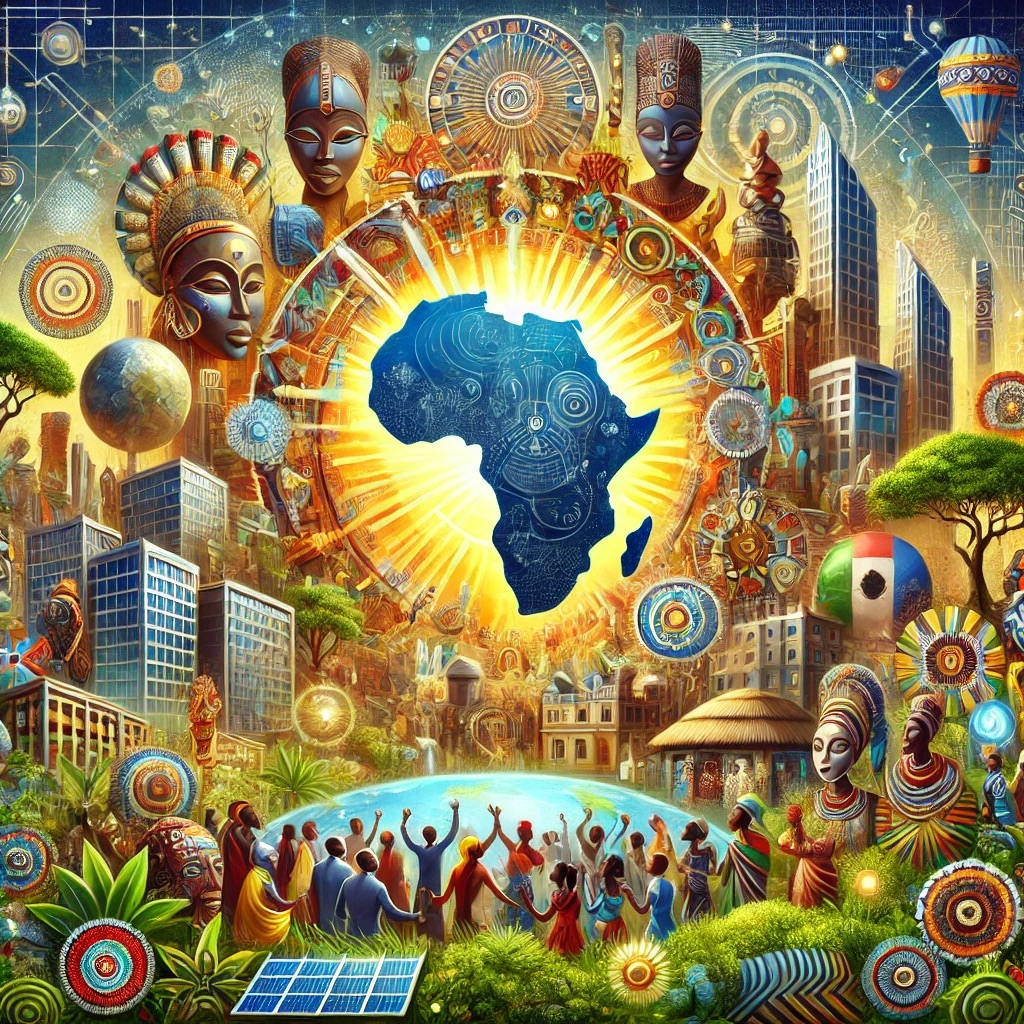
The  African Renaissance is taking place and through it we are fortunate to be at the forefront of seeing Africa take her place in the world. There are ongoing efforts at decolonising several industries, reclaiming narratives as well as embracing and contextualising  cultures. The idea of  Global Africanism looks at where Africa finds herself during this transformative era and how she interacts with her global peers. 

The term was popularised in an edition of the General History of Africa project which was introduced by UNESCO in an effort to support Africans reclaiming their narratives. The purpose of the Global African movement was to bridge the militant goals of the Pan-African movement with the diplomatic efforts of international bodies such as the AU and the UN. On one end, making PanAfricanism fit global diplomacy standards has been seen as a form of giving up and folding over to forceful powers, with leaders such as Malcom X fervently urging his followers to remain distrustful when it came to diplomatic approaches to conflict resolution. On the other hand it is the diplomatic approaches of leaders such as Nelson Mandela, that helped translate PanAfrican goals and get state freedom.

In his 2019 paper A call for a ‘right to development’- informed pan-Africanism in the twenty-first century, Kamga discusses how the rest of the world can take part in the African Renaissance particularly in the realisation of the right to development. That way, he essentially incorporates Global Africanism in his arguments. Outlining how international tools created to maintain diplomatic relations, can be useful pathways for development only if Pan-African goals are centralised rather than the neo-colonialist outcomes that many African countries have become subjected to. This right  is  outlined in Article 22 of the 1981 African Union Charter, the basis of the 2001 New Partnerships for Africa’s Development program by the Au as well as Resolution 41/128 of the UN General Assembly (the Declaration on the Right to Development) and is embodied in the 2030 Agenda for Sustainable Development.

In a 1998 speech Thabo Mbeki made a reference to the Japanese Meiji period when illustrating the possibilities of the African Renaissance, a time of industrialisation for the Japanese and successful resistance to being colonised. In this it’s made clear that  most important means of achieving this is building such an interest, especially amongst the emerging young Africans, to form united African nations, to learn and contextualise what’s working for others, all while maintaining cultural integrity.

Thabo Mbeki spoke a lot about the African Renaissance during his presidency, making clear his ambitions to bring South Africa to a level playing field with global superpowers. This ambition and vision stirred up hope for a much more successful South Africa, but in implementation, he faced criticism for placing so much focus on these diplomatic relations that he’d neglect meeting many South Africans’ immediate needs like employment for a great amount of the youths. That being said, Kamga’s approach seems to address what much of Thabo Mbeki’s approach missed. Voicing how the need to meet practical needs is an international objective that can still be met.

Global Africanism and the African Renaissance are PanAfrican concepts that, not only call for the imagination of a better future, but collaborative efforts to making that future a reality. Kamga makes it clear that the potential exists for everyone to take part in this. We’re one year closer to the Global Agenda for Sustainable Development’s vision 2030 and it’s exciting to see ideas that aim to make PanAfrican goals a reality.
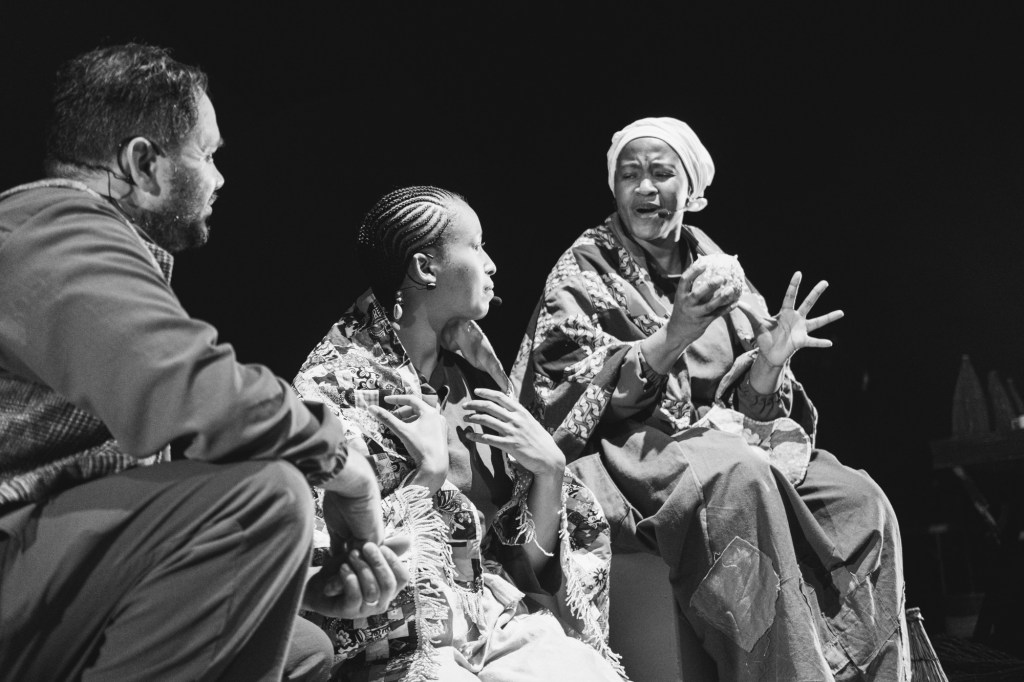
ǂAONI //AES : Reclaiming the Historic Narrative of the ǂAoni People Through Theatre

Section 6 of the Swakopmund Protocole

The owners of the rights shall be the holders of traditional knowledge, namely the local and traditional communities, and recognized individuals within such communities, who create, preserve and transmit knowledge in a traditional and intergenerational context in accordance with the provisions of section 4.

The application of this section is partially significant for how it allows customary groups to take ownership of their stories. The colonial era had oppressors taking the role of the authority on people’s stories. While we remain grateful for education, we can’t neglect the messaging that, “foreign knowledge is superior to indigenous knowledge.” This has played out as indigenous people not often being at the forefront of being historians of their own cultures. Since independence, many cultural groups have been making efforts to correct the stories that have been told about them. In this article we’re covering two works that have been conducted in Namibia, surrounding the cultural relationship between people and the ocean.

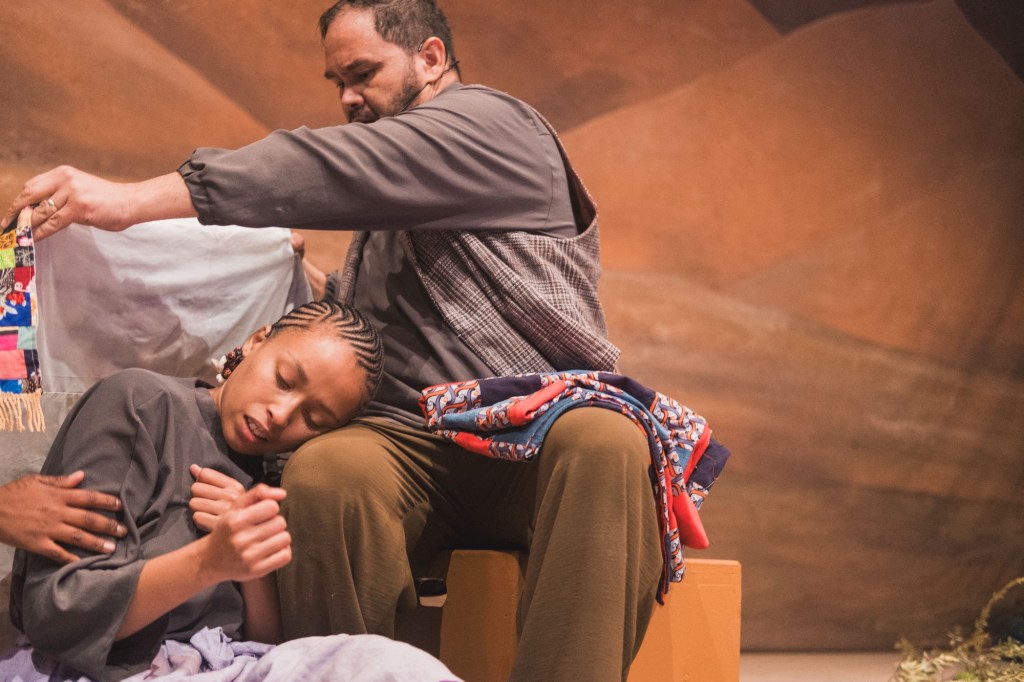
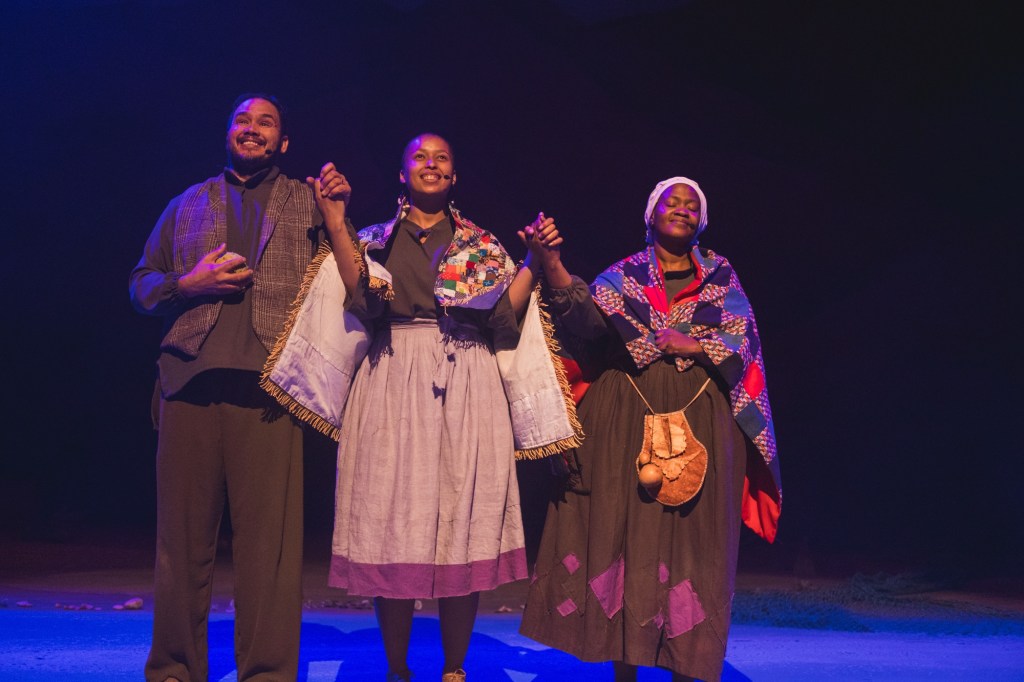
A phenomenal production retelling the story of the ǂAoni people and the ocean. The play consists of a cast of three, the father (Dawie Engelbrecht), the mother played by Hazel Hinda and their daughter Khoendikhoes, played by Chantell Uiras (Diolini). The story follows the three as they revisit the events of the colonial past and how these impacted on the current socioeconomic position of the ǂAoni people, a clan of Nama people mostly found around the !Kuiseb river in the Erongo region also referred to as the Topnaar community.

Setting things straight

One of the main issues covered in this play is that of the history of the community. Colonial era historians alleged that the community’s displacement during the colonial era was in response to countering fighting within the community and harm to the natural environment. The story starts by letting us know who these people were recognized as, ‘the water people’ or guardians of the water and marine life. Their role as caretakers was undermined by the ambitions of the colonizers. It was also clear that they were moved without consultation and that it was carried out in a forceful and chaotic manner. They did not stand a chance against the armed invaders and had no other choice but to comply. An all too familiar history. Before anyone else felt the hit of the colonial invaders, they, being at the coast, felt the first and strongest blows, and because the settling of foreign invaders on the coastal territory did not help their case much.

They spoke of the !Nara fruit (Acanthosicyos horrida), how it was not just food, but the unique way in which each family farmed it was a way to distinguish between families. After the displacement, restoring the practices that were central to their cultural identities has been a struggle not so much because they have lost the capacity to do so, but more because of the policies put in place to make sure that they never do Policies that have seen their way into post-independence Namibia. The play was not made out to be an attack on the contemporary government, but a channel to shed light to the fact that they (the Topnaar community) too are a people that were uniquely disempowered by the apartheid system, and that their story continues to be swept under other emerging and apparent issues. The story has been written in collaboration with academic research institutes like the University of Namibia (UNAM), One Ocean Hub, Global Research Fund, and UK Research and Innovation. Researchers such as Robert Vigne are also amongst those who have showcased the significantly disproportionate level of harm faced by the Topnaar Community during the colonial era. It’s safe to say that the message shared is one grounded in facts not a baseless critique.

When speaking to the audience after the play, a leader from the ǂAonin community, Joel Kooitjie, as well as, acting chief of community Stoffel Anamab, pointed out the struggles that their people continue to face today. Some impacts include the fact that they are only about two Topnaar people in local authority offices and that decision makers in their area can sometimes fail to capture their context very well and ultimately miss their needs. Furthermore, as a community that had largely survived on marine life for sustenance, bearing witness to the harm the ocean and its creatures have faced while disempowered from taking any feasible steps to help serves as a testament to the gradual weakening of their own development, this is in part because a great amount of their income came from inland circulation of oceanic goods. The historical and cultural relevance of ocean governance in this community has been significantly undermined and resulted in having to re-adapt to a life where their strongest skills remain in the backburner. It goes without saying that this need to suppress who they are in order to be convenient for invaders is a level of robbery that digs at the core of personhood.

Conclusion

The play ǂAONI //AES is an example of the Swakopmund Protocole at work. It’s the active reclaiming of a history by the people. It is also an assertion of who they are and who this land has known them to be. The impoverishment and struggle they face today is a result of being subject to a system that has unfortunately kept them down. The post-colonial government canntot take the blame for this, but, in their continuous efforts to decolonize Namibia, they can take the Topnaar Community and their pleas into consideration. 

Lessons from the TB Joshua Documentary

The Zenze podcast is up and we’ve been focusing on the fundamental freedoms mainly the freedom to religion found at Article 1 (1)(c) of the Namibian Constitution and Article 18 of the Universal Declaration of Human Rights.

Every right and freedom is limited and its for good cause. Article 22 of the Constitution of Namibia points out that every limitation has to be general and not aimed at a specific individual and that each limitation must be clear, if it is based on another existing law, that law must be pointed out, there should be no blurred lines. The writers of the Constitution, having just come out of apartheid knew that every right came with power, it is just easier for some people to exercise some rights and freedoms than others, because of social factors like race, class, gender, and, when it comes to religion, divine titles and leadership positions.

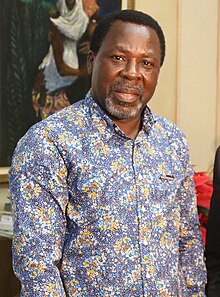
The news about TB Joshua passing away in 2021 had many evangelicals heartbroken. The man had established himself as an icon. Recently, in a BBC documentary a few women, some of his closest disciples spoke out about who this man was in reality. This documentary showed that TB Joshua was the leader of possibly one of the biggest cults in the 21st century. There are a few lessons we can get from watching the documentary to help us identify when the fundamental freedom to religion is being violated with some reference to the Constitution;

  • There is abuse going on and reporting it will cause harm

A few brave women spoke out about the sexual and physical abuse carried out by this man, and it goes without saying that this could not have been an easy task for them.  They also spoke about how their faith was used to normalize this abuse. One woman, Jessica a Namibian woman, told a story of when she questioned a possible victim about this behavior and she was reported and beaten for it. Standing up for themselves was an act with horrid consequences. Safe to say, if you are part of a religious group where there is physical, sexual, financial, emotional or spiritual abuse. RUN. One helpful way, apart from a leader crossing boundaries, is to look at the consequences that will come if people report issues that they feel are violations.

  • A system that seeks to breakdown while calling it ‘empowerment’ : Dignity and Slavery

The documentaries had many counts of people who were made to feel special for a time just to be broken down. The narrative, to the disciples was that of a humbling process, but the leaders knew what they were doing. That if they kept building up and breaking down people, eventually people would start associating the leaders with the role of ‘God’ the source of power. It was intentional but was framed as a natural part of the process. There is a difference between respecting leadership in an institution and having the right to dignity attacked to preserve the power of leadership in an institution. Aricle 8(2)(b) makes the right to dignity inclusive of torture, cruel, inhumane or degrading treatment or punishment.

Slavery and forced labour are prohibited by Article 9, and from the documentary, we learn that excessive servitude, to TB Joshua, to the point where people felt like zombies was framed as honouring God. In the documentary they spoke of how this came about by overworking the synagogue disciples into a state of perpetual exhaustion, such that they couldn’t really think for themselves. Meanwhile the narrative that having the approval of the leader (TB Joshua) meant having this extra level of honour in the eyes of God, then making them crave his attention, which he would give and take away on a whim. Having them chase a carrot on a stick for his own ego boost. One woman, spoke of how she was beaten on multiple times, he forced himself on her, and yet held her in a high position, amongst others giving her ‘need to know’ tasks like the recruitment of westerners. He took advantage of their desire to get closer to God.

  • Targeting the Vulnerable : Liberty and Privacy

Speaking on a calculated “humbling” process. The westerners, particularly white westerners were unwittingly walking into a trap. He took advantage of the fact that they were foreigners, made them afraid of the rest of Nigeria ensuring that safety could only come if they saw things the way he did. One of the closer disciples spoke of a very well thought out practice of recruiting members, playing on their desire to be part of a group that shared an interest as them, then dehumanizing them for their loyalty. For several years on end. Article 7 of the Constitution protects the right to liberty, no one should unlawfully be kept from moving freely.

His focus on westerners and foreigners was calculated. It was the young, bright eyed, hopeful and innocent ones that he would target with the goal of molding them into his little puppets. Targeting young people is not the main problem the problem is the intention behind it, investigating them to learn exactly how to manipulate them. They were robbed of their individualism for what they were made to believe was a greater cause. They had no privacy, cameras were all over, including in showers and being fully dressed in the dorms was not welcomed. The right to privacy is protected by Article 13, the only exception being that there is reasonable suspicion that there is criminal activity, which may be highly unlikely with young people joining a church youth group. It’s a little more difficult to see this one off the bat but if there’s an option to be a disciple in anything with the option to leave and to be yourself getting thinner as you get more into it, there’s a problem, if you have to be investigated, have your privacy unlawfully deprived to keep your place there, there’s a problem.

  • Loyalty to the movement

Above all else. Loyalty to the version of Christianity pedaled by TB Joshua and inadvertently loyalty to him, is what was meant to stand before everything. The fundamental freedom is violated when the ability to think for yourself is robbed from you. There is something wrong with an organization when you can’t criticize it.

  • What happens when you leave?

One way to test this is this is to look at what happens to those who leave? In the documentary, they mentioned that who ever said they wanted to leave was humiliated, disgraced, to paint them as an unholy entity against the church. If leaving comes with tribulation, it probably means they’re after your free -will and the point of having the freedom of religion is to actively practice free will in a way that is fulfilling and does not cause harm to others.

Conclusion

All in all the TB Joshua documentary is an eye opener and a reminder  that even those we look up to can violate our rights and freedoms. Click this link to watch the first episode of the documentary.